Tigray Displaced Families Fear Renewed War as Return Hopes Fade
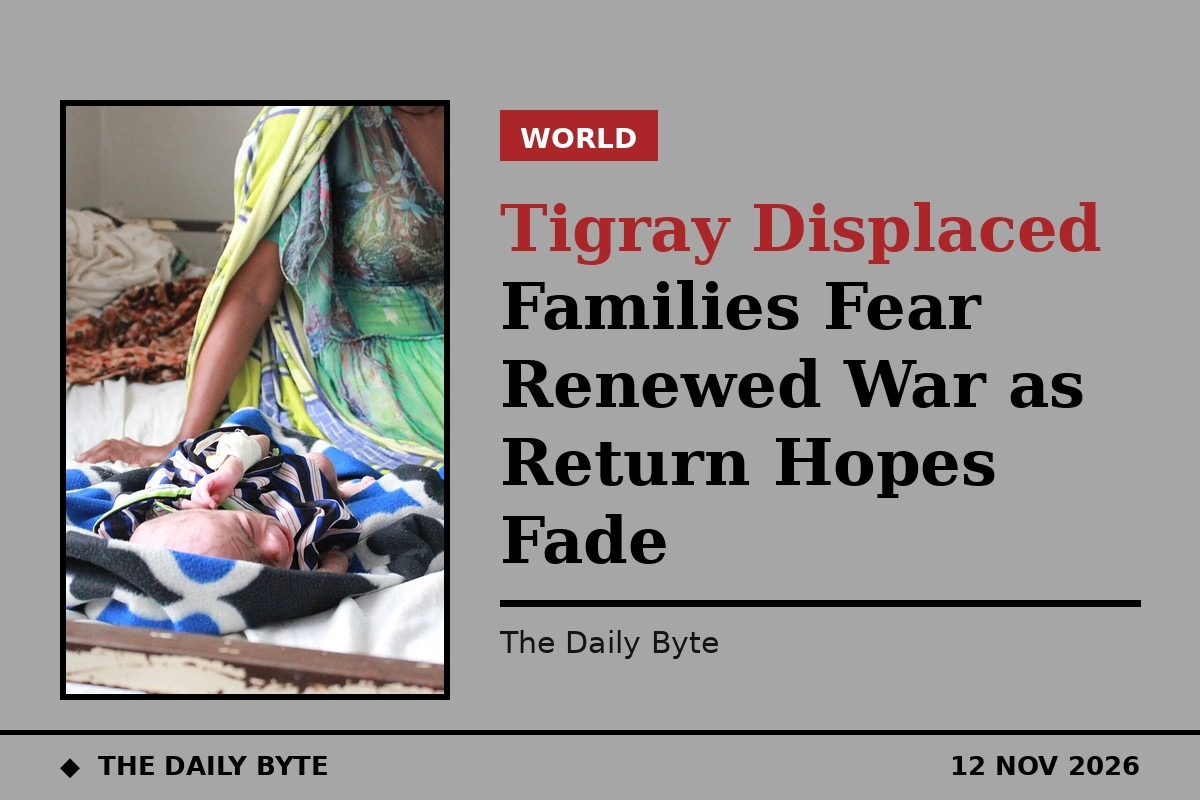
Families displaced from Western Tigray who have spent years living in a converted school in northern Ethiopia say their hopes of going home are fading, as renewed fighting threatens the peace deal that ended the country's devastating war.
In the town of Abi Adi, classrooms in a former high school have become long-term homes for families who fled Western Tigray. They expected to stay for a few months. Years later, they are still there, with children growing up in the school buildings and no date set for their return.
Years of waiting in Abi Adi
Tewolde, who fled Setit Humera in Western Tigray, told Al Jazeera that his family thought they would be back home within months. "We thought we would stay here for a few months before returning home. It has been years now. Our children are growing up in this school, and we still don't know when we will be able to go back," he said.
The Pretoria agreement, signed in November 2022 between Ethiopia's federal government and the Tigray People's Liberation Front (TPLF), ended two years of war that left an estimated 500,000 people dead through violence, famine and the collapse of healthcare, and displaced millions. But the status of Western Tigray was never settled, and the return of displaced Tigrayans has become one of the most contested issues left over from the deal.
Fighting flared again in September
Fighting escalated on 22 September 2026. TPLF forces launched an offensive the following day and seized the airport in Mekelle, the regional capital. Federal forces and allied fighters counterattacked and retook Mekelle on 4 October, but clashes continued elsewhere in the region, and the federal government later set up a six-month caretaker administration to govern Tigray, restore public services and prepare for elections.
Human Rights Watch and other groups warned the United Nations Human Rights Council in October that the renewed hostilities threatened to undo the Pretoria agreement.
For the families in Abi Adi, daily life is marked by shortages of food, clean water and medicine, with overcrowding hitting children, older people and those with chronic illnesses hardest. Doctors at Ayder Referral Hospital in Mekelle told Al Jazeera the facility lacked sufficient supplies of essential medicines.
On 5 November, Ethiopia's National Rehabilitation Commission said about 5,500 former Tigrayan fighters were receiving rehabilitation training at a centre in Mekelle. For Selass, a displaced mother in Abi Adi, the wish is simpler. "We survived one war and lost almost everything. We don't want our children to experience another one. All we want is to return home and live normally," she told Al Jazeera.