Tiny Trackers Follow Monarch Butterflies to Mexico
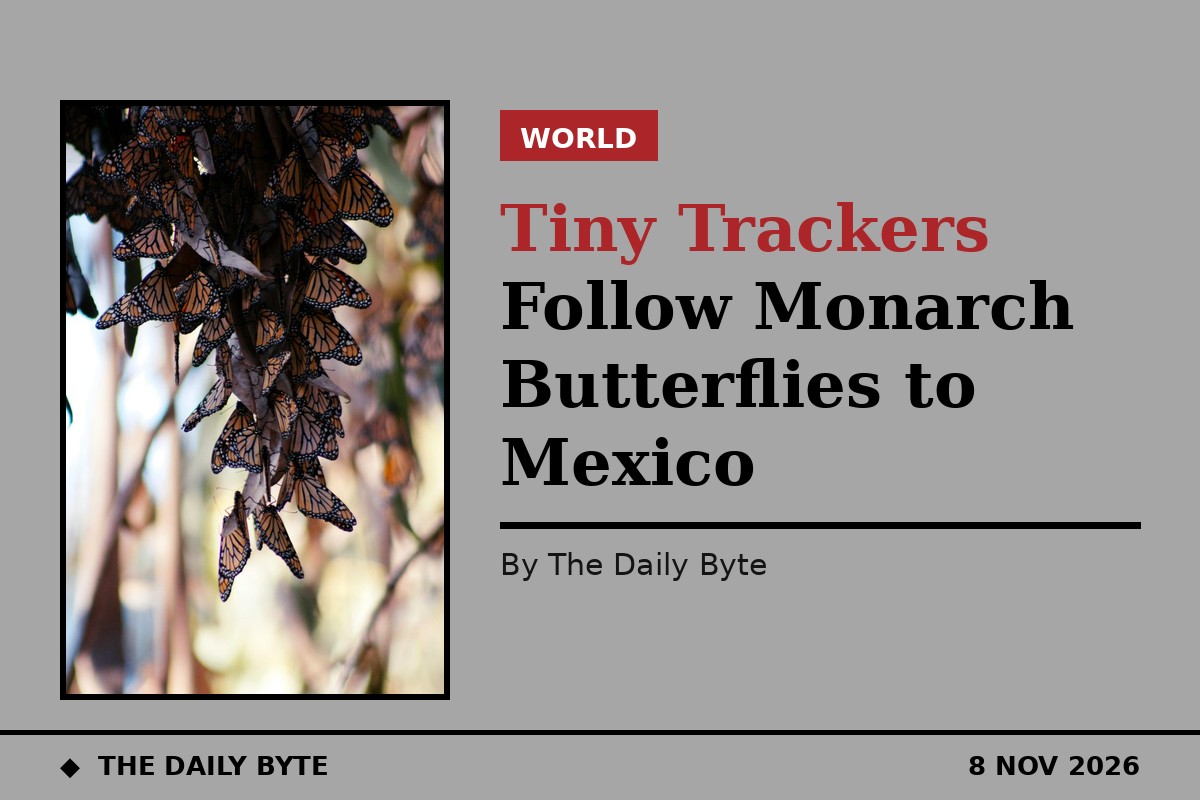
Monarch butterflies are completing one of nature's great journeys this week, and scientists can now follow individual insects almost all the way. Tiny solar-powered trackers fitted to the butterflies are reporting their progress as they travel from the United States and Canada to their wintering forests in central Mexico, the Lansing State Journal.
Researchers have attached the tags, called BluMorpho, to nearly 1,750 monarchs this year. Each tag weighs about 60 milligrams, roughly as much as a drop of water, and costs around 200 dollars. The solar-powered devices broadcast on the same radio frequency used by Bluetooth, so they can be picked up by ordinary smartphones as well as wildlife receivers. About 175 tagged butterflies had already been detected in Mexico since this year's migration began.
The early results are already changing what scientists thought they knew. One monarch nicknamed Chew left north-eastern Utah on 2 September and became the first radio-tagged monarch known to cross the United States border into Mexico, detected in Santa Catarina in the Mexican state of Nuevo Leon on 11 October. It was the first evidence of a butterfly from west of the Rocky Mountains joining the eastern monarchs in central Mexico. Other tagged insects travelled down the East Coast to Florida, crossed the Gulf of Mexico and continued through Mexico.
Butterflies tagged near Toronto and Cape May in New Jersey have also reached Mexico. The public can follow individual butterflies through the free Project Monarch Science app. Scientists caution that a detection records where a receiver picked up a tag, not the insect's exact position, and does not prove the butterfly is still alive. Even so, the tags are revealing the stopover sites the insects depend on, information conservationists say is needed to protect a migration spanning three countries and some 3,000 miles.