Trump: I Won't Forgive Enemies, Even to Reach Heaven
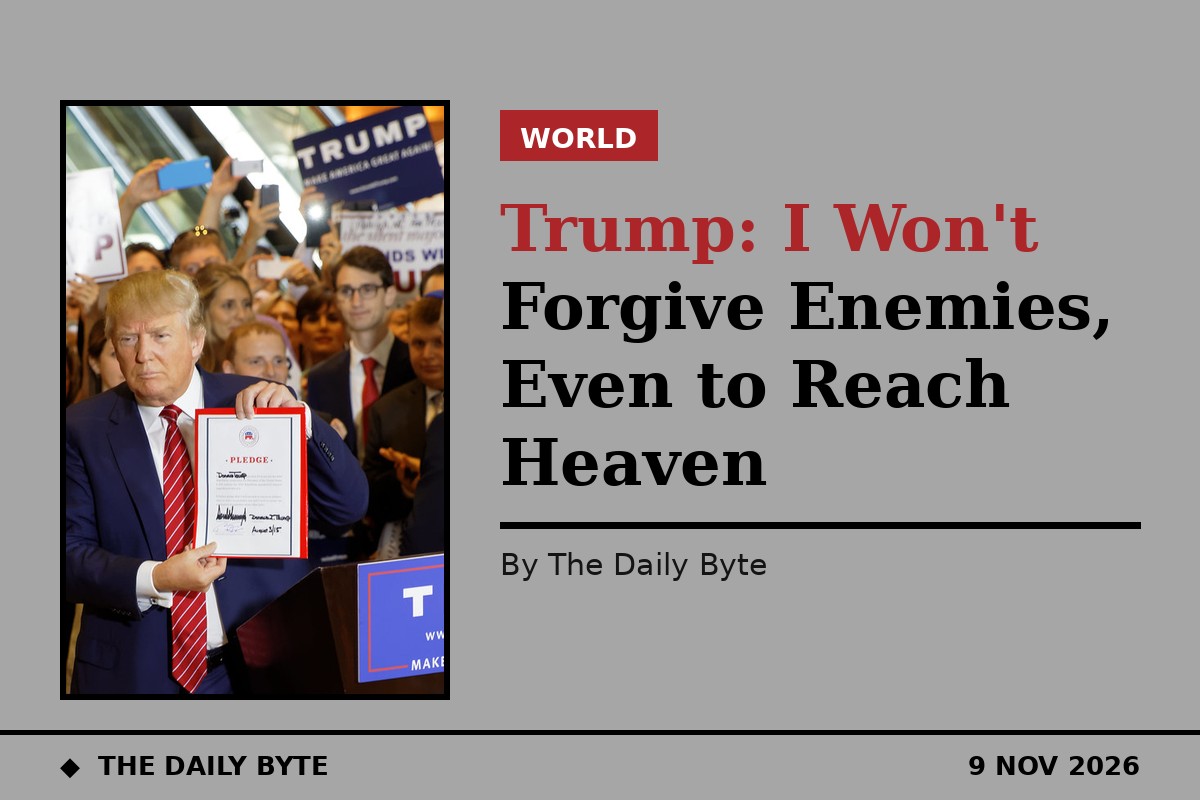
President Donald Trump has said he would not forgive his political enemies even if that were the price of entering heaven, telling CBS News' "60 Minutes" that he hates some of them and always will.
The remarks came in Trump's first sit-down interview since last week's midterm elections, conducted by correspondent Ross Douthat and aired on Sunday. The conversation, filmed at the White House on Friday, ranged from the election defeat to immigration, Iran and artificial intelligence, but it was the closing exchange, about mortality and forgiveness, that drew the most attention.
"What do you think happens to Donald Trump when you die?" Douthat asked. "I'm a religious person," Trump replied. "So, in theory, I go to heaven." Asked if he thought he was going there, he said: "I hope so. I don't want to go to hell."
Douthat then raised the example of Erika Kirk, the widow of conservative activist Charlie Kirk, who publicly forgave her husband's alleged killer during his memorial service in September 2025. Trump had followed her on stage at that service and said he hated his opponents and did not want the best for them.
"Let's say you pass away, you're entering the next life, and all you have to do to enter paradise is feel love and forgiveness for James Comey, Nancy Pelosi, anyone who you have expressed hate for over the years," Douthat said. "Do you think you can do it?"
Trump said the "easy answer" would be to say yes, but added: "Then I wouldn't be real, would I?" He described the people he could not forgive as "extremely dishonest people, very bad people, very bad for our country. I love our country far more than I can love people and people like that."
Pressed directly, he was blunt. "Is the answer no before the Judgment (Day)?" Douthat asked. "The answer is no. I want to be honest," Trump said.
He returned to the point once more before the interview ended. "I probably cannot do that, no, because I do hate some of my enemies, and I always will," he said.
Comey, the former FBI director, oversaw the investigation into possible ties between the Trump campaign and Russia during the 2016 election. During Trump's second term, the Department of Justice brought multiple federal cases and charges against Comey, which he has maintained are acts of political retaliation. Pelosi was speaker of the House of Representatives when Trump was impeached twice.
The interview was Trump's most extensive public assessment yet of the Republicans' historic midterm losses, in which the party lost control of both the House and the Senate. Trump took no personal blame for the defeat, saying Republican candidates had not been able to translate his own popularity into their races, but he did acknowledge that his administration's hardline deportation policy had been unpopular with voters.
The forgiveness exchange closed the programme, and it underlined a theme Trump has returned to throughout his political career: a long list of grievances against Democrats and officials who investigated him during his first term, and a reluctance to offer conciliation even as Democrats prepare to take majorities in Congress.


