TV Licence UK: Cost, Rules and Who Needs One in 2026
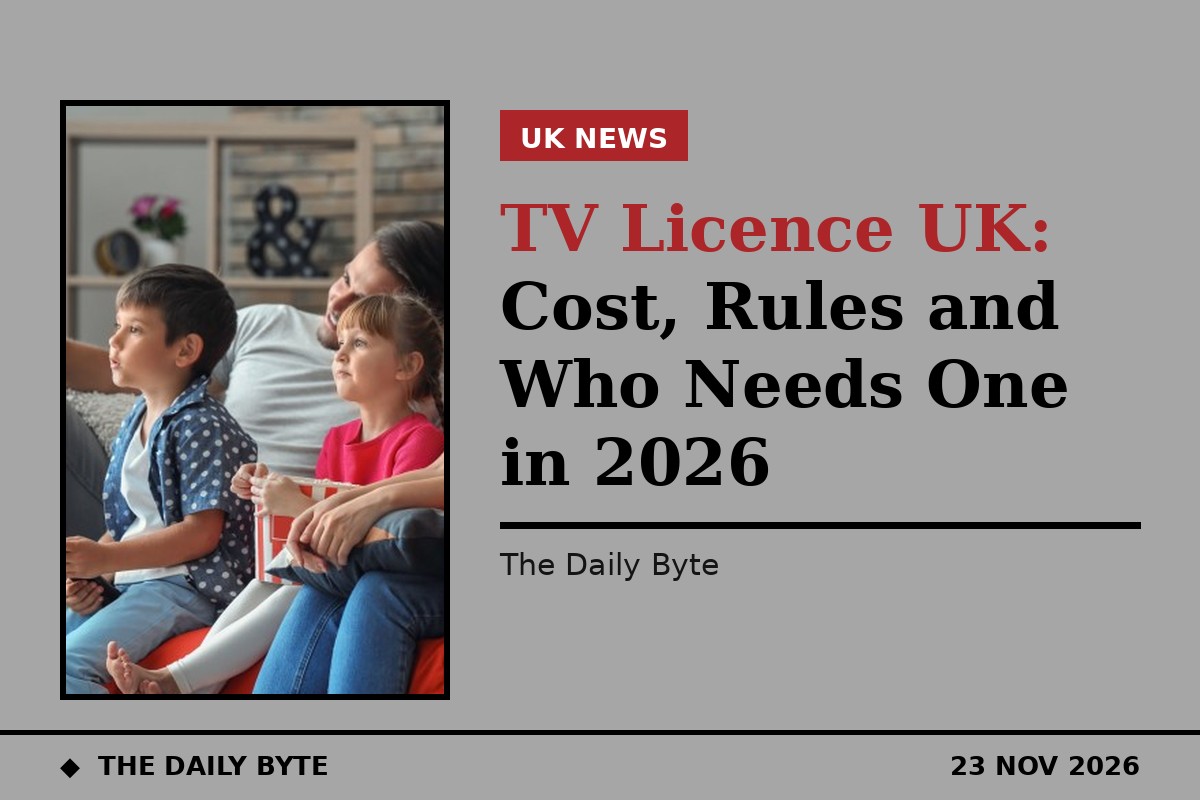
A TV licence costs £180 a year for a colour television and £60.50 for a black-and-white set, according to TV Licensing. You need one if you watch or record live television on any channel or device, or if you watch anything on BBC iPlayer — live, catch-up or on demand. You do not need one if you only watch on-demand programmes on other services, such as Netflix or Disney+.
That single distinction — live TV and iPlayer versus on-demand streaming — is where most confusion comes from. This guide sets out the current cost, who needs a licence, who does not, the free and discounted licences available, and what happens if you watch without one.
Who needs a TV licence?
In the United Kingdom, the Channel Islands and the Isle of Man, you need to be covered by a TV licence if you watch or record television programmes as they are being broadcast. That applies to every channel, not just the BBC, and to every device: a television set, laptop, tablet, phone, games console or streaming stick. It also covers live television watched through streaming services such as ITVX, Sky Go, Now, Amazon Prime Video or YouTube.
You also need a licence to download or watch any BBC programme on BBC iPlayer, whether live, catch-up or on demand, on any device. That is the strictest part of the rule: even if you never watch live television at all, using iPlayer on its own means you need a licence. The only exception is watching S4C programmes on demand, which does not need a licence.
Recording matters too. If you record a programme as it is broadcast and watch it later, you still need a licence, and the same applies to watching a programme on a delay or on +1 channels. Paying for a cable, satellite or streaming subscription does not remove the need for a licence — the licence and the subscription are separate things.
When you do not need a TV licence
You do not need a licence if you never watch live television on any channel or service and never use BBC iPlayer. Watching on-demand programmes on services other than iPlayer — Netflix, Disney+, ITVX catch-up, Channel 4 catch-up, Amazon Prime Video on demand — does not need a licence, provided you never watch anything live on them.
Listening to the radio does not need a licence, and neither does watching DVDs, Blu-rays or videos you own. If that describes your household, TV Licensing asks you to tell them at tvl.co.uk/noTV, by calling 0300 790 6044, or by writing to Customer Services, TV Licensing, Darlington DL98 1TL. They may visit to confirm that a licence is not needed: TV Licensing says that when it makes contact, around one in 14 people who said they did not need a licence turn out to need one.
How much does a TV licence cost?
The standard licence covers one address and every device used at that address. The current fees, set by TV Licensing, are:
| Licence type | Annual cost |
|---|---|
| Colour television | £180.00 |
| Black and white television | £60.50 |
You can pay in one annual payment or spread the cost. Direct Debit is the most common route, at around £15 a month for a colour licence. There is also a TV Licensing payment card, which allows weekly payments from £6.50, and you can pay by cash or debit card at PayPoint outlets, or by cheque by post. The fee is linked to inflation for the remainder of the current BBC Royal Charter period, which runs until the end of 2027, so it can rise each April.
Free and discounted TV licences
Several groups can get a licence free or at a reduced rate. The main concessions are:
| Concession | Who qualifies | Cost |
|---|---|---|
| Free licence | Aged 75 or over and receiving Pension Credit | Free |
| Blind concession | Registered as severely sight impaired (blind) | £90 a year (50% off) |
| Care home licence | Residents of qualifying residential care homes | Reduced rate per room |
The free licence for over-75s used to be universal, but since August 2020 it has been means-tested: it is only available to people aged 75 or over who receive Pension Credit, either Guarantee Credit or Savings Credit, in their own name or their partner's name at the same address. If you are 74 and receiving Pension Credit, you can apply now and get a short-term licence to cover you until your 75th birthday.
People registered as severely sight impaired receive a 50% discount, bringing the colour licence to £90 a year. People registered as sight impaired — partially sighted rather than severely sight impaired — do not qualify for that discount. Residential care homes can buy an Accommodation for Residential Care licence, which covers residents at a reduced rate per room.
Students, second homes and shared houses
One licence usually covers everyone living at the same address. But there are exceptions. Students in halls of residence generally need their own licence if they watch live TV or iPlayer on a device in their own room, because the hall's licence normally covers only communal areas. There is one exception: a student whose parents hold a licence at home is covered if they watch on a device that is not plugged into the mains — powered only by its own battery.
If you have a second home, you need a separate licence for that address. In shared houses without a joint tenancy agreement, each tenant may need their own licence. Businesses also need a licence if staff, customers or guests watch live TV or iPlayer on the premises, at £180 a year per address.
What happens if you watch without a licence?
Watching live television or using BBC iPlayer without a licence is a criminal offence. TV Licensing enforcement officers visit thousands of addresses each year, and if you are caught you can be prosecuted and fined up to £1,000, plus legal costs or compensation — and you will still have to buy a licence. In Guernsey the maximum fine is £2,000, and in Scotland, Scottish criminal law applies.
It is worth noting that simply owning a television does not require a licence. You only break the law if you actually watch or record live TV or use iPlayer. If you genuinely do not need one, telling TV Licensing can reduce the letters and visits.
How to cancel and get a refund
If you stop watching live TV and stop using iPlayer, you can cancel your licence and claim a refund for any full months remaining on it. You can apply for a refund up to 14 days before you stop needing the licence. Similarly, if you move home, tell TV Licensing so the licence moves with you — a licence covers an address, not a person.
TV Licensing also offers information in Braille, large print and audio for people with sight loss, on 0300 790 6076, and a text relay service for people who are deaf, hard of hearing or speech impaired.
Frequently asked questions
Do I need a TV licence to watch Netflix? No — not if you only watch on-demand programmes on Netflix or other non-BBC services. You need one only if you watch live TV on any service, or use BBC iPlayer.
Do I need a TV licence if I only watch catch-up? Catch-up on BBC iPlayer always needs a licence. Catch-up on other services, such as ITVX or Channel 4, does not — as long as you never watch anything live.
Does one TV licence cover my whole household? Yes, one licence normally covers everyone living at the same address and all the devices they use there. Separate licences may be needed for second homes, some shared houses and student halls.
Can I get a free TV licence at 75? Only if you are 75 or over and you, or your partner living at the same address, receive Pension Credit. If you are 75 or over but do not receive Pension Credit, you must pay the standard £180 a year.
Sources: TV Licensing — Do I need a TV Licence?; TV Licensing — Information about the TV Licence. Fees checked 23 November 2026.