UCU boycotts Goldsmiths over £22m job cuts plan
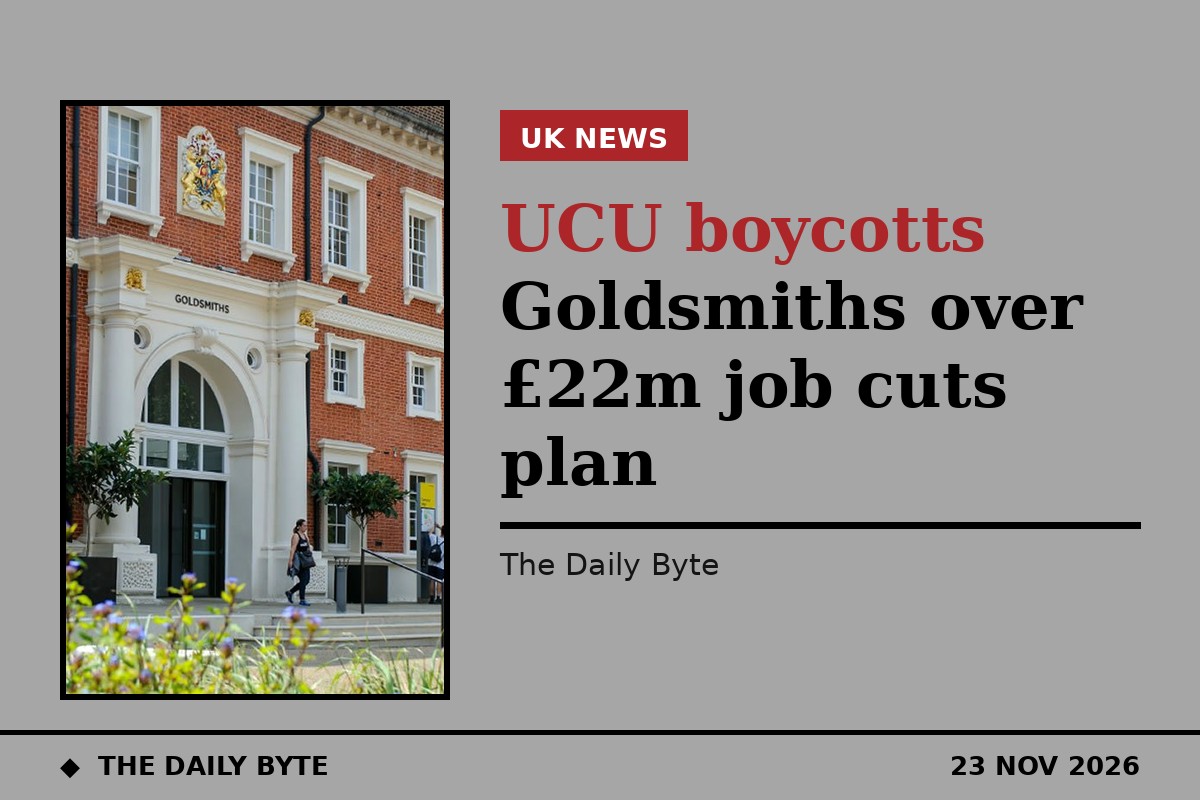
The University and College Union (UCU) has called a global academic boycott of Goldsmiths, University of London, in a long-running row over plans to cut £22 million by the end of the next academic year. The boycott, known as greylisting, took effect on 17 November 2026 and was formally announced by the union on 19 November 2026.
Staff at Goldsmiths are already on indefinite strike action in the same dispute. According to UCU, £20 million of the planned cuts would come from staffing, out of a staffing budget of about £83 million. The union says that if the reductions were spread proportionately across the workforce, around a quarter of the university's 1,230 staff could face the axe, including mass compulsory redundancies.
What the boycott asks academics to do
Under the boycott, UCU is calling on its members, university workers, trade unionists and supporters worldwide not to apply for advertised jobs at Goldsmiths, speak at or organise conferences with or at the university, give lectures or lead workshops, or accept positions as visiting professors or researchers. It also asks academics not to write for journals edited or produced at Goldsmiths, accept new external examiner contracts for taught courses, or collaborate on new research projects or credit-bearing teaching.
This is the third time in four years that Goldsmiths has faced an academic boycott, following similar action in 2022 and 2024. Times Higher Education reports that staff are in the midst of what is thought to be the longest-running strike in university history, having passed the 129 days of walkouts by union members at the University of Brighton in 2023. The Goldsmiths indefinite strike began on 8 June 2026.
Why the university says cuts are needed
Goldsmiths' vice-chancellor, Professor Joanna Newman, has said the cuts are needed after the university's total income dropped 16 per cent, with student numbers falling by a third since the pandemic. The university described the boycott as counterproductive, saying it risked damaging its reputation in the UK and internationally and undermining confidence in the institution.
UCU disputes the need for cuts on this scale and has called on the university to open its books, saying the latest publicly available accounts do not show a deficit. UCU general secretary Jo Grady said: "Cuts of this scale would leave Goldsmith's a shell of its current self and would cause irreparable damage to current and future students as well as the local community."
What happens next
The boycott remains in place while the dispute continues, and UCU says it stands prepared to escalate further. The union has urged Professor Newman to step back from the cuts and negotiate. Students at Goldsmiths face continued disruption from the indefinite strike and the marking and assessment boycott, which the branch says prompted the university to impose 100 per cent pay deductions on participating staff.
Frequently asked questions
What is an academic boycott? It is a call, known as greylisting, for academics elsewhere not to take part in specified activities with the boycotted institution, such as jobs, conferences, lectures, visiting posts, external examining and new research collaborations.
How many jobs are at risk at Goldsmiths? UCU says £20 million of the £22 million in planned cuts would come from staffing, and that around a quarter of the university's 1,230 staff could be affected if cuts were spread proportionately. No final list of redundancies has been published.
Has Goldsmiths been boycotted before? Yes. UCU says this is the third academic boycott of Goldsmiths in four years, following action in 2022 and 2024.
Sources: UCU; Times Higher Education.