UK Spent £100m on Unused Brexit Border Posts
The UK spent at least £100 million setting up post-Brexit border inspection posts that were never used, according to fresh figures from HM Revenue and Customs released under freedom of information laws, The Guardian reports.
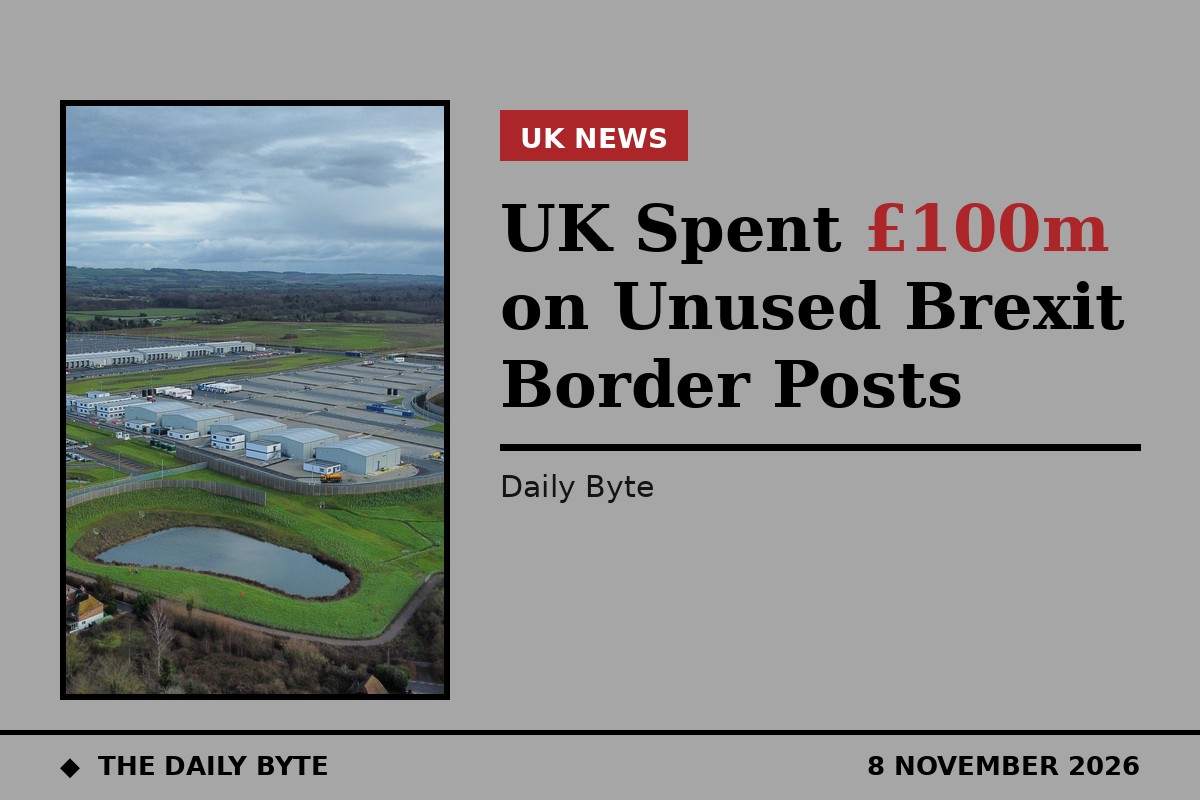
Seven inland border facilities were built in England and Wales to carry out checks on goods arriving from the continent. Five of the seven never reached the operational stage after the previous Conservative government decided not to implement all the planned border checks, concluding that food arriving from the EU would be of the same standard as before Brexit.
The most striking example is the site known as Dover White Cliffs, near the village of Guston in Kent. The Department for Transport paid £21 million to buy the land and spent a further £7 million on initial ground works, including an archaeological survey for Roman remains, yet the site remains a field. HMRC also revealed that operational costs for the border programme have reached £179 million.
Elsewhere, Portsmouth International Port spent £23 million building a border control post designed to handle around 80 trailer checks a day. It now averages about two checks a day. The port received £17.1 million in government funding, leaving the council-owned port to cover a £6 million shortfall. Capital costs for the Sevington inland border facility in Kent ran to £154 million.
The National Audit Office has estimated that the taxpayer has spent about £4.7 billion on 13 border-related programmes since 2019, The Times reports. Much of that spending is now set to be redundant: the government is due to agree a sanitary and phytosanitary deal with the EU at a summit on 20 November that would remove most food and agricultural checks across the Channel and the Irish Sea.