UK 30-Year Gilt Auction Tests Yields Near 1998 Highs
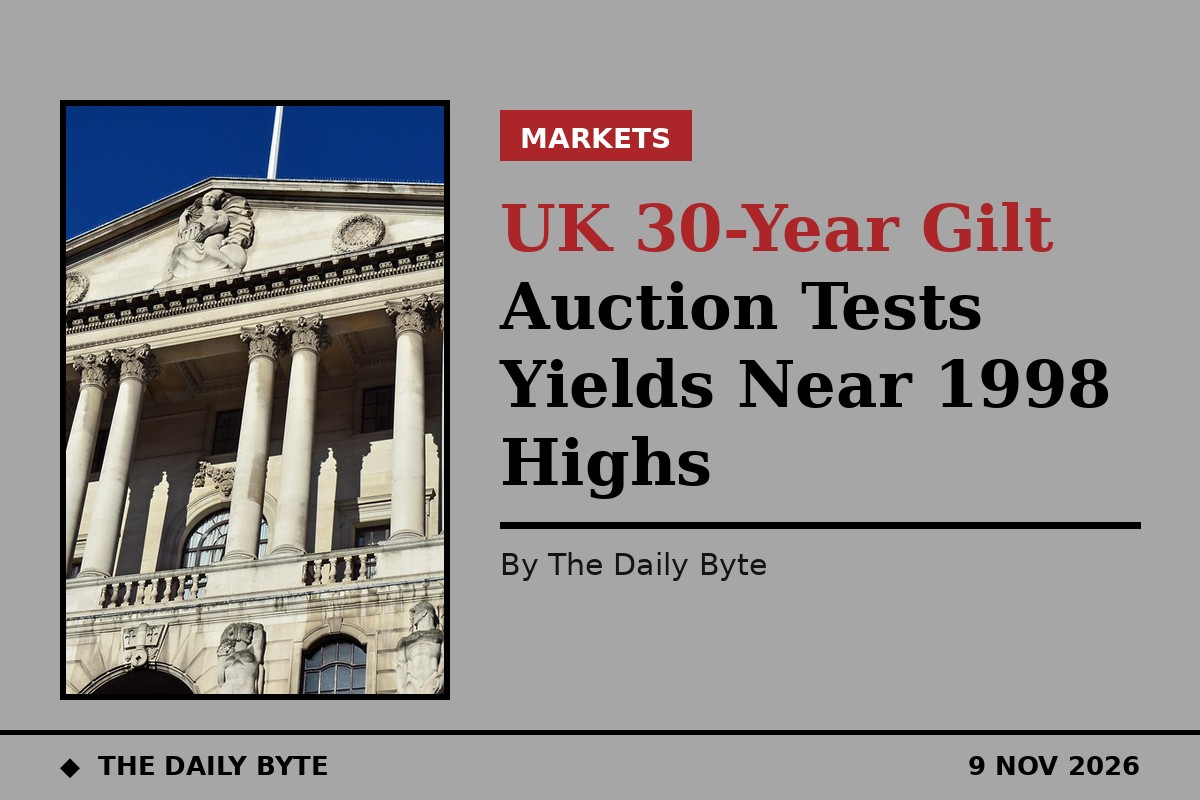
Britain will test investor appetite for its longest-dated debt on Tuesday, when the UK sells 30-year government bonds at 10.30am with the yield on that maturity at 5.89 per cent — its highest level since 1998.
UK gilt yields have risen materially through 2026, with several benchmarks reaching their highest levels since the late 1990s, according to J.P. Morgan Private Bank. The yield on the 10-year gilt has risen to around 5.25 per cent, while the 30-year yield's climb to 5.89 per cent marks the highest since 1998.
The immediate trigger is largely global. Higher oil prices and renewed inflation fears, driven by the conflict in the Middle East, have pushed up government borrowing costs around the world, while central banks have shifted from an anticipated easing cycle towards monetary tightening. At the same time, considerable borrowing needs from governments and companies — including spending linked to artificial intelligence — have increased bond supply, and economic growth has proved more resilient than expected.
The backdrop in Britain has sharpened since the Bank of England raised interest rates on Thursday. The Monetary Policy Committee voted eight to one to lift Bank Rate by a quarter point to 4 per cent, the first rise of this cycle, with Catherine Mann favouring a half-point increase. The Bank expects UK inflation, which reached 3.5 per cent in September, to rise towards 5 per cent by the middle of next year.
Markets are pricing in more than four additional rate rises from here, a degree of tightening that J.P. Morgan believes is excessive. The bank still expects the Bank of England to follow other major central banks and tighten policy further over the coming quarter, but it argues that much of the repricing in yields may already be behind us — the upward trend has begun to stall.
Importantly, J.P. Morgan sees limited evidence of a significant UK-specific fiscal risk premium being priced into gilts. The government has so far succeeded in maintaining market confidence, delivering what the bank describes as a restrained, "do-no-harm" Autumn Budget that upheld fiscal rules and left headline tax rates unchanged, funding modest spending commitments through more targeted revenue measures. Sterling has also found support in the UK's yield advantage and in the emphasis on fiscal restraint.
Tuesday's auction will show how much demand there is for long-dated UK debt at these yields. It lands on a busy day for markets: United States consumer price inflation for October is released the same afternoon, the week's biggest data point, and two Bank of England policymakers speak — Deputy Governor Clare Lombardelli at lunchtime and Chief Economist Huw Pill in the evening. Governor Bailey speaks on Monday evening, his first scheduled remarks since the rate rise.
J.P. Morgan's own view is that the five-year segment of the gilt curve looks particularly attractive at current yields, and that the recent sell-off has created new opportunities for investors prepared to hold government debt. But the auction result, the inflation figures and the Bank's speakers will all shape where yields go next. The Bank's next rate decision is on 17 December, and with inflation forecast to keep rising, the market's expectation of further increases will be tested well before then.