UK Announces £5m Extra Gaza Winter Aid
Britain will give UNICEF a further £5 million to help Gaza through the winter, Middle East minister Stephen Doughty announced in a statement to the House of Commons on Thursday.
The money, released from the UK's bilateral budget, is focused on the winter response, including the impact of flooding over the weekend. It comes on top of £14 million already provided to UNICEF this year for nutrition, child protection, health, water and sanitation and winter preparation.
Mr Doughty told MPs the support aims to provide winter clothing for 100,000 children, tarpaulins for 62,500 people, family tents for 1,250 households and blankets for 150,000 people.
Floods wreck thousands of shelters
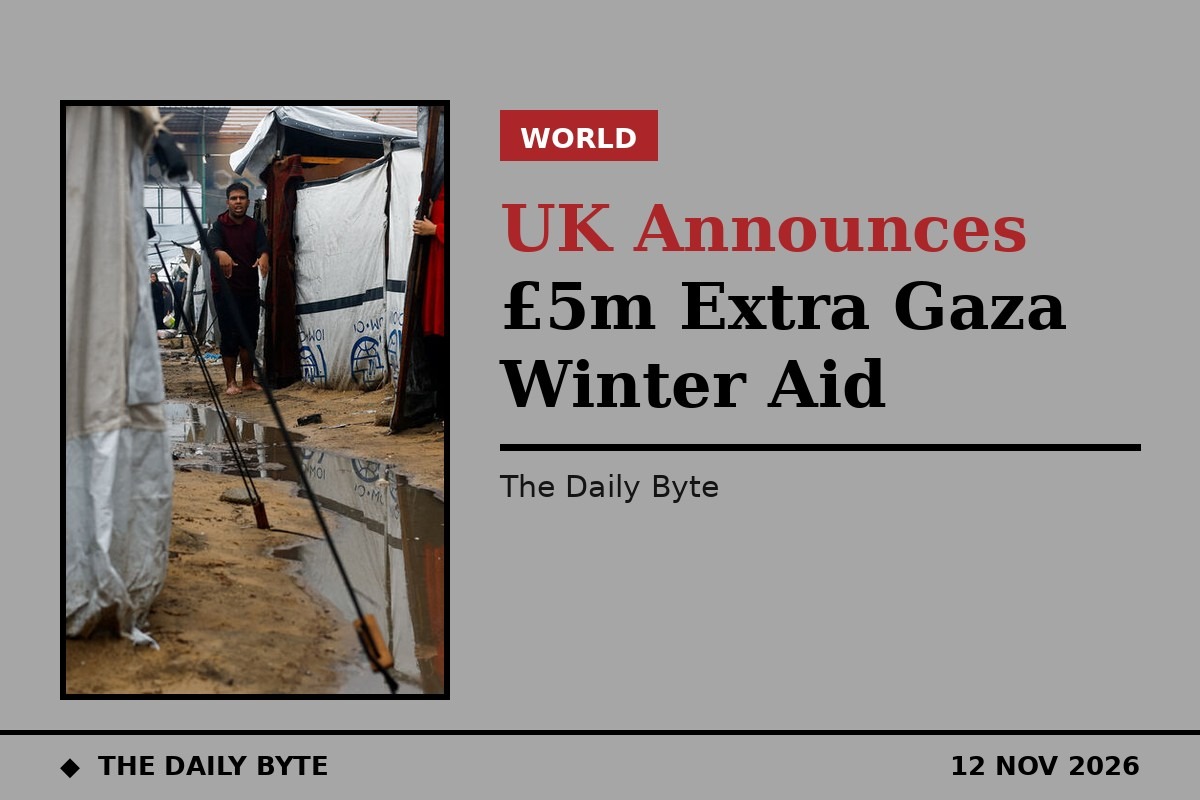
Gaza is entering its fourth winter of conflict, and heavy rain and strong winds last weekend made what Mr Doughty called an already intolerable humanitarian situation even worse. Flooding damaged displacement sites, tents, buildings, hospitals and schools.
According to humanitarian partners on the ground, more than 152,000 people have been affected, with over 6,000 shelters destroyed, 17,400 damaged and nearly 4,000 households left without shelter. Three children and their mother were killed when a sand embankment collapsed on their tents.
Civilian deaths continue, with more than 1,600 people killed since the ceasefire alone, and Gazans confined to around 30 per cent of the territory, the minister told the Commons.
Aid waiting outside Gaza
Mr Doughty said the problem was not whether the international community could provide help, but whether that help could reach the people who need it. According to the UN, more than 150,000 tents and 300,000 tarpaulins bought by humanitarian partners and donors are sitting outside Gaza ready to go in, yet the Israeli authorities have prevented them from entering. Timber is also blocked, leaving no emergency shelter kits available inside Gaza.
'This is shameful,' he told MPs, adding: 'Let the aid in.'
His immediate asks of the Government of Israel are to open crossing points, starting with Erez in northern Gaza, allow additional days for dual-use items to enter and reduce the list of those items so medicines, medical equipment and materials for tents and shelter can reach people, and allow access for journalists, diplomats and foreign ministers.
The flow of aid has been repeatedly disrupted in recent months. Commercial deliveries were temporarily suspended in September, and on 3 November the Israeli authorities closed the Egypt corridor for six days over allegations of smuggling, cutting off what Mr Doughty called an essential lifeline.
Britain's wider support
Through £88 million of humanitarian funding this financial year, the UK expects to provide healthcare for up to 900,000 people, safe water for 150,000 people and rehabilitation and prosthetic care for 1,000 children with blast injuries. Last month, the UN's pooled fund, to which the UK is a significant contributor, provided 45 million dollars for winter supplies.
Mr Doughty also updated MPs on Yemen, where Britain is providing £104 million in humanitarian support, including £10 million recently announced to the UN's emergency fund. More than 330,000 people have fled their homes in Yemen since August, with more than 1,000 civilian casualties.
On sanctions, he confirmed work is under way to prepare a new regime targeting illegal settlement activity, and said the UK has expanded its global human rights sanctions regime to cover serious violations of international humanitarian law, including obstructing the delivery of aid. He said Britain is prepared to use those expanded powers against those who continue to block aid into Gaza and other conflict zones.
Sources: GOV.UK; Security Signal.