UK and EU Agree Food, Youth Mobility and Emissions Deal
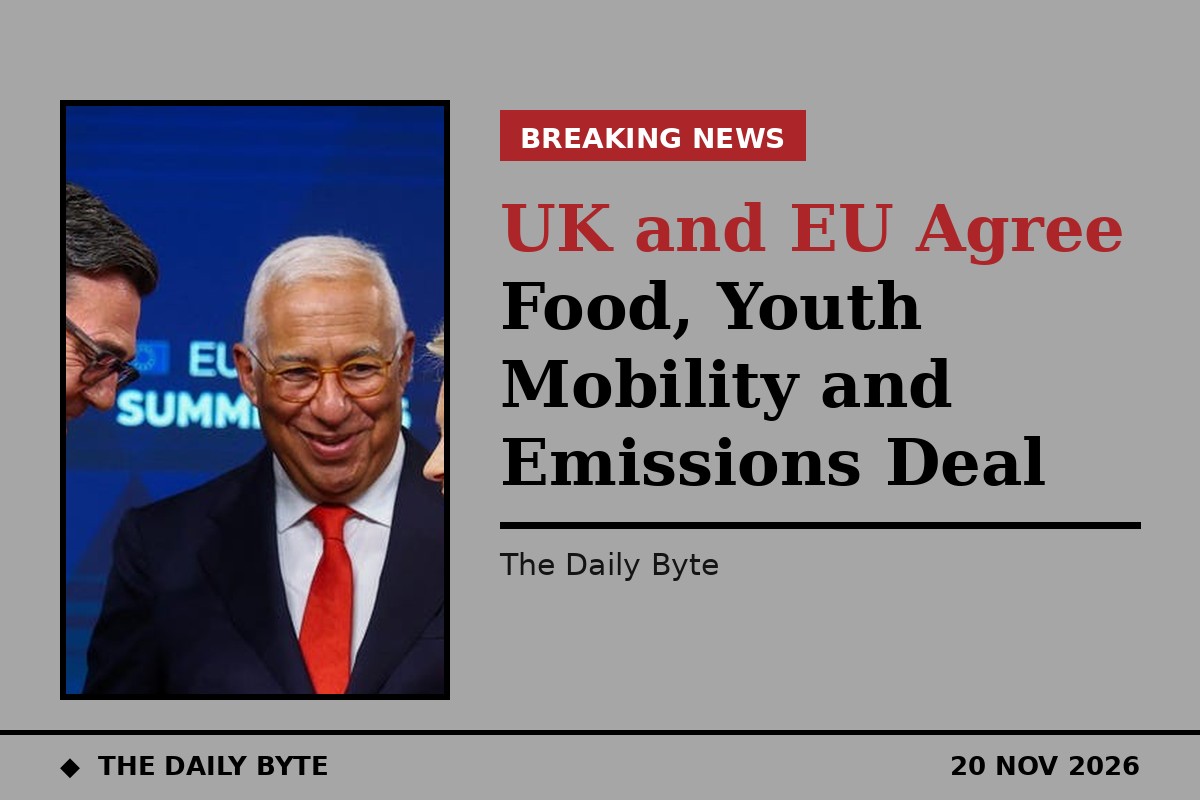
Britain and the European Union have agreed a package of deals at a summit in Brussels covering food trade, youth mobility and emissions trading, in the most significant reset of the relationship since Brexit. Prime Minister Andy Burnham met European Commission President Ursula von der Leyen and European Council President Antonio Costa on Friday to confirm the agreements, which the two sides described in a joint statement as an ambitious step forward.
Mr Burnham said it was a “good day for Britain and a good day for Europe”, and that the deal would “draw a line on a decade of drift and division by reconnecting with old friends”. He said Treasury analysis suggested the package could add up to £17 billion a year to the British economy by 2040, helping with “the cost of the weekly shop”.
Food checks to end from March 2028
The most significant agreement economically covers food and agricultural trade. Most post-Brexit checks and restrictions on animals, plants and related products such as sausages, cheese, apples and seeds will be removed under a sanitary and phytosanitary deal, which is due to come into effect in March 2028. Britain has estimated the change could add up to £5.1 billion a year to its economy, and consumers on both sides could benefit from lower prices.
At present, cross-border shipments of animal or plant products from Britain to the European Union require health export certificates, which typically cost £150 to £250 per consignment, with some consignments subject to physical checks at the border. UK food, drink and feed exports to the European Union fell by 26 per cent in value terms from 2019 to 2025, according to a House of Lords paper. Under the deal, Britain would need to align with EU food and plant safety rules, an arrangement Brexit supporters oppose.
Youth scheme for 100,000 a year
The two sides will allow each other’s young people, initially aged 18 to 31, to live and work or study for up to three years, with 100,000 places available each year on each side. Britain, mindful that immigration was a factor behind the Brexit vote, had proposed a limit of 50,000, but the two sides finally settled on 100,000. The joint statement sets a target of January 2030 for the youth opportunities to be available, and the scheme is hoped to be rolled out by 2028.
One issue remains unresolved. EU countries want their students to be eligible for “home fees” at British universities, rather than the international rate, which is typically some three times higher. Britain prefers to offer “significantly reduced” fees. The Russell Group, representing 24 research-intensive British universities, says granting home tuition fee status to EU students would cost UK universities £570 million. The joint summit statement says Britain and the EU will resolve the issue within six months. Mr Burnham said there was “no confusion” over the status of the deal, adding: “There are firm dates for the implementation of the changes to the different policy areas in the deal.”
Emissions trading linked from 2028
A further agreement will link the emissions trading systems of Britain and the European Union from 2028, so that British and EU goods such as steel will be exempt from each other’s carbon border levies. Joining the two carbon markets would mean a carbon allowance from either can be used for compliance in either market. Britain says the arrangement could add up to £3.8 billion a year to the UK economy and exempt some £6.5 billion of exports from critical industries like steel and aluminium from paying the EU’s carbon tax.
The deal also includes a new structured dialogue on migration and closer work on the Channel action plan to combat the people trafficking operations behind the small boats crisis, and work will continue towards the UK’s participation in the EU’s electricity market. Mr Burnham suggested the package was “probably the limit” of what could be achieved before the next general election, and he has committed to abide by Labour’s manifesto red lines ruling out a return to the single market, customs union or free movement. He has promised to set out options for the future UK-EU relationship, including the possibility of seeking to rejoin the bloc, as part of his 10-year plan in December, after an “informal brainstorming process” with the EU. Ms von der Leyen called the summit a “turning point”, while Mr Costa said the EU remained open to the closest possible relationship. Reform UK leader Nigel Farage told the BBC the Prime Minister had no democratic mandate for the changes, while Liberal Democrat leader Sir Ed Davey said Britain needed “a whole new deal that actually works for Britain, and fast”.