UK-EU deals at risk over tuition fees row
Britain and the European Union sealed deals on food trade, carbon markets and youth mobility at their Brussels summit on Friday 20 November 2026, but the whole package could be held up by an unresolved row over university tuition fees. EU member states have warned that the three deals will not go ahead until a fees agreement is reached, and talks have been given six months to settle it.
Prime Minister Andy Burnham met European Commission President Ursula von der Leyen and European Council President Antonio Costa at the summit, which had been postponed from July. The two sides concluded negotiations on a common sanitary and phytosanitary area for food, a link between the UK and EU emissions trading systems, and a youth experience scheme. The deals are due to apply from 2028, with the first young people able to benefit from youth mobility by 2030, according to a joint summit statement reported by Reuters.
What was agreed
The food deal removes most certificates and border checks for animals, plants and related products, such as sausages or seeds. The youth scheme will let young people from each side live and work in the other for three years, with Britain agreeing to 100,000 places a year for young Europeans aged 31 or under, after initially proposing 50,000. The government puts the combined gain from the three deals at up to £17 billion a year, equivalent to 0.5% of GDP, albeit over 14 years.
The fees sticking point
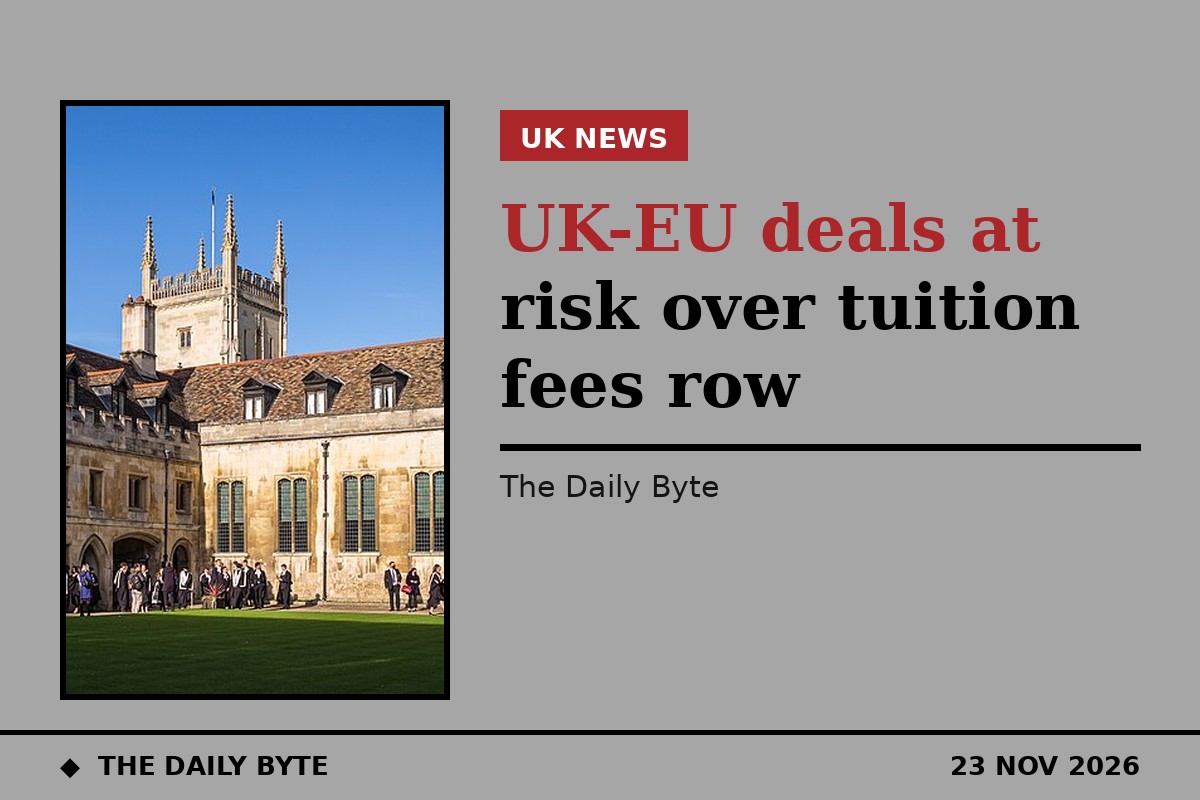
Tuition fees proved too difficult to settle at the summit. Brussels wants students from EU countries to pay the same for a British university education as home students, who now pay up to £9,790 a year. Before Brexit, EU students paid the same as home students. Britain has resisted, not least because matching home fees could cost around £450 million a year, according to The Times.
The row nearly derailed the summit. At a late-night meeting, several EU countries, including Italy and Spain, insisted on a statement making clear that unless Britain offered an acceptable deal on tuition fees, the agreements would not be implemented. The joint Council and Commission statement says the food deal, the carbon-market link and the youth scheme will not precede the conclusion of negotiations on a supplementing agreement providing for equal treatment on tuition fees.
What both sides say now
The UK government insists the three deals are done and are not contingent on a fees deal. British officials say the agreements have been concluded, the dates they come into force are set out in the joint statement, and talks will continue on the remaining areas. Von der Leyen said she was confident a solution on fees would be found, pointing to the two sides' track record of finding solutions.
EU officials take a different view. Times Higher Education reports that Brussels has told London it will not implement other aspects of the agreement unless the UK agrees to cut costs for EU students, and that the joint statement commits both sides to conclude the fees negotiations within six months of the summit. Until that negotiation lands, the reset remains agreed on paper but not yet secure.
Frequently asked questions
What did the Brussels summit agree? Deals on food trade, linking the UK and EU carbon markets, and a youth experience scheme, with the agreements due to apply from 2028.
Why are tuition fees holding things up? The EU wants its students to pay the same university fees as British students. The UK has resisted over the cost, and member states say the deals will not go ahead until a fees agreement is reached.
When must the fees issue be resolved? The joint statement commits both sides to conclude the tuition fees negotiations within six months of the 20 November summit.
Does this affect the youth scheme? The youth scheme, for 100,000 young Europeans a year, has been agreed in principle, but EU member states say it will not be implemented before the fees agreement, a position the UK government disputes.
Sources: Reuters; Times Higher Education.