UK to require economic benefits from major foreign defence contracts
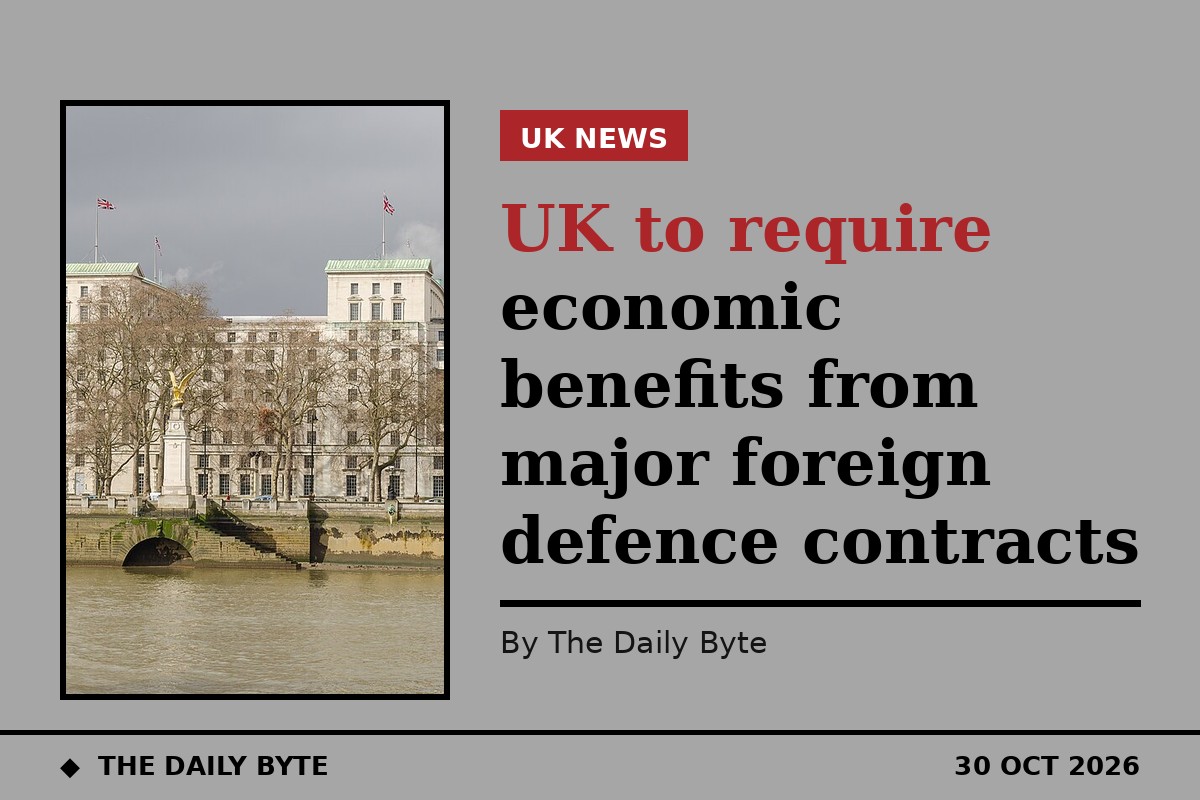
Britain will require overseas defence suppliers winning selected military contracts worth more than £50 million to deliver jobs, investment, skills or other economic benefits in the UK, under a new policy announced on Friday 30 October 2026, Reuters reported.
How the new rule will work
The policy will apply on a case-by-case basis from April 2027, with a new Offset Authority overseeing agreements and delivery, the government said. Contractors could be required to generate economic benefits in Britain worth up to the value of a contract — so a £100 million contract could result in up to £100 million of investment, jobs or skills programmes.
The government said more than £35 billion had been spent on defence contracts with overseas suppliers since 2016, representing about 11% of direct Ministry of Defence spending with industry. Britain sees higher defence spending as a way to strengthen both its military and its industrial base, Reuters reported.
What it means for suppliers and jobs
For foreign suppliers, the message is that winning a major UK contract will increasingly come with a domestic footprint attached: work, training or investment that stays in Britain rather than flowing entirely overseas. For UK workers and firms, the policy is designed to make sure that a larger share of defence spending supports British jobs and skills.
The test will be in delivery. Offsets can be valuable when they create lasting capability, but they can also become box-ticking exercises if the benefits are vague or hard to measure. The new Offset Authority's job — overseeing agreements and checking that promised benefits actually arrive — will therefore matter as much as the headline rule itself.
Sources: Reuters.