UK GDP Q3 forecast 0.7% as pound holds $1.3275 ahead of 12 November
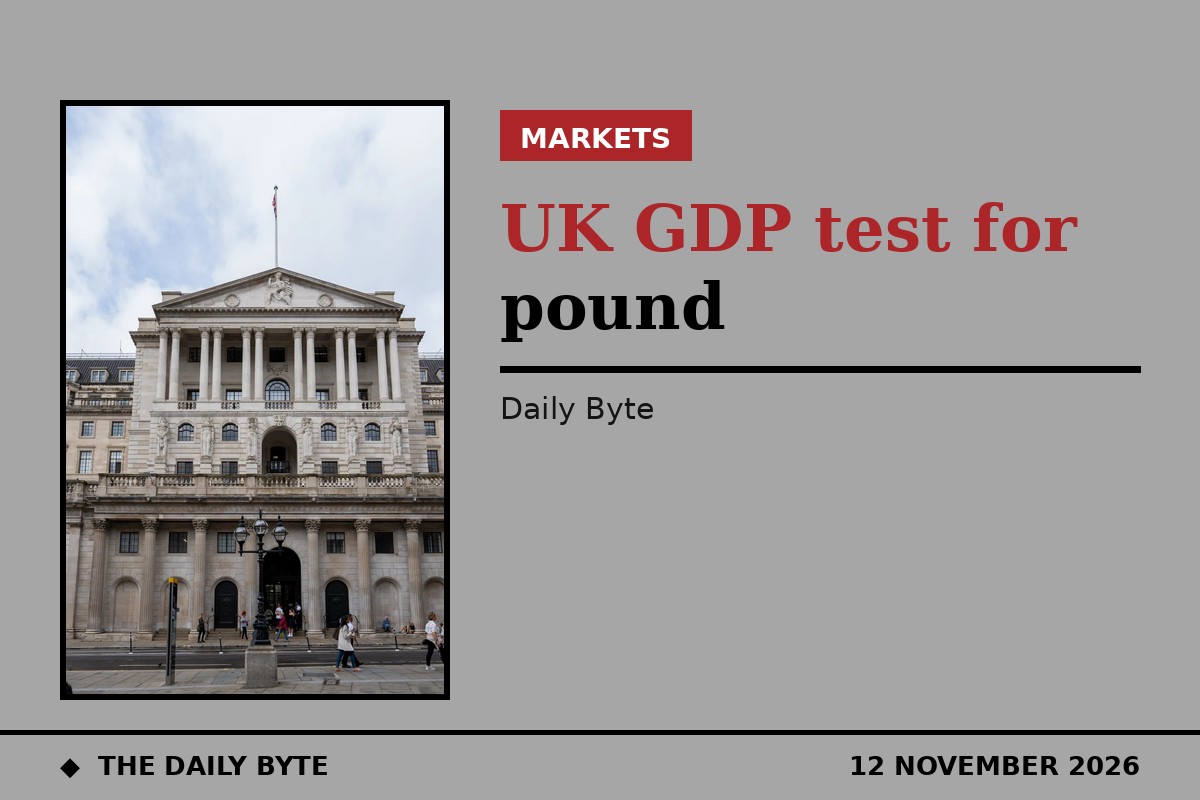
The UK economy is expected to have grown by 0.7% in the three months to September 2026, according to market forecasts, with the Office for National Statistics due to publish its first estimate for the third quarter at 07:00 GMT on Thursday, 12 November 2026.
The forecast, if confirmed, would be an acceleration from growth of 0.5% in the second quarter of 2026 and 0.6% in the first quarter. The annual growth rate is expected to pick up to 1.9%, from 1.4% in the previous quarter.
The release will also include the monthly estimate of gross domestic product for September 2026. Monthly GDP is expected to have been unchanged in September, after the economy grew by 0.1% in August, beating market expectations of a 0.1% contraction.
Pound steady above $1.3250
The pound held steady above $1.3250 in early Asian trading on Thursday, trading at about $1.3275 as traders waited for the GDP figures. Sterling has fallen for two consecutive trading days, dropping about 75 pips from $1.3350, and is approaching support around $1.3250.
The pound was quoted at $1.3284 late on Wednesday afternoon, down from $1.3323 at the same time on Tuesday, after stronger-than-expected US inflation data lifted the dollar. The US dollar index rose to 102.908, its highest level since April 2025.
Stronger UK growth figures could give the pound some support by reinforcing expectations that the Bank of England will keep interest rates restrictive. A weaker reading could add to pressure on sterling, which has struggled as US inflation and hawkish comments from Federal Reserve officials have encouraged investors to favour the dollar.
What the figures mean for interest rates
The GDP release is the main event on the UK economic calendar this week, and traders will read it for what it means for Bank of England policy. The figures put expectations for a further Bank of England rate rise in December in focus, with the strength of the economy a key test for policymakers.
Bank of England Deputy Governor Clare Lombardelli has highlighted persistent inflation risks linked to wage growth and labour market conditions. Bank of England policymaker Megan Greene also spoke on Wednesday about the outlook for interest rates.
Governor Andrew Bailey is due to speak in Zurich on Thursday, and Friday brings US producer inflation data and further Federal Reserve commentary, which could decide whether the dollar keeps its recent strength.
Growth so far in 2026
Growth in 2026 has been above expectations so far. The UK recorded the joint-fastest GDP growth in the G7 over the first half of the year, with growth of 0.6% in the first quarter and 0.5% in the second quarter, according to the House of Commons Library, citing Office for National Statistics figures.
The Office for Budget Responsibility forecast in March 2026 that the economy would grow by 1.1% in 2026 and 1.6% in 2027. A Treasury survey of independent forecasts in October 2026 showed an average forecast of 1.3% for 2026 and 1.2% for 2027.
The first quarterly estimate published on Thursday is based on incomplete data and is revised as more information becomes available, so the figures could change in later releases.
Sources: Office for National Statistics and FXStreet. The 0.7% figure is a market forecast, not the published result; the official figures are due at 07:00 GMT on 12 November 2026.