UK Jails Parents Who Keep Children Abroad Without Consent
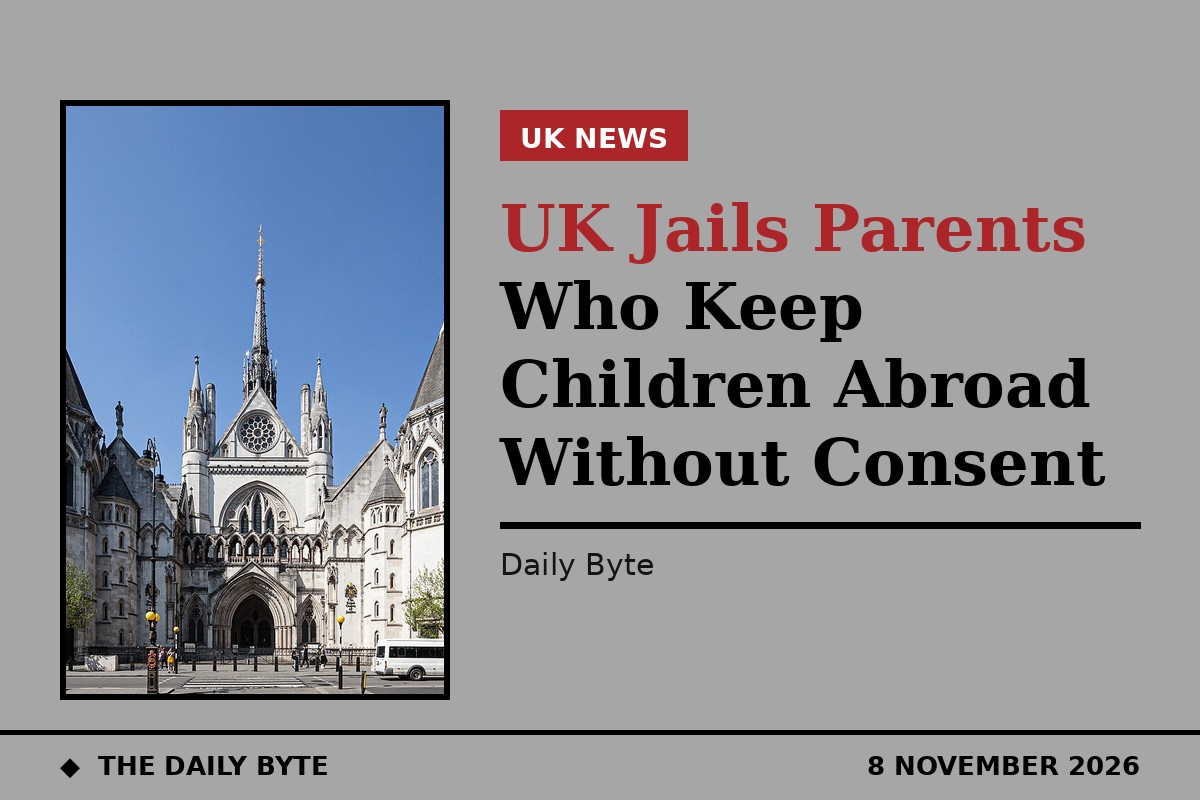
Parents who take a child abroad with permission but then refuse to bring them home can now face up to seven years in prison under a new offence that came into force in England and Wales on Friday 6 November 2026.
Section 137 of the Crime and Policing Act 2026 inserts a new subsection into the Child Abduction Act 1984. Under it, a person connected with a child under 16 commits an offence if the child is taken or sent out of the United Kingdom with the appropriate consent and is then detained outside the country without that consent. The full text is published on legislation.gov.uk.
The change closes a long-standing gap in the law. Until now, it was an offence to take a child abroad without consent, but not necessarily to keep them there beyond an agreed return date after a lawful departure. A 2012 High Court ruling in R (Nicolaou) v Redbridge Magistrates' Court exposed the loophole, and the Law Commission recommended reform in a 2014 report.
The Ministry of Justice, in a circular issued on 6 November, said the offence targets cases where a child is taken abroad with the necessary permission but is subsequently prevented from returning. There are limited exceptions: a person named in a child arrangements order as someone the child lives with may keep the child abroad for less than one month, and a special guardian for less than three months, without committing the offence.
The offence is not retrospective. It applies only where the child was taken or sent out of the UK on or after 6 November 2026. Prosecutions require the consent of the Director of Public Prosecutions, and the maximum penalty on conviction in the Crown Court is seven years' imprisonment. A matching provision covers Northern Ireland. Anyone affected by these rules should seek independent legal advice.