UK Military Satellite Titania Reaches Orbit to Watch Activity on Earth
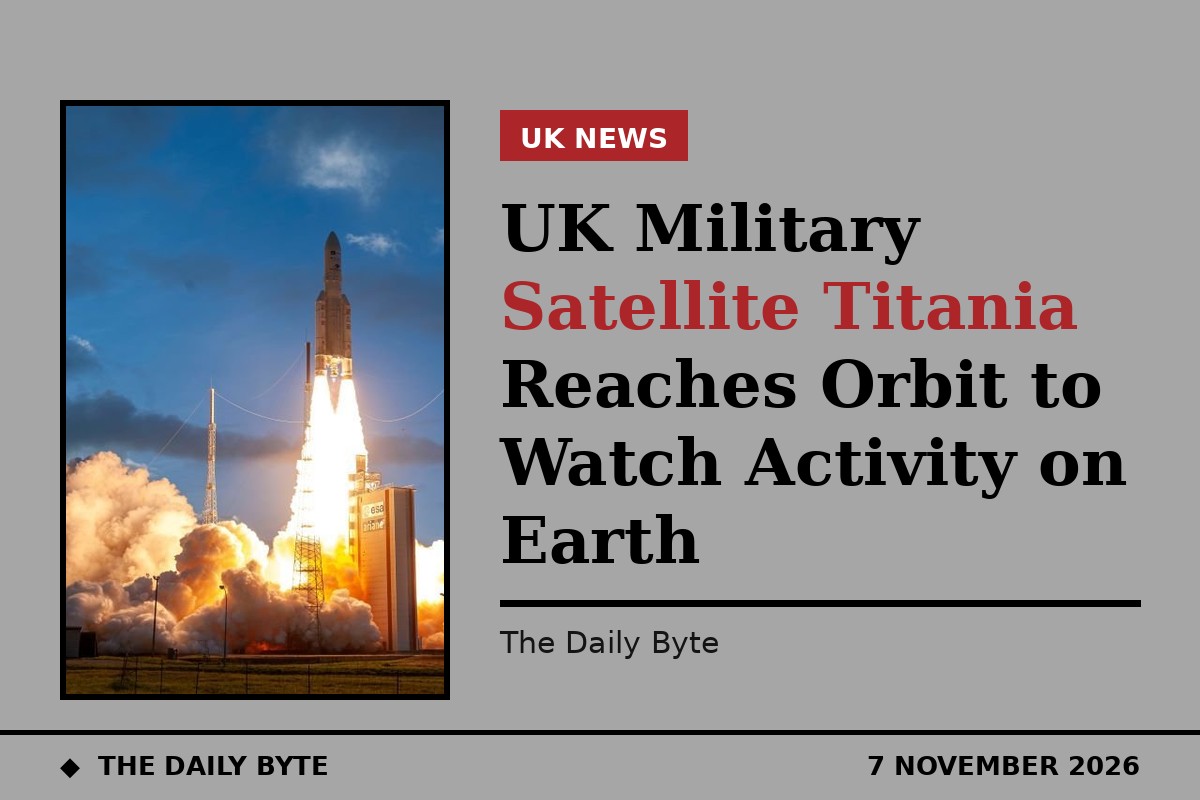
Britain has a second military observation satellite in orbit, the Ministry of Defence has confirmed, giving the Armed Forces a new pair of eyes in space.
The British-built satellite, named Titania, was launched last month aboard a reusable SpaceX Falcon 9 rocket from California. It weighs about 100 kilograms — roughly the size of a washing machine — and circles the Earth about every 90 minutes.
Titania is the second satellite in the UK's growing military constellation, following Tyche, and will be operated by UK Space Command under the ISTARI programme, which is building space-based intelligence, surveillance and reconnaissance for British forces.
Watching the watchers
The announcement comes as the Ministry of Defence stands up Project Inaros, a trial of advanced ground-based sensors designed to monitor movements in space and detect threats to UK satellites. Three sensors will be tested at sites in the UK, Australia and Cyprus.
The sensors, developed by British-Australian company Optera, detect changes in light and could help identify unusual activity near UK satellites. The Ministry of Defence says space underpins weather forecasts, financial transactions, satellite navigation and mobile phone connections, as well as national security.
Built in Hampshire
Titania was designed and built in Hampshire by the Defence Science and Technology Laboratory and BAE Systems under a £9.5 million contract. It will be followed by further satellites, Juno and Oberon, under the same programme.
Defence Secretary Wes Streeting said space was "critical for our national security and military operations". The satellites and sensor project are backed by more than £3 billion of defence investment in space over the next four years.