UK Petrol Stays Near 170p as Brent Crude Tumbles 20%
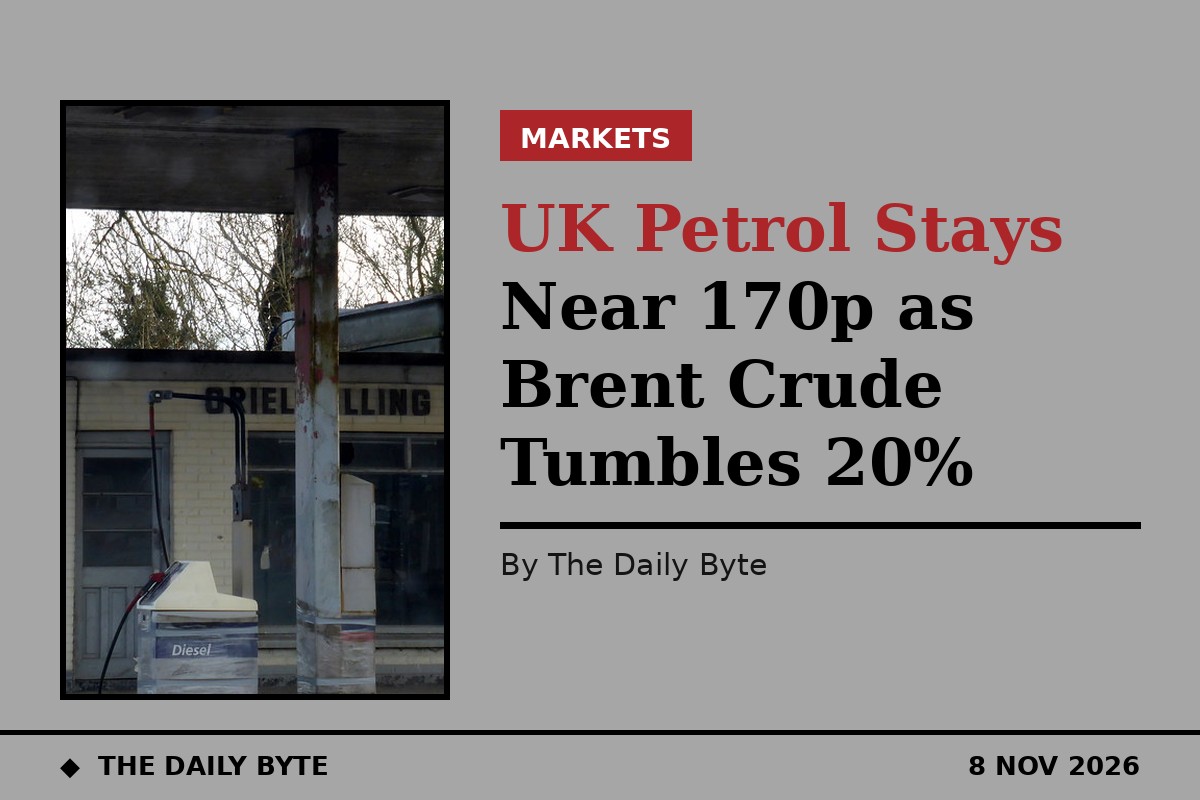
British drivers are still paying close to 170p a litre for petrol even though the price of Brent crude has fallen by almost a fifth in little more than a week, new figures show.
Brent crude closed at $117.64 a barrel on 30 October. By Wednesday 4 November it had fallen 8.7% in a single session to $94.62, dropping below $95 a barrel for the first time in two months. Prices recovered to around $99.58 on Friday morning, but the benchmark remains far below its recent highs.
At the pumps, the fall has barely registered. The national average price of unleaded petrol was 169.9p a litre on 8 November, down 2.0p on the week, according to data drawn from the Government's Fuel Finder scheme. Diesel averaged 198.9p a litre, unchanged on the week. Asda was the cheapest brand in Great Britain, at 166.7p for unleaded.
The gap is even clearer over a longer window. For the week ending 2 November, unleaded averaged 172.78p a litre and diesel 198.58p, according to the UK Fuel Price Index published by PetrolPrices.co.uk. By 6 November, petrol had eased only to around 170.6p and diesel to 198.3p. On the Government's weekly survey, petrol fell 1.3p in the week to 2 November, while crude oil had fallen 2.5p a litre over the previous four weeks and pump prices just 2.1p, or 1.8p before duty and VAT.
The crude slump was driven by politics rather than supply. The Democrats' victory in the US midterm elections, which saw them take control of Congress, led traders to reassess the chances of an end to the conflict between the US, Israel and Iran. Hopes of de-escalation cut the war premium that had been built into oil prices, and Gulf shipments have continued to flow.
There are real reasons why cheaper crude does not mean cheaper fuel overnight. Crude oil has to be refined, transported, blended and distributed before it reaches a forecourt, and wholesale petrol and diesel prices are shaped by refining capacity, demand and biofuel blending costs as well as the crude price. Refined fuel is traded internationally in US dollars, so a weaker pound can eat into any saving. The RAC says it typically takes around two weeks for changes in wholesale costs to work through the supply chain and reach forecourt prices.
Tax takes a large share too. UK motorists pay 57.95p a litre in fuel duty, with VAT charged at 20% on the final price, including the duty. That means a substantial part of every litre goes to the Treasury rather than covering the cost of the fuel itself.
Even so, campaigners say the pace of the fall is too slow. FairFuelUK has put fuel retailers on notice, calling on supermarkets, oil companies and independent forecourts to pass on lower wholesale costs as quickly as market conditions allow. Its founder, Howard Cox, said: "Oil has crashed. So the clock starts now." The group says it will monitor petrol and diesel prices over the next seven, 14, 21 and 28 days to see how quickly reductions reach forecourts, and it is renewing its calls for a PumpWatch system to give drivers greater transparency over the gap between oil prices, wholesale costs, retailer margins and pump prices.
For now, the test is simple. Brent has fallen by roughly a fifth; diesel is still within a penny of £2 a litre. If the usual two-week lag holds, the next fortnight should show whether forecourts pass the saving on, or whether the familiar pattern of prices rising like a rocket and falling like a feather repeats itself.