UK Universities Face Strike Wave Over Job Cuts
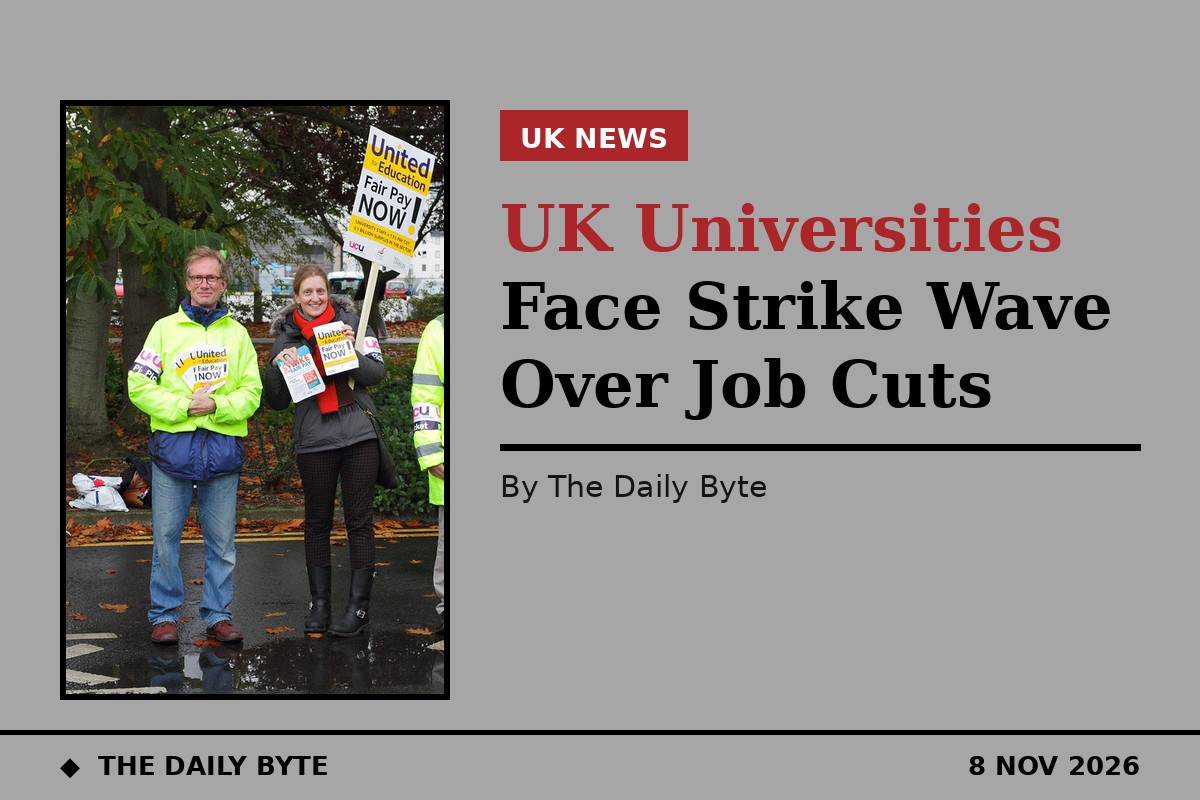
Universities across the UK are facing a wave of strike action over job cuts, course closures and restructuring, with walkouts under way at several institutions and a national day of action planned for 20 November.
At the University of Nottingham, staff have been on strike since 5 October in a ten-week walkout scheduled to run until 11 December. University bosses plan to cut hundreds of jobs and have already closed courses in music and modern languages to new students. Staff held a funeral march through the campus in late October to mourn the loss of staff and courses.
Nottingham UCU vice president Andreas Bieler said higher education in Britain was being sacrificed, adding that the university had accepted some of the union's proposals but was still closing down modern languages. He said more action would be needed for a full victory and that the union should explore a nationwide dispute, because the pressures were similar everywhere.
At the University of Glasgow, a University and College Union ballot on strike action closes on Tuesday 10 November. The union called the ballot after the university opened a voluntary severance scheme in August and confirmed plans for an organisational change project that the union says will involve cuts to staff numbers. Management has not said how many jobs it wants to cut and has not ruled out compulsory redundancies, according to the union. Academic promotions have also been cancelled for the current year.
Glasgow UCU branch president Duncan Lowther said the branch wanted to engage with management and resolve the dispute, but that the principal and his management team needed to rule out compulsory redundancies and give colleagues certainty about their futures. He said the university was in a financially strong position, with reserves among the highest in the country, and that the cuts were unnecessary.
The ballot follows a report by the Scottish Funding Council which found that nearly half of Scotland's universities are forecasting deficits in the coming years, after the government spent tens of millions of pounds bailing out the University of Dundee.
At the University of Lincoln, members have already voted in favour of strike action in their own dispute over job cuts. Some 85 per cent of participating UCU members backed strikes on a turnout of 60 per cent, while 88 per cent backed action short of a strike. It follows plans that originally put more than 140 staff at risk across humanities, engineering and physical sciences, social and political sciences, chemistry, geography, design and architecture and the Lincoln Business School, where 25 staff members have already left this year. The union said it was the fourth year of job losses in a row.
UCU general secretary Jo Grady said strike action was a last resort for staff, but that the yes vote showed Lincoln staff had had enough and were ready to fight to save jobs. A university spokesperson said the institution had no current plans to run a severance scheme or make redundancies, and that it would keep investing where student demand was strong.
Elsewhere, staff at the University of Edinburgh have completed five weeks of strike action, while workers at Goldsmiths in south London remain on indefinite strike. At the University of Dundee, UCU members called off the last day of their strike after bosses paused the compulsory redundancy process, and the branch is now set to meet management.
UCU has backed a day of action on 20 November in every university, the same day students have been called on to mobilise and protest. At the University of Aberdeen, a union representative dismissed after 27 years at the university has been reinstated, and the branch is still balloting over job cuts until 30 November.
The disputes share a common pattern: universities citing financial pressure and falling demand, and unions arguing that compulsory redundancies and department closures damage teaching, research and the student experience. With ballots closing, strikes continuing and a national day of action approaching, the sector faces one of its most disrupted autumns in years.