UN puts Iran war recovery at five years and $1.4 trillion
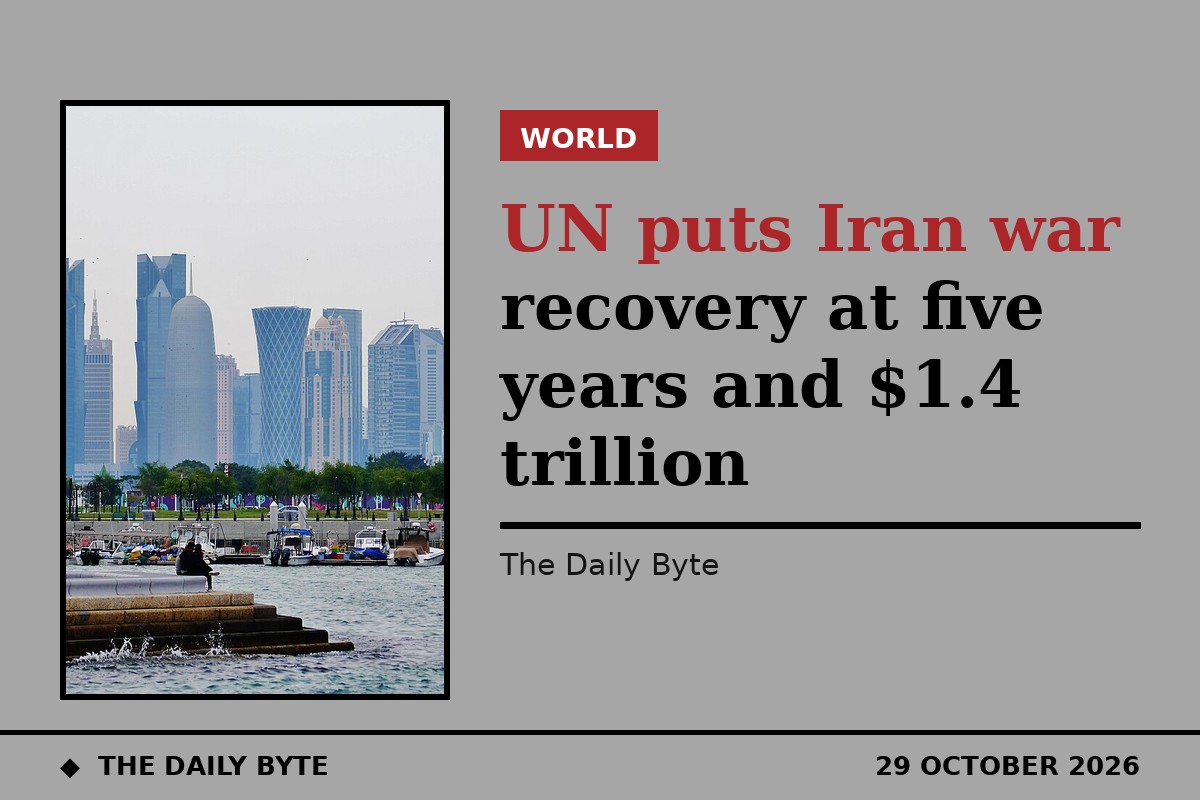
The United Nations estimates that the Arab region faces a minimum five-year economic recovery costing $1.4 trillion in reconstruction if the war in Iran ended today. The figure was given by Abdallah Al Dardari, the UN assistant secretary general, in an interview with The Wall Street Journal at the 2026 World Investment Forum in Doha this week. It is the starkest assessment yet of the war's economic damage beyond the battlefield, and it is a UN estimate as reported by the Journal, not an independently audited figure.
War exposed structural weaknesses
Al Dardari said the war had exposed the region's structural weaknesses: low productivity, low diversification and low innovation compared with the rest of the world. He argued that the Gulf states' rentier economic model, built on owning scarce assets and charging fees rather than creating new goods and services, had left them exposed. Gulf Arab states have sought to diversify away from oil and gas, but hundreds of billions of dollars were pumped into sectors such as real estate, which drove near-term growth while remaining inherently extractive in the long term, Al Dardari said.
Mediation continues as costs mount
The UN official said Arab economies must channel more investment into productive sectors, noting that the energy sector's contribution to overall productivity was limited. The estimate covers the wider Arab region rather than Iran alone, reflecting disrupted shipping, damaged energy infrastructure and shaken investor confidence across the Gulf. It also lands as mediation continues, while Washington is reported to be preparing further military options. The $1.4 trillion figure is an estimate of what recovery would cost, not money already spent, and it assumes the fighting stops now; every further month of war would be expected to push the bill higher.
Sources: The Wall Street Journal, Just Security (summarising the WSJ interview).