UN Renews Yemen Sanctions Until November 2027
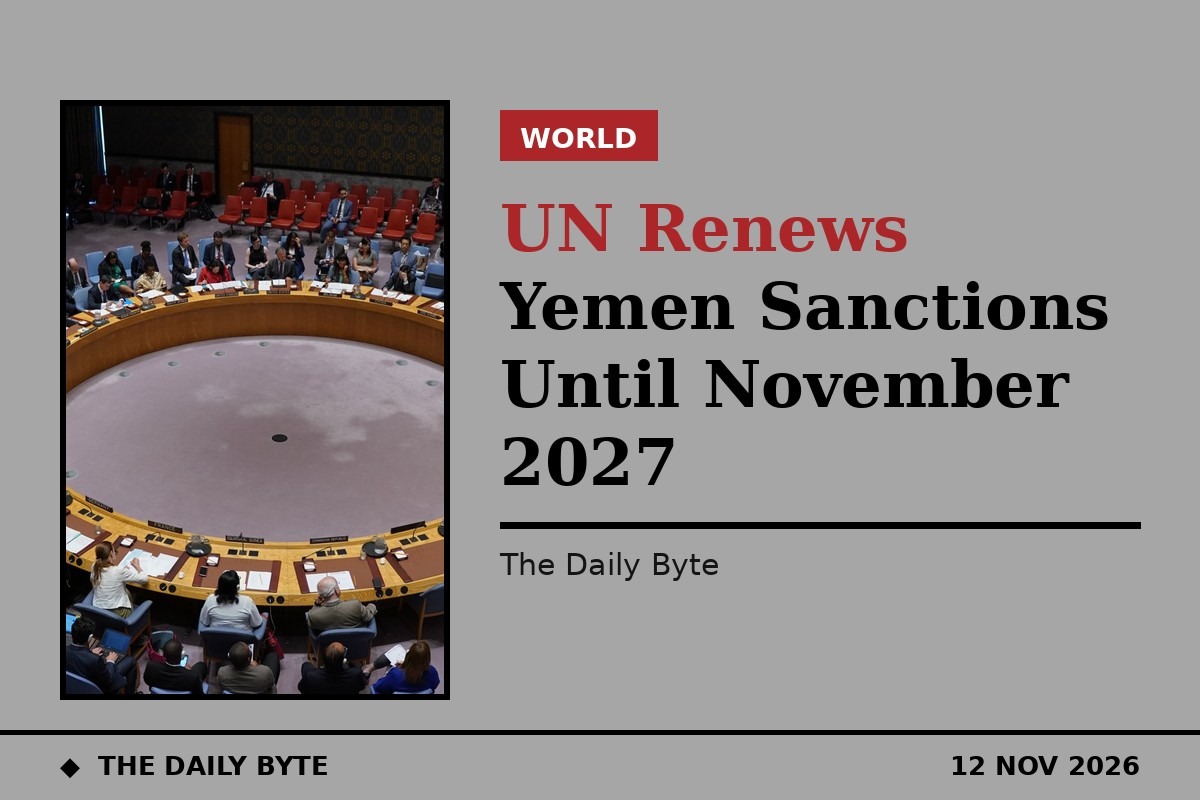
The United Nations Security Council has renewed its sanctions on Yemen until November 2027, adopting a British-drafted resolution by consensus on Thursday that tightens the arms embargo on the Houthi movement.
Resolution 2837 extends the targeted asset freezes and travel bans first imposed under Resolution 2140 in 2014, and renews the mandate of the Council's Panel of Experts on Yemen until 15 December 2027. It was adopted with no member voting against it, two days before the existing measures were due to expire on 14 November.
The resolution condemns the Houthis' military escalation, including missile and drone attacks on Saudi Arabia, strikes on Red Sea shipping and attacks on civilian infrastructure, and calls on the group to halt its offensive immediately and unconditionally.
What the renewed measures cover
The sanctions regime combines a travel ban and an asset freeze on designated individuals and entities with a targeted arms embargo on the Houthis that has been in place since 2015. The new resolution renews those measures and sharpens enforcement, directing member states to crack down on the smuggling of weapons and components by land and sea.
It also expands the UN monitoring panel to include maritime security experts, and affirms that arbitrarily detaining UN and humanitarian workers is grounds for sanctions.
The new focus on dual-use goods
The sharpest change in the resolution is its focus on dual-use goods: components and precursor chemicals with legitimate civilian uses that can also feed weapons production inside Yemen. The UK says the Houthis rely on such items to underpin their local missile and drone manufacturing.
The resolution itself does not name the items that will fall under the tighter controls. Britain says it will work with Council members in the coming months to agree a list of dual-use items to be subject to measures within the sanctions regime.
Why the Council acted now
Fighting in Yemen has intensified sharply since August. The World Health Organization reported at least 2,025 people killed or wounded in the country between 31 October and 8 November, including 163 deaths in the strategic northern city of Marib alone. More than 330,000 people have fled their homes since August, according to the UK government, with more than 1,000 civilian casualties.
Houthi attacks have also continued beyond Yemen's borders, with the group claiming strikes on Saudi targets including King Khalid International Airport in Riyadh and an oil pumping station at Yanbu, and on shipping in the Red Sea.
Britain's ambassador to the UN, Sarah MacIntosh, told the Council after the vote: 'Today's adoption by consensus demonstrates this Council's determination to take decisive action against reckless attacks by the Houthis in Yemen and against the Kingdom of Saudi Arabia and the broader region.'
The unanimous adoption marks a change from last year's renewal, when Resolution 2801 passed by 13 votes to none, with China and Russia abstaining.
What happens next
With the measures now extended for another year, attention turns to the dual-use list Britain has promised to negotiate with Council members, and to whether the tightened embargo can slow the flow of parts into Houthi weapons workshops.
The UK government has stressed that sanctions are not an end in themselves, and says it will continue to work with the Government of Yemen and humanitarian partners to protect civilians and return to a political process.
Sources: Yemen Monitor; CNN; UK Explanation of Vote at the UN Security Council.


