UNIFIL Prepares Lebanon Exit After 48 Years
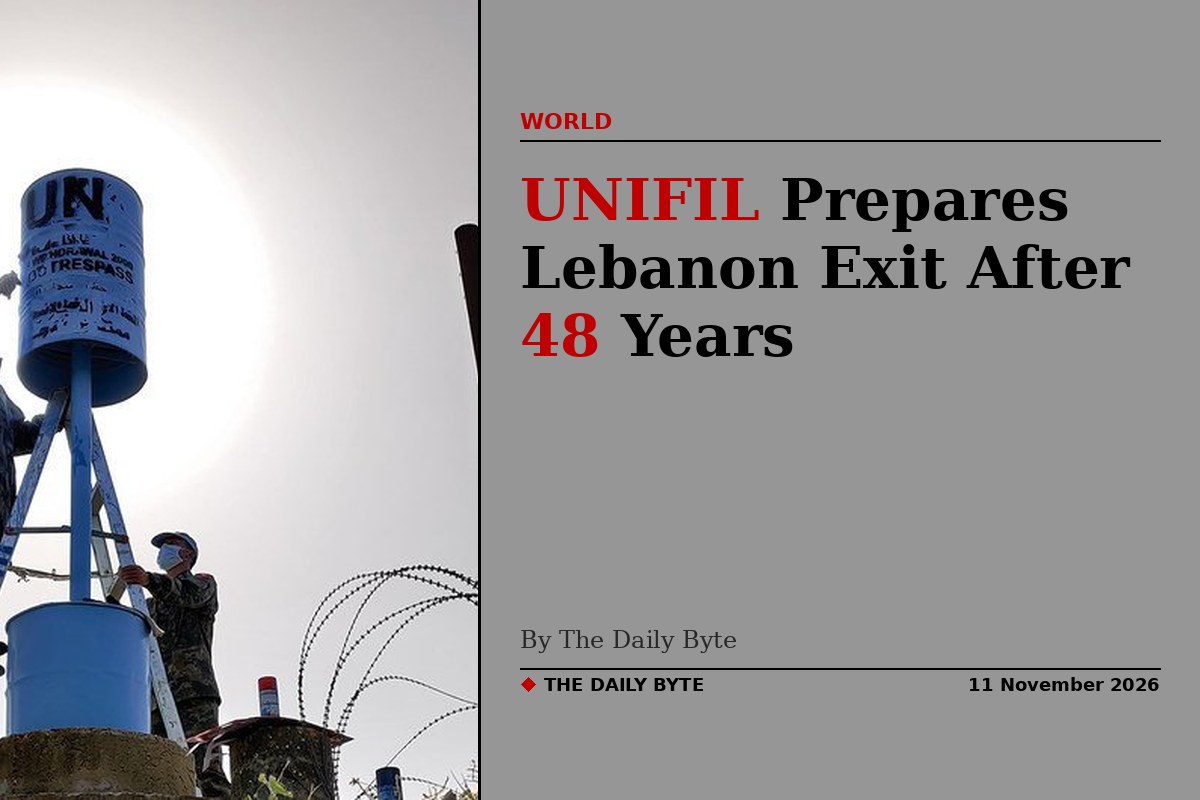
The United Nations peacekeeping force in southern Lebanon is preparing to leave the country after 48 years patrolling the Blue Line, the United Nations said on 11 November 2026, as the communities it has protected for decades face an uncertain future without it.
Speaking from the mission headquarters at Naqoura, UNIFIL spokesperson Kandice Ardiel told UN News that the force was getting ready for the end of its mandate on 31 December 2026, with preparations for withdrawal expected to begin in January 2027 and a gradual pull-out to follow during 2027.
“There’s a great deal of nervousness now that we’re leaving in a situation where southern Lebanon remains unstable because of ongoing military activity, the continuation of the conflict, and the uncertain future that people here are anticipating,” Ardiel said.
A mission created in 1978
UNIFIL, the United Nations Interim Force in Lebanon, was established by the UN Security Council on 19 March 1978, with its first peacekeepers arriving four days later. Its original tasks were to confirm the withdrawal of Israeli forces from Lebanon, restore international peace and security, and help the Lebanese government re-establish its authority in the south.
In August 2025, the Security Council voted unanimously not to renew the mission’s mandate beyond the end of 2026. Under Resolution 2790, the force is to cease operations on 31 December 2026 and withdraw its personnel over the following year, with most uniformed peacekeepers expected to have left by mid-2027. The force currently numbers around 7,500 troops from 45 countries, according to the House of Commons Library.
As it withdraws, UNIFIL positions are to be handed over to the Lebanese Armed Forces, although the mission’s head has warned that handing over some sites may prove very difficult, as around half of its sites are in Israeli-controlled territory.
Daily violations continue
Ardiel said daily violations by Israeli forces continue to be observed across southern Lebanon, including the construction of military positions and roads, military operations, demolitions, airstrikes and artillery fire. The force still monitors the frontier, reports breaches by all parties and supports the Lebanese Armed Forces in the area between the Blue Line and the Litani River.
The dangers facing the peacekeepers were underlined on Tuesday evening, when a routine patrol near Wadi Jilu in the Tyre district came under fire. The patrol returned fire, the shooting stopped and no injuries were reported. UNIFIL has called on the Lebanese government to investigate promptly. It did not say who carried out the shooting.
Despite the continuing tension, the UN said the number of internally displaced people who have returned home has risen by 13 per cent since September, to nearly one million. Around 304,500 people remain displaced outside their areas of origin.
What happens next
Ardiel said the Security Council was considering options for what might follow the mission, but nothing had yet been decided. “There’s a lot of talk and speculation about what might come next. We know the Security Council is considering options, but so far nothing has been decided. So that’s led to a lot of uncertainty. And people are, of course, concerned,” she said.
Foreign ministers of the G7 meeting in Paris on Tuesday agreed on the need to avoid a security void in Lebanon once the mandate expires, French Foreign Minister Jean-Noel Barrot said. The UN’s peacekeeping chief, Jean-Pierre Lacroix, warned the Security Council on 4 November that Lebanese and Israeli forces could be left facing each other with no third-party buffer, and urged it to give guidance on next steps.
Communities brace for change
Ardiel said the withdrawal would affect not only the mission’s personnel but also the communities of southern Lebanon, where the force has been part of local life for decades. Beyond its security role, UNIFIL provides jobs and contributes significantly to the local economy.
For staff members, the transition is expected to be particularly difficult. “This is especially true for our national staff, who are Lebanese, many of whom have lost homes or family members because of the ongoing conflict,” she said.
Many villages have suffered extensive damage, she added, with electricity networks, water systems and roads destroyed and in need of rebuilding, even as children return to school and farmers try to harvest their crops, particularly olives.
Ardiel stressed the importance of maintaining an international presence in southern Lebanon, saying impartial monitoring and international engagement had played a crucial role in the region over the years and would remain essential for Lebanon’s future stability. A smaller UN mission, the UN Truce Supervision Organization, will remain after UNIFIL’s withdrawal.
Sources: UN News and House of Commons Library.