United Airlines bans AI agents from booking flights
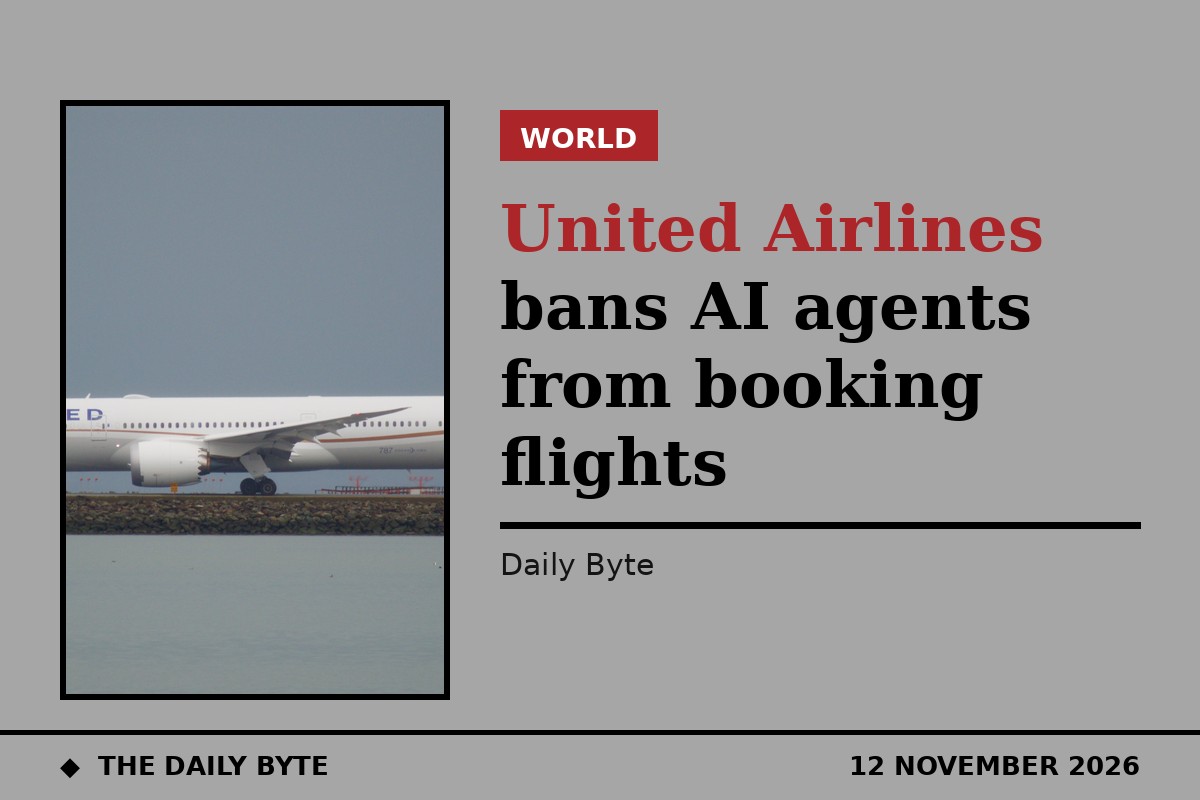
United Airlines has banned personal AI agents from booking its flights, becoming the first airline to draw a formal line against automated assistants handling passenger bookings. The Chicago-based carrier announced the change on 11 November 2026, saying unauthorised third-party AI assistants may no longer search for, book, buy or manage United trips.
The ban covers united.com and the United app, and it also reaches bookings made indirectly through travel agencies and aggregators. AI tools can still show United flight options and prices, but the purchase itself must be completed by the customer. United says the restriction lands just ahead of the holiday travel season, when booking volumes rise.
What the new rule says
United has written the restriction into its Contract of Carriage, which was revised on 11 November 2026. A new Rule 6.J.6 bars "the use of AI Agents to make, modify or service a Ticket, and/or to purchase any service or product." A companion change to Rule 5.H adds reservations made, modified or serviced by AI agents to the bookings the airline says it can cancel without notice. The definition is broad: it covers software or a service taking autonomous or semi-autonomous action, even when a passenger supervises or approves each step, and it covers assistants built into search engines, messaging apps and browsers, as well as standalone agents.
The scope goes beyond flights. The rule covers seats, upgrades, ancillary products and partner products sold through United. United says bookings that an AI agent made before 11 November 2026 will not be cancelled, but it recommends that travellers review recent plans to confirm they were ticketed correctly.
Why United says it acted
United gives three reasons. First, handing account credentials to a third-party AI assistant can expose sensitive information. Second, actions taken by such tools may result in unintended purchases, account changes or use of MileagePlus miles. Third, automated actions have the potential to break US Federal Aviation Administration and Department of Transportation rules. The airline gives check-in as an example: a passenger must personally acknowledge that bags do not contain banned items such as explosives, and an automated agent completing that step could create a compliance problem.
United also says it does not yet work with any third-party AI agents, but wants to build standardised, secure technology integrations with privacy, authorisation and accountability protections first. Travellers can still use AI tools to research and plan trips, as long as those tools do not touch United's website or app.
A wider fight over who controls the booking
The move comes as OpenAI, Meta and others build assistants that can handle increasingly complicated tasks on a user's behalf, including shopping and travel. United's decision frames the dispute as one about who owns the customer relationship and the customer data: the airline, or the assistant acting for the traveller. USA Today reported that United is the first airline to announce such a ban, while other industries have already taken similar steps against automated purchasing tools.
United says it sees very little booking activity from AI agents so far, which suggests the policy is as much about setting terms before the technology spreads as it is about stopping current abuse. Flights will remain bookable through established channels such as Kayak, Hopper and Google Flights, which display fares without completing the purchase through an AI agent. Other airlines have not yet announced matching policies, and the industry will be watching whether United's contract change becomes a template or stays an outlier.


