US Asks Iraq to Shut Most Iran Border Crossings
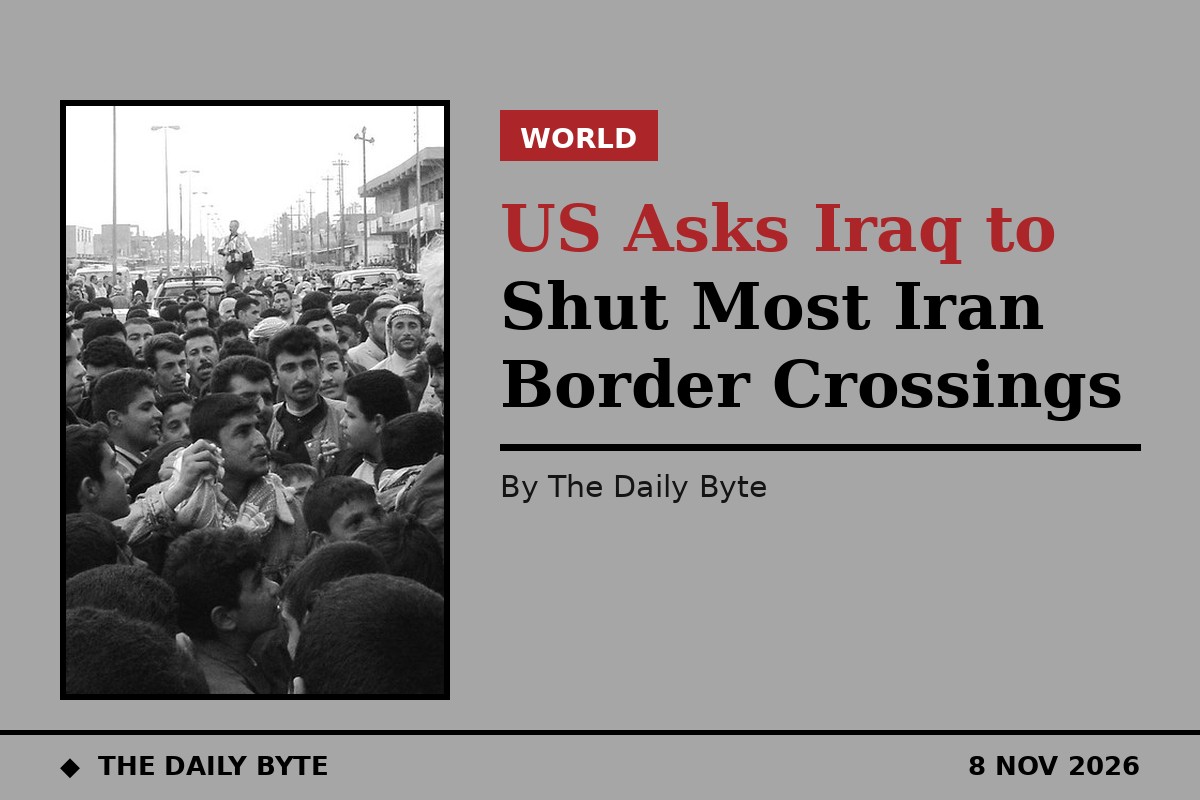
The United States Treasury has asked Iraq to close all of its border crossings with Iran except for two, as part of Washington's policy of increasing economic pressure on Tehran, Iraqi Foreign Minister Fuad Hussein has said.
Hussein disclosed the request in an interview with Al Jazeera, saying one of the two crossings that would be allowed to stay open is in Iraq's Kurdistan region. He made clear that Baghdad has not agreed to the demand and that talks with Washington are continuing.
"There are many official and unofficial border crossings with Iran, and closing all of them would be difficult and would affect our economy. The Americans are still demanding the closure of the crossings, and we are currently in discussions with them," Hussein said.
The request extends Washington's pressure campaign against Iran beyond the sea. Last month, Iraq closed the busy Sheeb border crossing with Iran to review security arrangements and install detection equipment aimed at stopping smuggling. That closure, on the border with Iran's Khuzestan province, has already disrupted trade and prompted protests in Iraq's southern Maysan province.
The border demand follows the announcement on Saturday by US Central Command of a new unit, Task Force Iron Gate, which is intended to disrupt the movement of advanced weapons, dual-use technology, sanctioned materials and illicit revenue across Iran's land borders and the Caspian Sea. The task force, based in Tampa, Florida, builds on the naval blockade the United States has enforced against Iran since the war began in late February.
For Iraq, the request presents a difficult balancing act. The country shares a long border with Iran and depends heavily on cross-border trade, including energy imports and goods that move through official and informal crossings alike. A sweeping closure would hit traders, transport workers and communities on both sides of the frontier, while also testing Baghdad's relations with Tehran, one of its most important neighbours.
Domestic opposition to the American demand is already surfacing. Iraq's Badr parliamentary bloc said on Sunday that it rejected the US demands to close the crossings with Iran, urging the Iraqi government to reopen them immediately and warning that the restrictions undermine national sovereignty and harm local livelihoods.
The dispute comes as diplomatic efforts to ease the confrontation continue. Qatar says it is still mediating between Washington and Tehran, and no agreement has been announced. US President Donald Trump told CNN on Sunday that fresh American strikes on Iran were "highly unlikely" if negotiations continued to advance, while Iranian Foreign Minister Abbas Araghchi said Tehran's proposal for reopening the Strait of Hormuz remained on the table.
For now, the crossings remain open while the discussions continue. But the American request, combined with the new task force and the naval blockade, shows Washington widening its economic squeeze on Iran to every route in and out of the country, and putting Iraq at the centre of that strategy.