US Deportation Flight Carrying Iranians Turns Back After Pakistan
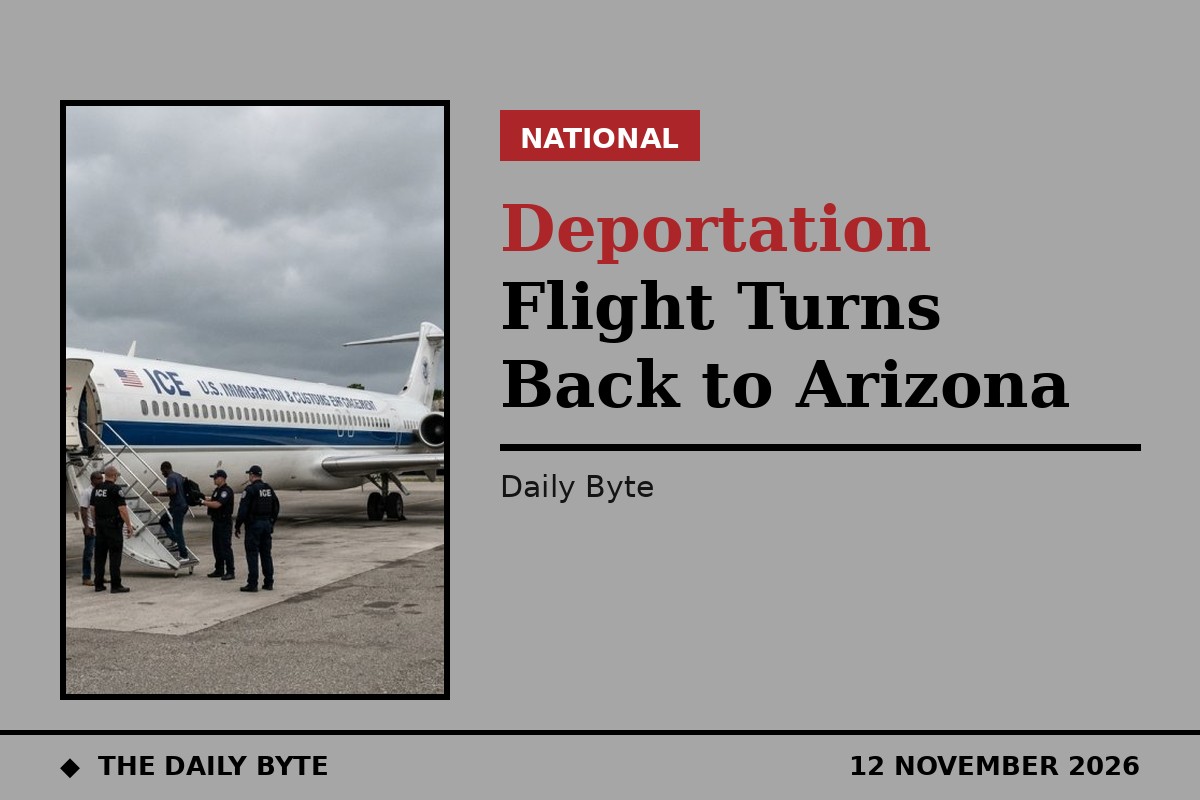
A United States deportation flight carrying at least nine Iranian nationals turned back to Arizona on Tuesday, 10 November 2026, after Pakistan reportedly refused to allow the detainees into the country, according to reporting by The New York Times.
The Immigration and Customs Enforcement (ICE) charter flight had departed from Mesa, Arizona, with the Iranians on board. The plan was for the group to be flown to Pakistan and then transferred onward to Iran. Instead, the aircraft changed course about 30 minutes after takeoff and returned to its original airport. The detainees were taken off the plane and returned to an immigration detention facility in Arizona.
What happened on Tuesday
The account of the aborted flight was reported by The New York Times, citing a United States official and a relative of one of the detainees. The Times reported that Pakistan had declined to accept the Iranian nationals for transit. Pakistan's Foreign Ministry spokesperson declined to comment on the reported operation.
The nine Iranians remain in immigration detention, and their cases have not been resolved. The return of the aircraft does not mean they have been released, and no revised deportation arrangements had been publicly confirmed by Wednesday.
A second failed attempt in days
The incident was the second time in recent days that a planned deportation of Iranian nationals from Arizona had been called off. On Sunday morning, at least eight Iranians were loaded onto a plane in Mesa for a deportation flight that was to travel through Georgia and then to Pakistan, according to Ali Rahnama, an attorney with the Iranian American Legal Defense Fund who filed emergency motions on behalf of some of the detainees.
That flight was cancelled abruptly without explanation, Rahnama told The Associated Press. The detainees on the Sunday flight had been visited by a senior official with the Iranian Interests Section, the Iranian representative office in the Pakistani Embassy in Washington, and had been told that the Iranian government would transport them from Pakistan to Iran.
The Department of Homeland Security has declined to discuss individual removal operations, including flight schedules, passenger lists and destinations, and did not confirm either operation.
The court case behind the flights
The flights are taking place against the background of a lawsuit brought by the Iranian American Legal Defense Fund, which was filed in July. The group alleges that the United States government unlawfully shared confidential information about Iranians seeking asylum with Iranian officials, and it has called for a halt to the removal flights.
United States District Judge Ana C. Reyes, who is overseeing the litigation, has ordered the government to give the court advance notice of any finalised plans to deport Iranians to Iran or to another country from which Iranian officials would arrange onward travel. A court filing by the group on Sunday argued that the administration may have breached that notice requirement.
The group has warned that deportation to Iran, where the United States is engaged in a war that began in February, could expose returnees to persecution, torture or death. At least one person who had been part of the scuttled Sunday flight volunteered to return after nearly two years in detention, Rahnama said, out of desperation to leave what he described as inhumane imprisonment.
Why Pakistan is the transit point
Deportations of Iranians from the United States have historically been rare, because Washington and Tehran have no diplomatic relations. The Trump administration has instead relied on so-called third-country deportations, sending migrants to countries other than their country of origin where direct removal is considered impracticable. Pakistan has been used as the intermediary country for Iranians, because the Iranian Interests Section operates from within the Pakistani Embassy in Washington.
Court documents have shown that the administration conducted at least three deportation flights to Iran between September 2025 and January 2026, removing more than 100 Iranian nationals. The two failed attempts this week suggest the route through Pakistan is now facing both legal and diplomatic obstacles, and it remains unclear whether the administration will try again, seek a different transit country, or pause the removals while the court case continues.