US heating bills to rise 7% this winter
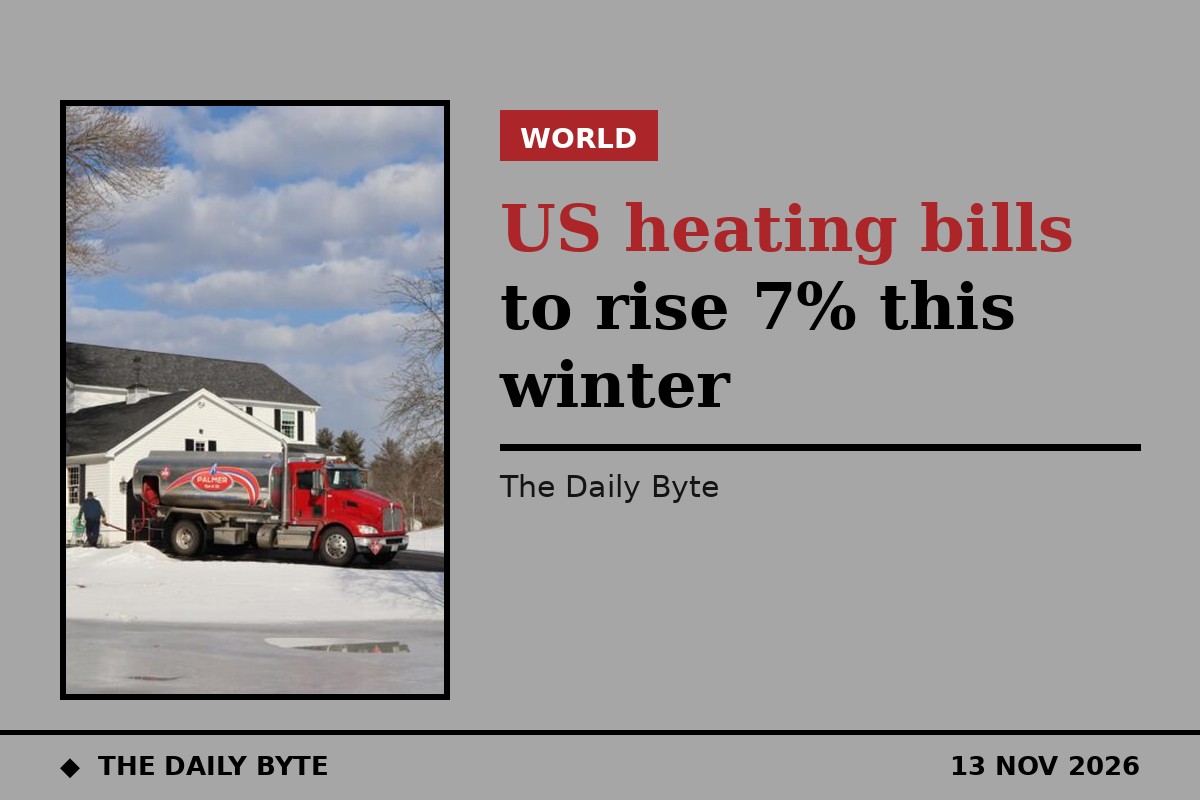
American households will pay an average of $1,002 to heat their homes this winter, up 7.1 percent on last winter, according to a forecast published on 11 November 2026 by the National Energy Assistance Directors Association (NEADA), which represents state officials who seek federal funding for energy assistance. The increase of $66 comes as families already face higher prices for food, housing and petrol.
Households that rely on heating oil face by far the steepest rise. Nearly five million households use the fuel, mostly in the north-east and Alaska, and their seasonal costs are projected to jump 70.2 percent, from $1,749 last winter to about $2,977 this winter, NEADA said. The north-east as a whole is expected to see average heating bills rise 16.9 percent, or $221, from $1,311 last winter to $1,532 this winter.
Why oil users face the sharpest rise
Heating oil is essentially the same distillate fuel as diesel, which is also used to make jet fuel. Refiners facing shortages have had to choose whether to produce jet fuel or heating oil, a choice that can worsen shortages further, according to Joe Adamski, managing director of the supply chain consultancy ProcureAbility.
NEADA links the pressure on heating oil to disruption stemming from the war with Iran, which has tightened global supplies. “Heating oil costs are a direct consequence of the Iran war,” Adamski told the New York Post. NEADA’s executive director, Mark Wolfe, said the situation in the Strait of Hormuz remained highly volatile, and that continued uncertainty about global oil supplies made it difficult to predict where prices would go.
There has been some relief at the pump. National average residential heating oil prices fell to $6.14 a gallon in the week ending 2 November, down from $6.23 a gallon, according to the US Energy Information Administration, although they were still roughly 69 percent higher than the same time last year. Petrol prices fell below $4 a gallon on 10 November for the first time since mid-July, according to AAA, after President Donald Trump signalled he was not planning to strike Iran soon and was continuing negotiations instead. Adamski also noted that experts were forecasting a milder start to winter because of a strong El Niño pushing the jet stream further south and east, which could limit heating demand.
Other fuels and the strain on households
Other households will also pay more, although by less. Electric heating costs are projected to rise about 6 percent to $1,215, while propane bills are expected to climb roughly 5 percent to an average of $1,350. Natural gas costs are expected to remain roughly the same as last winter, NEADA said.
Heating oil is used mainly in older homes built before 1990, which are largely concentrated in the north-east. About 59 percent of households in Maine rely on heating oil, along with 43 percent in New Hampshire, 40 percent in Vermont, 39 percent in Connecticut, 29 percent in Rhode Island, 24 percent in Massachusetts, 19 percent in New York and 16 percent in Pennsylvania, according to US Census Bureau data cited by the New York Post.
The higher bills land on households that are already struggling. About one in six US households are behind on their utility payments, owing about $23 billion in total, NEADA said. “For higher-income households, these increases may be an inconvenience. For low- and middle-income families, they can be devastating,” Wolfe said in a statement. “Families are already struggling with rising costs for food, housing and other necessities. Adding hundreds or even thousands of dollars to their winter heating bills will push many of them further into debt.”
More than a quarter of US families said they had reduced the heating and cooling in their homes to uncomfortably low levels to save money, and 19 percent said they had cut back on groceries or switched to less expensive food, according to a Consumer Reports survey from August. The warning follows a record-hot summer: in July, described in the NEADA report as the hottest month ever recorded in the United States, utilities disconnected power to 173,598 households across 10 states despite dangerous temperatures.
Calls for help before winter
NEADA is urging Congress to provide financial assistance before the higher winter bills arrive. “Energy is not a luxury. Families need to be able to heat their homes without worrying about whether they can afford food, medicine or rent,” Wolfe said. “Congress has an opportunity to provide immediate relief before these higher winter bills arrive.”
Wolfe urged states to plan on the assumption that prices would stay high. “For planning purposes, we believe it is prudent to assume that heating oil prices will remain elevated throughout the winter heating season,” he said. “We hope we’re wrong, but states need to prepare for the possibility that prices will stay high.”