Weakening EV sales rules risks UK climate targets
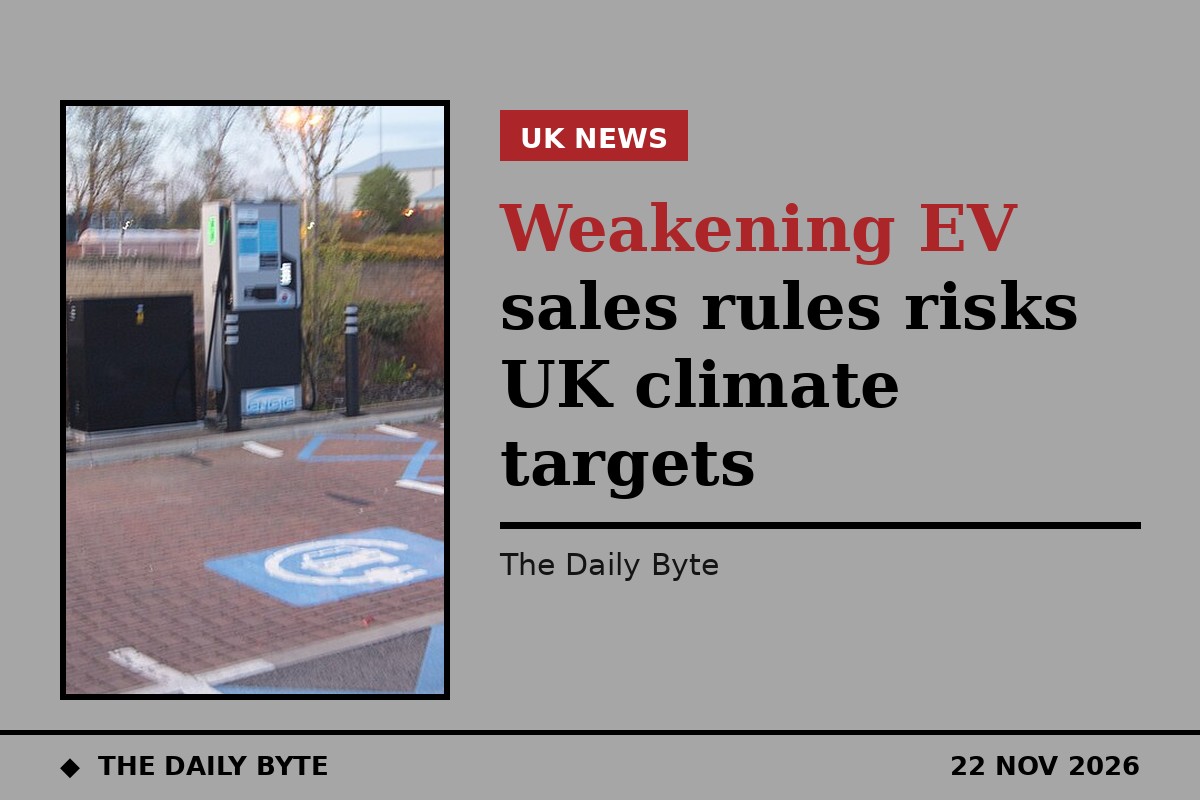
Weakening the UK's electric car sales rules would probably leave Britain missing its legally binding climate targets, the government's own climate advisers have warned. The Climate Change Committee (CCC) said in a letter published on Wednesday 18 November 2026 that cutting the Zero Emission Vehicle (ZEV) mandate would also add more than £1 billion a year to the country's fuel bill and cost drivers money.
The warning, sent by CCC chair Nigel Topping to Transport Secretary Heidi Alexander, comes as ministers consider easing the mandate after a consultation that closed last month. Reports have suggested the 2030 target for electric cars could be cut from 80% of new sales to around 60%.
What the advisers warned
The CCC said the UK is likely to miss the legal climate targets set by Parliament if the government weakens the mandate. Electric vehicles provide the single biggest share of emissions cuts in the government's Carbon Budget and Growth Delivery Plan through to 2037, and the committee said watering down the rules would make hitting the Sixth Carbon Budget, covering 2033 to 2037, significantly harder and costlier.
Weakening the targets could add an extra 8.4 million tonnes of carbon dioxide pollution a year by the next decade, according to the committee's analysis. The government would then have to find other major emissions cuts of the same scale, or amend the carbon budgets to allow more pollution.
The mandate also underpins the separate carbon budgets set by the Scottish and Welsh governments and the Northern Ireland Executive, so a change in England would have effects across the UK.
The cost for drivers and fuel bills
Using the government's own impact assessment, the CCC said cutting headline ZEV targets would increase UK fuel consumption by 15 million barrels of oil a year by 2030, forcing the country to buy over £1 billion worth of additional oil on international markets every year at current prices.
Switching to electric cars would also protect households from volatile energy prices. The committee said a typical driver would save around £800 a year by going electric, a saving that would be lost if the transition slows.
Electric cars made up 26.6% of UK new car sales during the first 10 months of 2026, well below the 33% headline target for this year. Carmakers must sell a bigger proportion of electric cars each year under the mandate or face fines of £12,000 per vehicle, although flexibilities in the rules allow them to use carbon dioxide credits to meet their obligations.
What the car industry and the government say
The car industry has lobbied for months to cut the headline targets, arguing that the mandate is putting manufacturers under too much financial pressure. Mike Hawes, chief executive of the Society of Motor Manufacturers and Traders, said the CCC ignored the damaging cost of the targets, including billions in unsustainable discounts and millions more in government incentives.
A government spokesperson said Britain remained committed to its climate targets, the phase-out of new petrol and diesel cars by 2030, and a requirement that all new car and van sales be zero-emission by 2035. No final decision on the mandate has been announced.
The warning was reported by Reuters, and the Climate Change Committee's letter to the Transport Secretary sets out the oil, cost and carbon budget figures in full.
Frequently asked questions
What is the ZEV mandate? The Zero Emission Vehicle mandate, introduced into law on 3 January 2024, sets annual electric vehicle sales targets for manufacturers, rising from 33% of new car sales in 2026 to 80% by 2030 and 100% by 2035.
What change is the government considering? A consultation explored cutting the 2030 target to 50%, 60% or 70%. Reports suggest ministers are considering a target of around 60%, but no decision has been announced.
How much would weakening the mandate cost? The Climate Change Committee says it would add 15 million barrels of oil consumption a year by 2030, costing over £1 billion a year, and cost a typical driver around £800 a year in lost savings.