Welsh NHS gets 500m boost in Plaid first budget
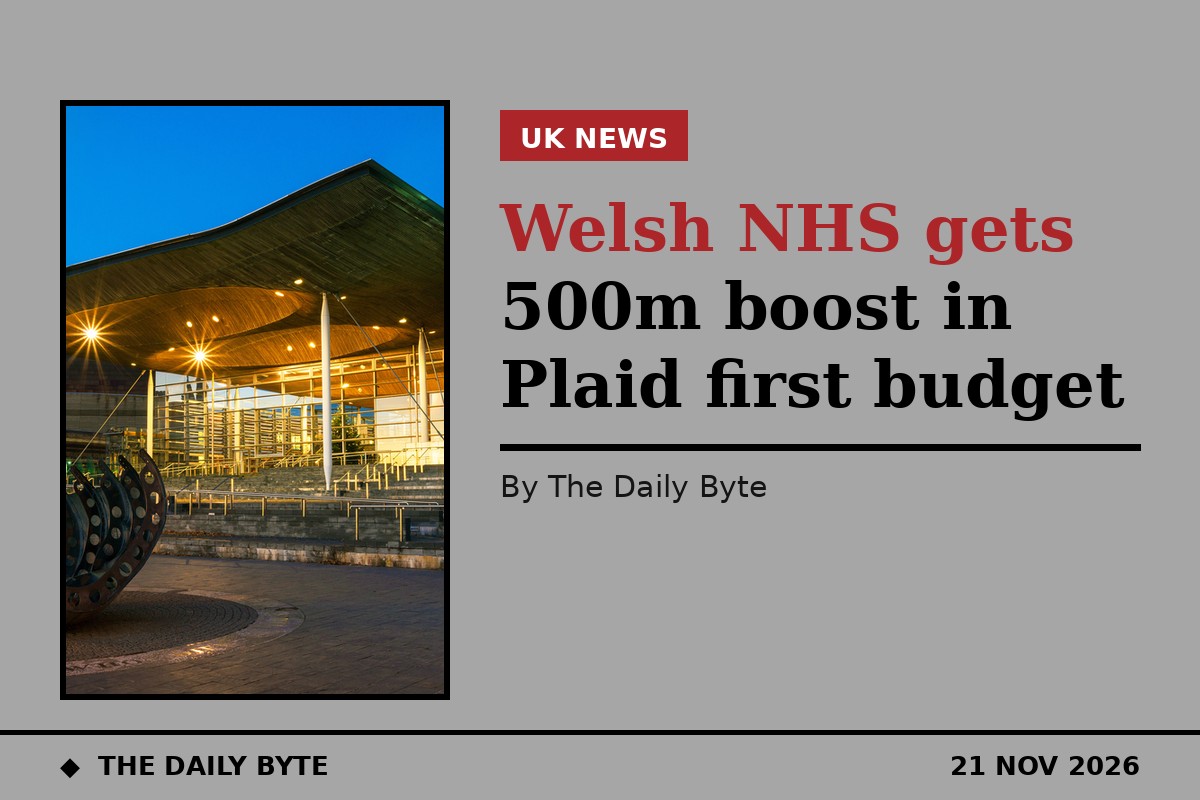
The Welsh NHS will receive an extra 500 million pounds to cut waiting lists under Plaid Cymru's first budget, Finance Minister Elin Jones has announced.
The draft budget, presented to the Senedd on Tuesday, 17 November, is the first full spending plan drawn up by Plaid Cymru since the party won power at May's Senedd election. The extra money for health rises to 700 million pounds in 2028-29, and is accompanied by 2 billion pounds of capital funding for health services over the next three years.
Jones described the budget as a "reset" in how Wales spends public money, telling the Senedd: "This budget is a break with the past. It is a reset in how Wales spends public money, and it lays the foundations for everything this government wants to achieve over this Senedd term, including a stronger NHS, support for local councils and more help with childcare."
A boost that still lags behind the usual rise
The headline figure comes with an important qualification. The extra 500 million pounds represents an increase of 2.1 percent in health spending once inflation is taken into account, well below the historical average rise of 3.6 percent. Ministers have also pencilled in a real-terms cut of 0.3 percent on health spending in the following year.
Overall, health and care will receive 12.4 billion pounds in 2027-28, rising to 12.6 billion pounds in 2028-29. Within that, about 64 million pounds will go to the A Healthier Wales programme, 47 million pounds to substance misuse services, 27 million pounds to mental health and 29 million pounds to targeted health protection and immunisation.
On capital spending, 171 million pounds is earmarked for projects such as new elective care hubs, as part of the 2 billion pound three-year package. The draft budget itself acknowledges that the additional investment "will not eliminate all access challenges", and warns that lasting progress "will depend on reform, improved productivity and a continued focus on the outcomes achieved for patients".
Dr Deiniol Jones, chair of the British Medical Association's Welsh Council, said the extra 500 million pounds was "welcome and much needed", but added: "These funding increases remain below historical real terms rises and pressures will likely persist. Ultimately, patients will judge this Budget by whether services actually improve."
Tight finances elsewhere in the budget
Jones was frank that the money for health comes at a cost elsewhere. She told the Senedd that "public finances are tight", with the funding available to run day-to-day services expected to shrink by 0.5 percent next year. Four government departments, covering local government, education, the economy and rural resilience, will have less to spend next year.
Funding for local councils will increase by 176 million pounds, but some councils could see their funding rise by as little as 0.4 percent in real terms. The Welsh Local Government Association warned of the prospect of job cuts, council tax rises and service cuts, with its leader Anthony Hunt appealing to the Welsh government and Senedd members "to put local services first".
The government also wants to spend 75 million pounds next year to expand childcare, a key manifesto commitment for Plaid. The agency that funds universities and post-16 education, Medr, faces a below-inflation settlement on its 850 million pound budget, and Jones accepted there was "pressure" on its funding. There are no changes to the rates of income tax controlled by the Welsh government, nor to land transaction tax.
The vote that still has to be won
None of this is settled yet. Plaid Cymru governs without an overall majority, so the budget cannot pass on its own votes. Jones said she had a "sizeable pot", worth nearly 150 million pounds of day-to-day funding, to discuss with other parties, and has already reached a deal with the Greens to fund electric car clubs and a climate resilience fund. But the two Green members will not be enough to pass the budget, and the final vote, due in February, will be the biggest test Plaid has faced since forming a government.
The debate was also marked by Reform UK's continued boycott of the Senedd, in protest at a speaking ban for its member Joe Martin. Jones and other parties criticised Reform for not being present to hear her budget statement. Darren Hughes, director of the Welsh NHS Confederation, welcomed the extra money but warned that it "must translate into clear and sustainable funding to address long-term pressures, not just immediate demands".