What Are Tariffs and How Do They Work?
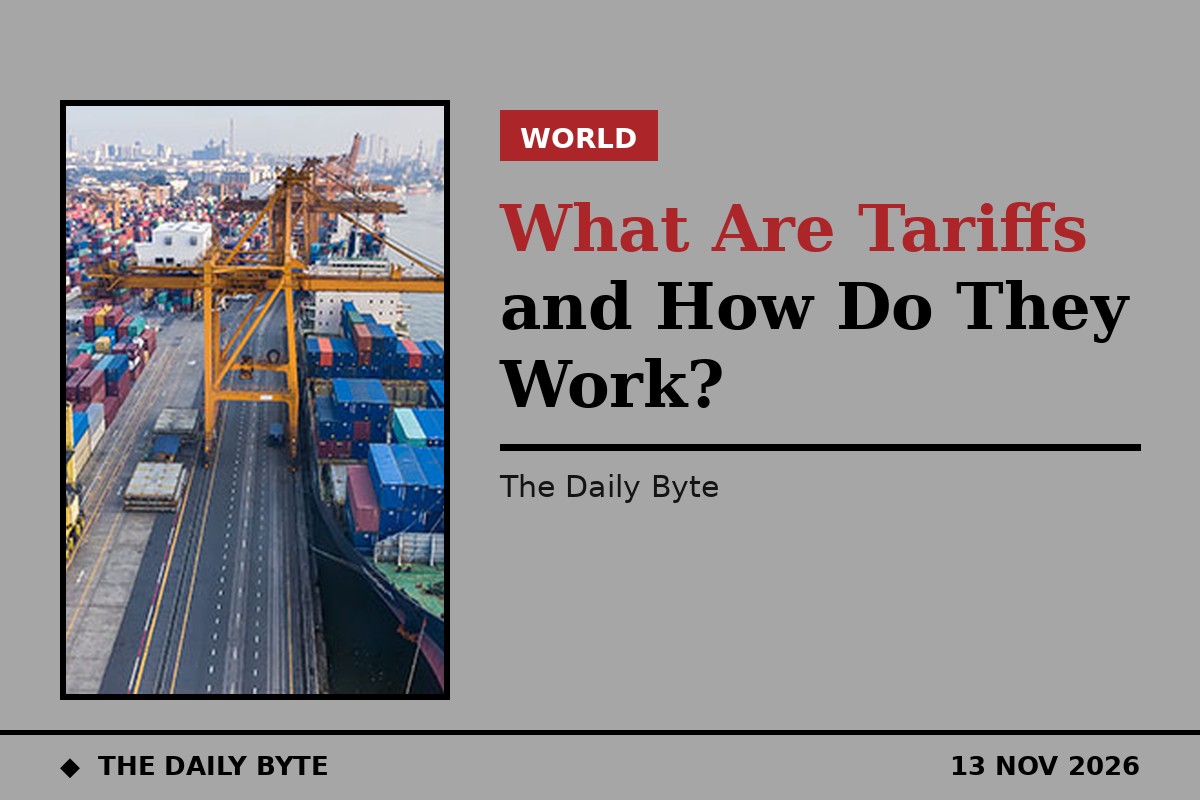
A tariff is a tax that a government charges on goods imported from another country. It is paid at the border by the company importing the goods, not by the foreign seller or the foreign government — and the cost is usually passed on, in whole or in part, to businesses and shoppers in the importing country. Tariffs are back in the headlines because US President Donald Trump threatened on 12 November 2026 to double tariffs on Mexico unless it stops migrant caravans heading for the US border.
Who actually pays a tariff?
The legal bill falls on the "importer of record" — normally the domestic business bringing the goods into the country, or its customs broker. That company pays the duty to its own government's customs authority (in the United States, US Customs and Border Protection) before the goods are released. No foreign company writes a cheque to the US Treasury, and no foreign government transfers money to Washington. Whether the foreign exporter lowers its prices to stay competitive is a separate commercial decision, and it does not change who legally owes the duty.
What happens next is a question of economics rather than law. The importer can absorb the cost in its profit margin, push it back onto the supplier by negotiating a lower price, or pass it forward to customers through higher prices. In practice the cost is often shared, but studies of recent tariff rounds have found that most of it ends up with firms and consumers in the importing country.
How is a tariff calculated?
Customs officers work out the duty on each shipment in three steps: classification, valuation and origin. Every product is assigned a code under the internationally harmonised system used by most countries, which determines the rate that applies. The value of the goods is then assessed, and their country of origin is established — which can be complicated when a product is assembled from parts made in several countries.
Most tariffs are "ad valorem", meaning a percentage of the goods' value: a 10% tariff on goods worth $100 adds $10 in duty. Some are "specific", a fixed amount per unit, such as a set sum per tonne of steel. Under World Trade Organization rules, member countries generally commit to maximum tariff levels, known as bound rates, for different products.
Why do governments impose tariffs?
Governments use tariffs for several reasons: to protect domestic industries from cheaper foreign competition, to raise revenue, to respond to practices they regard as unfair, and to gain leverage in negotiations. The money collected goes to the government that imposed the tariff. The other side of the bargain is that tariffs can raise prices at home, disrupt supply chains and invite retaliation — the targeted country often answers with tariffs of its own, which is how trade disputes escalate.
Why is Trump threatening to double tariffs on Mexico?
On Thursday 12 November, Trump wrote on social media that migrant caravans were forming and marching through Mexico, and warned: "MEXICO MUST STOP THEM, NOW, and if they do not do so, the Tariffs on Mexico will be IMMEDIATELY DOUBLED." He linked the caravans to the Democrats' gains in last week's US midterm elections and said the migrants "will not be accepted".
About 1,500 people, mostly from Central America, set off on Tuesday from Tapachula, near Mexico's border with Guatemala. Mexican President Claudia Sheinbaum said no migrant caravan had reached the US border since Trump returned to power, and that Mexico was playing an active role in stopping them. She said two groups were moving — one in Arriaga, Chiapas, that began with 500 to 600 people and had shrunk to fewer than 100, and another from Honduras.
The threat matters because Mexico is the United States' biggest source of imports. The US bought $481.6 billion of Mexican goods in the first nine months of 2026, according to Census Bureau data. Mexico is currently subject to a 10% tariff imposed in July 2026 under Section 301 of the Trade Act of 1974, following a forced-labour investigation, so doubling it would take the rate to 20%. The two countries are also negotiating a trade agreement after Trump chose in July not to extend the US-Mexico-Canada trade pact. Trump has used tariffs in the same way elsewhere: on 7 November he raised tariffs on EU cars to 25%.
Who bears the cost in the end?
The Congressional Budget Office estimated in February 2026 that foreign exporters absorb about 5% of tariff costs and US consumers bear the remaining 95%. The Tax Foundation estimated in August 2026 that the tariffs then in place would cost the average US household about $820 this year, with about $130 of that attributable to duties on Canadian and Mexican goods. Those are estimates, and the split varies by product and market — but the broad picture is that tariffs are largely paid for inside the country that imposes them.
Frequently asked questions
Do foreign countries pay US tariffs? No. The duty is paid to US Customs by the American importer. A foreign exporter may cut prices to stay competitive, but that is a business choice, not a payment to the US government.
Do tariffs make things more expensive? Usually, yes. Importers commonly pass some or all of the duty on through higher wholesale and retail prices, although competition and profit margins affect how much reaches the shelf.
Can tariffs be removed? Yes. The government that imposed them can lift or reduce them at any time, and tariffs are frequently bargained away in trade negotiations — which is why they are used as leverage as well as a tax.
Reuters reported that Trump threatened to double tariffs on Mexico if it does not stop migrant caravans, while MNP's tariffs guide explains that the importer bears the duty directly and the cost is normally passed along the supply chain to consumers.