What Is a CNIC? How to Apply for a CNIC in Pakistan
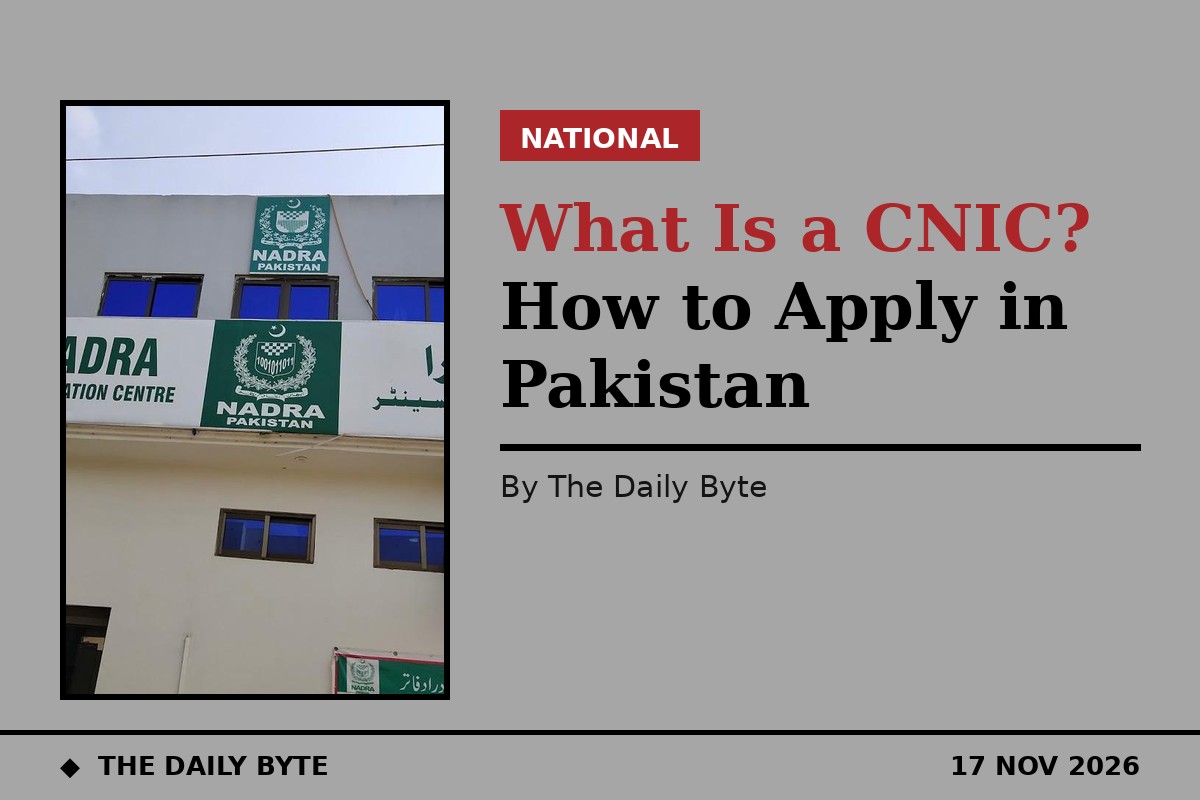
A CNIC is a Computerised National Identity Card, Pakistan's main identity document for its citizens. It is issued by the National Database and Registration Authority, known as NADRA, to every Pakistani citizen aged 18 and over. The card carries your name, photograph, signature and a unique 13-digit identity number that is recognised across the country. You need it for everyday life in Pakistan, from opening a bank account and getting a passport to registering a mobile SIM, and it is the document that proves who you are to the state.
The short answer to the question most people ask is that a first CNIC must be applied for in person at a NADRA Registration Centre. You cannot apply for a brand-new CNIC through NADRA's website. Renewals, modifications and reprints of an existing card are different: those can be done through NADRA's Pak Identity mobile app and have the card delivered to your door. That split catches many people out, so this guide sets out which route applies to you, what to bring, and what to watch out for.
What is a CNIC and what is it used for?
NADRA describes the National Identity Card as an official identification document issued to valid citizens of Pakistan, and says every citizen aged 18 and above is eligible to apply for one. The card is a blend of modern technology and defined rules designed to guarantee its authenticity, and its unique 13-digit number is recognised all over the country. NADRA says the card is the first requirement for obtaining documents such as a driving licence, a National Tax Number, a bank account, a passport and a cellular connection. In practice it is also the document you show at government offices, banks and hotels, and the one your identity is checked against whenever an official record is created in your name.
Because the number stays with you for life, it is worth keeping the details on the card accurate. A wrong spelling of a name, an old address or an out-of-date marital status can cause problems later, when the card is matched against another record. NADRA allows corrections and updates, and the process for those is set out below.
CNIC, Smart NIC and NICOP: what is the difference?
There are three cards people often confuse. The standard CNIC, sometimes simply called the NIC, is the basic identity card. The Smart NIC is a newer generation of the same card, with an embedded microchip that stores your biometric and personal information securely. It is the card most people are issued now, and it can be renewed, modified or reprinted through the Pak Identity app. The NICOP, or National Identity Card for Overseas Pakistanis, is a separate document for Pakistani citizens living abroad, and it also serves as a travel document for entering Pakistan without a visa in many cases. This guide covers the CNIC and Smart NIC for citizens in Pakistan. If you live overseas, the NICOP route through NADRA's overseas services is the one to follow.
Children under 18 do not get a CNIC. They are issued a Child Registration Certificate, commonly known as the B-Form, which records the child's birth in NADRA's database. That B-Form is the key document when the child turns 18 and applies for a first CNIC, because it links the new card to the family record already held by NADRA.
Who can apply for a CNIC?
Any Pakistani citizen who is 18 years old or older and whose birth is registered in NADRA's database can apply. For a first card, you will need your B-Form if you have one, plus the original CNICs of your parents or a close blood relative, so NADRA can link you to your family record. If your birth was never registered, that registration has to be sorted out first, and NADRA staff at a registration centre can explain what is needed in that situation.
There is no single national deadline for getting a first CNIC, but delaying it causes practical problems, because so many services ask for the card. Students turning 18 who need a bank account, a SIM or a passport should apply as soon as they are eligible rather than waiting until the card becomes urgent.
How to apply for your first CNIC, step by step
Go to your nearest NADRA Registration Centre, known as an NRC, or a NADRA mega centre. NADRA has a centre locator on nadra.gov.pk to find the closest one, and you can use any centre in the country, not only the one nearest your registered address. Arriving early in the day usually means a shorter wait, and you should bring original documents, not only photocopies.
At the centre, NADRA sets out the steps as follows. First you are issued a token. Then your photograph is captured, your fingerprints and signature are taken, and your details are entered into the system. A printed version of your application form is produced for you to review, and you must check it carefully before it is submitted. Errors caught at this stage are easy to fix. Errors found after the card is printed mean a modification application and another wait.
The form then has to be attested by a gazetted officer, unless you bring a blood relative with you. NADRA says you can skip the attestation step by bringing your father, mother, brother, sister, son or daughter to the centre and providing their biometrics there. That is the simpler route for most first-time applicants, and it is worth arranging before you travel.
Once the form is submitted and the fee is paid, you are given a receipt with a tracking ID. Keep it safe. You can use it to follow the progress of your application through NADRA's tracking service or the Pak Identity app, and you will need it if you have to ask about a delay.
How to renew, modify or replace a CNIC online
Renewals and changes are much easier than a first application, because NADRA already holds your photograph, fingerprints and other biometric data. If your card has expired, or you need to change your name, address, marital status or photograph, or replace a lost or damaged card, you can apply through the Pak Identity mobile app, listed in app stores as Pak Identity and published by NADRA, or through the Pak Identity web portal at id.nadra.gov.pk. Download the app only from the official store listing published by NADRA, and never from a link sent by a stranger.
In the app, the path for a card is through Identity Documents, then ID Card, then the applicant, then Renewal, Modification or Reprint. You take your photograph with your phone camera when the app asks, fill in the changed details, choose your processing priority and pay the fee online. The new card is then delivered to your door. A first CNIC cannot be done this way, because NADRA needs your biometrics captured in person, and if your B-Form record does not already hold your photograph, fingerprints and iris scan, you will still need one visit to a registration centre even when applying through the app.
NADRA also lists Pakistan Post counters for Smart NIC renewal, reprint and changes of address or marital status, which can help if you do not want to use the app or travel to a registration centre.
How much does a CNIC cost and how long does it take?
There is a fee for obtaining an identity document, and NADRA says the fee structure varies according to the type of document, the nature of the application, whether it is new, a renewal or a modification, and the priority you choose. NADRA offers normal, urgent and executive processing, with faster delivery costing more and taking fewer days. Because fees and processing times change, do not rely on a figure quoted on a third-party website or by an agent. Check the current fee structure on nadra.gov.pk before you apply, and pay only through the official counters or payment channels shown on NADRA's website.
Timelines run from the date the fee is paid, and the exact number of days depends on the priority you selected. Normal processing takes the longest, urgent is faster, and executive is the fastest. If your card is needed by a fixed date, for example for a passport appointment or a job application, apply early and choose a priority that leaves a margin for delay.
What to do if your CNIC is lost, stolen or damaged
Apply for a duplicate, also called a reprint, as soon as you realise the card is gone. You can do this through the Pak Identity app if your biometric record is already held by NADRA, or at any NADRA Registration Centre. A lost card should be reported, because the 13-digit number can be misused for identity fraud, including taking out a mobile connection or opening an account in your name. If you suspect your card has been used by someone else, report it to NADRA and to the police, and check your records with your bank and mobile operator.
A damaged card with a cracked chip or unreadable details should also be replaced rather than repaired or laminated over. NADRA will not accept a card that cannot be read, and other organisations will turn it away as well.
Common mistakes and scams to avoid
The most common mistake is paying an agent or middleman who promises a faster card. Only NADRA's official channels, its registration centres, nadra.gov.pk and the Pak Identity portal and app, can issue or renew a CNIC. Nobody outside NADRA can speed up an application, and anyone asking for payment through a personal bank account or mobile wallet is not acting for NADRA. Pay fees only through official counters or channels shown on NADRA's website, and keep your receipt.
Other mistakes are easier to avoid. Check the printed form at the centre before it is submitted, because a misspelt name or wrong date of birth is far harder to fix later. Bring original documents, not photocopies alone. Do not share photographs of your CNIC on social media or messaging groups, because the card number, photograph and other details are enough for identity theft. And do not trust a CNIC checking service that is not run by NADRA. If you need help, NADRA's helpline for mobile users is 1777, and its website lists registration centres and the official fee structure.
Frequently asked questions about the CNIC
Can I apply for my first CNIC online? No. NADRA states that a fresh CNIC cannot be applied for through its website. You must visit a NADRA Registration Centre in person so your photograph, fingerprints and signature can be captured. Renewals, modifications and reprints of a Smart NIC can be done online through Pak Identity.
What documents do I need for a first CNIC? Your B-Form or Child Registration Certificate if you have one, and the original CNICs of your parents or a close blood relative so NADRA can link you to your family record. Bring originals, and check NADRA's guidance for your situation before travelling.
How do I track my CNIC application? Use the tracking ID on your receipt through NADRA's tracking service on nadra.gov.pk or in the Pak Identity app. Keep the receipt until the card is in your hand.
What is the difference between a CNIC and a Smart NIC? They are different generations of the same national identity card. The Smart NIC carries a microchip with your biometric and personal data, and it is the version that can be renewed or modified online through Pak Identity.
Can overseas Pakistanis apply for a CNIC? Pakistanis living abroad generally apply for a NICOP, the card for overseas Pakistanis, through NADRA's overseas services. Renewals and modifications of a Smart NIC can also be done online from abroad through Pak Identity.
Sources: NADRA, National Database and Registration Authority. Fees and processing times change, so always confirm the current fee structure on nadra.gov.pk before you apply or pay.