What Is Access to Work? UK Grant Explained
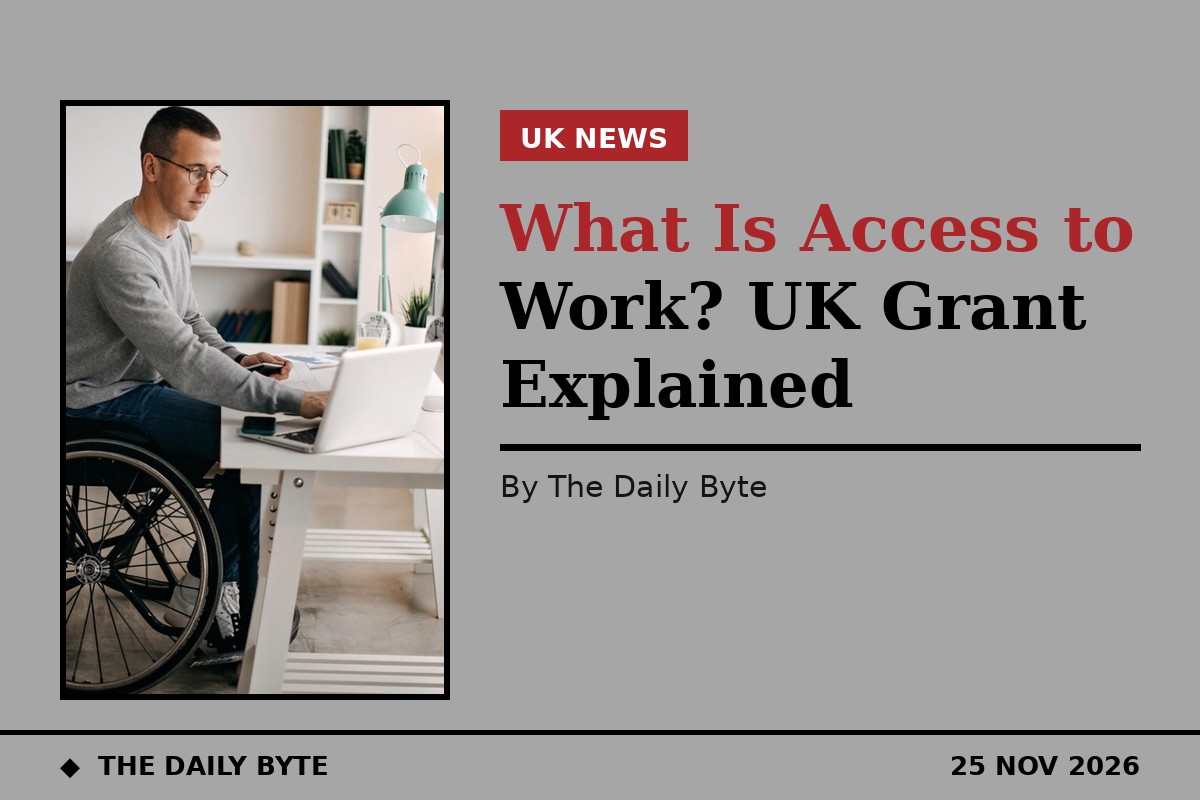
Access to Work is a UK government scheme that helps people with a disability or health condition get into work and stay in work. It can pay for practical support, such as specialist equipment, a support worker or help with travel, and it can also fund support to manage mental health at work. The money is a grant, not a loan: it does not affect other benefits and it does not have to be paid back.
Many people have never heard of the scheme, even though it can cover support worth thousands of pounds. This guide explains what Access to Work is, who can get it, what it pays for, what it will not pay for, and how to apply.
What is Access to Work?
Access to Work is run by the Department for Work and Pensions. It is designed for people whose physical or mental health condition or disability means they need extra support to do their job, or to get to and from work. The support depends on the person's needs, and it can be used alongside a job that has already started or a job that is about to start.
Through the scheme, a person can apply for three kinds of help. The first is a grant to pay for practical support at work. The second is support with managing mental health at work. The third is money to pay for communication support at a job interview. A workplace can include the person's home, if they work from home some or all of the time.
The scheme is aimed at removing the extra costs that a disability or health condition can create at work. It does not replace the employer's own legal duties, and it does not pay for changes that the employer is required to make. That distinction matters, and it is explained in more detail below.
What can an Access to Work grant pay for?
An Access to Work grant can help pay for a wide range of practical support. According to GOV.UK, examples include specialist equipment and assistive software, such as screen-reading software or an adapted keyboard. It can also pay for support workers, for example a British Sign Language interpreter, a job coach or a travel buddy who accompanies the person on the journey to work.
Travel costs are covered where the person cannot use public transport because of their condition. The scheme can also pay for adaptations to a vehicle so the person can get to work, and for physical changes to the workplace itself, such as an adapted desk or accessible workstation. In some cases the person or their employer may have to pay some costs up front and claim the money back later.
What the grant pays for is decided after an assessment. After the person applies, someone from Access to Work contacts them to talk about the application. They may ask for more information about the work and the condition, ask for permission to speak to the employer, or arrange for an assessor to look at the workplace by video call or in person. The person then receives a letter with the decision, which explains how much the grant is and what it should pay for.
Support with mental health at work
Access to Work also offers support for people who need help managing their mental health at work. This can include a tailored plan to help the person get or stay in work, and one-to-one sessions with a mental health professional. This part of the scheme works differently from the grant: the person applies directly to one of two providers, Able Futures or Maximus, and must apply to only one of them.
There is an important limit on this support. Mental health support through Access to Work can only be claimed once. If a person has already received it, they cannot apply for it again. That rule does not apply to the grant for practical support, which can be renewed.
Communication support at job interviews
The scheme can also pay for communication support at a job interview. This applies to people who are deaf or hard of hearing and need a British Sign Language interpreter or a lipspeaker, and to people with a physical or mental health condition or a learning difficulty who need communication support to take part in the interview. The support is separate from the grant for people already in work, and it has its own application route on GOV.UK.
Who is eligible for Access to Work?
To qualify for a grant or for mental health support, a person must have a physical or mental health condition or disability that means they need support to do their job or to get to and from work. They must be 16 or over, and they must be in paid work, or about to start or return to paid work in the next 12 weeks. They must live and work in England, Scotland or Wales. Northern Ireland has a different system, and people who live in the Channel Islands or the Isle of Man cannot get Access to Work.
No formal diagnosis is needed to apply. GOV.UK lists examples of conditions that can qualify, including a physical disability such as hearing loss or using a wheelchair, a learning disability such as Down's syndrome, a developmental condition such as autism, attention deficit hyperactivity disorder or dyslexia, an illness such as diabetes or epilepsy, a temporary condition such as a broken leg, and a mental health condition such as anxiety or depression. The key question is whether the condition means the person needs support at work, not what the condition is called.
Paid work can be full time or part time, and it can include employment, self-employment, an apprenticeship, a work trial or work experience, an internship or a work placement. Voluntary work does not count. People who work from home some or all of the time can still apply.
Income and benefits rarely block an application. A person can get Access to Work at the same time as most benefits, as long as they work more than one hour a week. If they are employed, they can get support however much they earn or have in savings. If they are self-employed, they must have an annual turnover of at least £6,500. People claiming Employment and Support Allowance can get Access to Work at the same time if they work less than 16 hours a week, under the rules about working while claiming that benefit.
One group is excluded. Civil servants do not get Access to Work, because their employer provides the support instead. A civil servant who needs support should contact their employer so it can be assessed and arranged directly.
What Access to Work will not pay for
Access to Work will not pay for reasonable adjustments. These are the changes an employer must legally make to support a disabled employee to do their job, under the Equality Act 2010. Examples can include changing working hours, providing an accessible workspace, or supplying standard equipment that any employee would need. Because the employer is legally responsible for these changes, the scheme does not fund them. Access to Work will, however, advise the employer if it thinks a change should be made as a reasonable adjustment.
Understanding this boundary helps applicants set expectations. Access to Work covers the extra, individual support that goes beyond what the employer must provide as a matter of law. If an employer refuses to make a reasonable adjustment, that is a separate employment-law issue, and the person may need advice from Acas or an employment adviser.
How to apply for Access to Work
A person applies for Access to Work themselves; an employer cannot apply on their behalf. The application can be made online through GOV.UK or by phone through the Access to Work helpline. The helpline number is 0800 121 7479, with a textphone service on 0800 121 7579 and Relay UK on 18001 followed by 0800 121 7479. The helpline is open Monday to Friday, 9am to 5pm. If phone calls are difficult, for example because the person is deaf or hard of hearing, they can ask for all communication to be by email instead.
The application asks for contact details, the workplace address and postcode, information about how the condition affects the person's work and what support they think they need, and details of a workplace contact who can confirm they work there. That contact will not be approached without the person's permission. Self-employed applicants need their Unique Taxpayer Reference number, and applicants should have their National Insurance number ready if they have one. The form is available in other formats, such as braille, large print or audio CD, on request through the helpline.
It is worth talking to the employer before applying, to agree what adjustments the employer can make and how Access to Work could help. It is also worth applying before incurring costs, because funding is generally only valid from the date the application is submitted. Disability charity Scope notes that it is receiving reports of delays in processing applications and renewals, so applying early, and well before support is needed, is sensible.
After you apply: decision, claiming and renewing
After the application is submitted, an Access to Work adviser contacts the applicant. They may ask for more information, seek permission to speak to the employer, or arrange a workplace assessment. The applicant then receives a decision letter stating how much the grant is and what it should pay for. If the applicant disagrees with the decision, they can call the helpline and ask for the application to be reconsidered. The helpline can also be contacted to complain about how a case has been handled.
Money is claimed from the grant online or by post. To claim, the person needs the dates they had support, invoices or receipts showing the cost, and bank details for the person or company that will receive the money. A workplace contact may also need to confirm the support being claimed for. Claiming online requires a GOV.UK One Login and a letter confirming the grant has been approved. For a postal claim, the paper form sent with the decision letter should be used, and copies of invoices or receipts are accepted.
Grants for ongoing support, such as a support worker, need to be renewed before they end. The decision letter states the end date, and a renewal application can be made 12 weeks before that date, online or by phone. Civil servants whose grant end date is on or after 1 April 2022 cannot renew and should contact their employer instead. If circumstances change, for example a change of address, a change of job or a change in the condition, Access to Work must be told through the helpline.
Frequently asked questions
Do I need to be claiming disability benefits to get Access to Work? No. A person does not need to be receiving disability benefits, and most benefits are unaffected by a grant. The test is whether the person is in paid work and needs support because of a condition or disability.
Can I apply if I have not started the job yet? Yes, if the person is about to start or return to paid work in the next 12 weeks. Access to Work can only assess an application once there is a written job offer, and the application can be made up to six weeks before the start date.
Does my employer have to pay anything? Sometimes the employer contributes to the cost, depending on the size of the business and the type of support. The decision letter sets out what the grant covers. What is covered is decided case by case, so applicants should read the letter carefully and ask the helpline if anything is unclear.
Is Access to Work the same as a reasonable adjustment? No. Reasonable adjustments are the employer's legal responsibility under equality law. Access to Work funds additional, individual support on top of those adjustments. The two work together: the employer makes the workplace accessible, and Access to Work helps with the extra support the individual needs to do the job.
Access to Work is general information in this article, not personal advice. Anyone unsure about eligibility can contact the Access to Work helpline, or seek advice from a disability charity such as Scope or Mencap, before applying.