What Is an ISA? UK ISA Rules Explained 2026
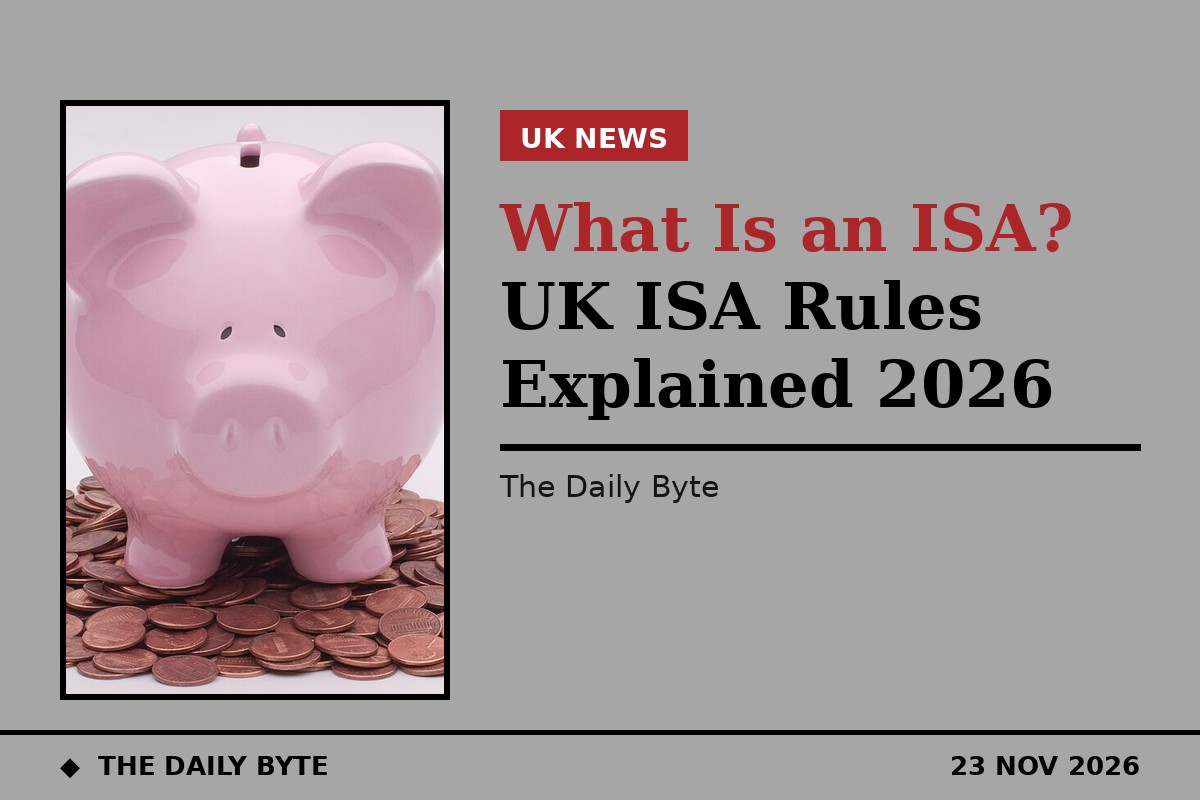
An ISA, or Individual Savings Account, is a UK savings or investment account that shelters your money from UK tax. In the 2026/27 tax year you can put up to £20,000 into ISAs, and you pay no Income Tax on the interest and no Capital Gains Tax on the growth inside the account. The tax year runs from 6 April 2026 to 5 April 2027, and any allowance you do not use by 5 April is lost, because it does not roll over into the next year.
That tax-free wrapper is the whole point of an ISA. Outside an ISA, interest on savings and gains on investments can be taxed once they pass your allowances. Inside an ISA, the interest, dividends and growth are sheltered for as long as the money stays in the account. You can hold cash, investments, or a mix of both, and you can split your £20,000 allowance across different types of ISA. This guide explains the rules as they stand on 23 November 2026, using GOV.UK and MoneyHelper as its sources. It is general information, not personal financial advice.
How does an ISA work?
An ISA is not itself an investment. It is a tax wrapper that sits around cash savings or investments. You open an ISA with a bank, building society or investment provider, pay money in, and the returns inside the wrapper are free of UK tax. You do not declare ISA interest or ISA investment gains on a tax return, and there is no tax to pay when you take money out of a standard ISA.
Your ISA allowance is £20,000 for 2026/27. That is the total you can pay into adult ISAs in the tax year, not £20,000 per account. If you pay £12,000 into a Cash ISA and £8,000 into a Stocks and Shares ISA, you have used the full allowance. If you pay in only £5,000, the other £15,000 is gone at the end of the tax year. You cannot carry it forward.
Since April 2024 you have been able to pay into more than one ISA of the same type in the same tax year, for example two Cash ISAs with different providers, as long as your total stays within the £20,000 limit. The one exception is the Lifetime ISA: you can pay into only one Lifetime ISA per tax year. Partial transfers between ISA providers are also allowed, so you can move part of an ISA without losing its tax-free status. You must be 18 or over to open an adult ISA, and you must be resident in the UK for tax purposes, with limited exceptions for Crown employees working overseas.
The four types of adult ISA
There are four main types of adult ISA. A Cash ISA works like an ordinary savings account, but the interest is tax-free. You can choose easy-access, notice or fixed-term accounts. Your money is not exposed to the stock market, so the amount you put in does not fall, although inflation can erode what it will buy over time. Cash ISAs suit money you may need in the next few years, such as an emergency fund or a deposit you are building up.
A Stocks and Shares ISA is an investment account that can hold funds, shares and bonds. Returns are sheltered from Income Tax and Capital Gains Tax, but the value of your investments can fall as well as rise, and you could get back less than you put in. This type suits money you can leave invested for five years or more. Fees apply, and the choice of investments matters, so many people use low-cost funds rather than picking individual shares.
An Innovative Finance ISA holds alternative investments such as eligible peer-to-peer loans and some crowdfunding investments. The returns can be higher than cash, but so is the risk, and this type of ISA is generally not covered by the Financial Services Compensation Scheme in the same way as cash deposits. It is aimed at experienced investors who understand the risks.
A Lifetime ISA, or LISA, is designed for first-time buyers and for retirement saving. You can open one between the ages of 18 and 39, pay in up to £4,000 a year until you are 50, and the government adds a 25% bonus, up to £1,000 a year. You can use it to buy a first home costing up to £450,000, or take the money out from age 60. Taking money out for any other reason triggers a withdrawal charge, so it is not a flexible savings pot.
The 2026/27 ISA allowance and the Budget change
For the 2026/27 tax year the ISA allowance is £20,000, unchanged from 2025/26, and the government has said it will stay at £20,000 until 5 April 2031. Before the Budget on 28 October 2026, there was a plan to cut the Cash ISA allowance to £12,000 for savers aged under 65 from April 2027, forcing anyone who wanted the full £20,000 to invest at least £8,000. That plan was scrapped in the Budget. From 6 April 2027, savers of all ages can still put the full £20,000 into a Cash ISA if they choose.
MoneyHelper also reports that the government is looking into a new ISA to help people who are new to investing, but there are no details yet about what it will offer or when it will start. The Lifetime ISA is due to be replaced for new savers by a First Time Buyer ISA from April 2029. Until then, you can still open a Lifetime ISA under the current rules.
Junior ISAs: saving for children
A Junior ISA is a tax-free savings account for a child under 18 who lives in the UK. It has its own allowance of £9,000 for 2026/27, separate from your £20,000 adult allowance, so you can pay into both in the same year. The money belongs to the child and cannot be withdrawn until they turn 18, when the Junior ISA automatically becomes an adult ISA. A child aged 16 or 17 can also hold a Junior ISA, and the adult ISA minimum age is now 18, so 16 and 17-year-olds cannot open an adult Cash ISA.
Withdrawing money and moving ISAs
With most Cash ISAs and Stocks and Shares ISAs you can take money out at any time, although fixed-term accounts may charge a penalty or refuse early withdrawals. Some ISAs are flexible, which means you can take money out and pay it back in during the same tax year without using up more of your allowance. Not all ISAs are flexible, so check before you withdraw if you plan to replace the money.
Transferring an ISA to another provider does not count against your allowance if you use the official transfer process. Never withdraw the money yourself and pay it in elsewhere, because that counts as a new subscription and uses up allowance. Ask the new provider to arrange the transfer. Cash ISA transfers usually take up to 15 working days, and stocks and shares transfers can take longer.
Cash ISA or Stocks and Shares ISA: which suits you?
The right choice depends on when you need the money and how much risk you can accept. Money you need within a few years, such as a house deposit or an emergency fund, usually belongs in cash, where its value will not fall. Money you will not need for five years or more can reasonably be invested, because shares have historically grown more than cash over long periods, even though they fall sharply in some years.
Many savers split their allowance, keeping short-term money in cash and investing the rest. That is a reasonable approach, but it is not advice for any individual. If you are unsure, MoneyHelper offers free, impartial guidance, and a regulated financial adviser can give personal advice for a fee.
Common ISA mistakes to avoid
The most common mistake is assuming the allowance is per account, when it is £20,000 in total across all your adult ISAs. Another is leaving the allowance unused until the deadline and then rushing into an unsuitable investment. A third is withdrawing from an ISA and paying the money back into a different ISA, which uses allowance twice. Finally, some people open a Lifetime ISA without understanding the withdrawal charge, or pay into one after 40, which is not possible for a new account. Check the rules for your type of ISA before you commit.
Frequently asked questions
How much can I put in an ISA in 2026/27? Up to £20,000 in total across all your adult ISAs. The Junior ISA limit is a separate £9,000 per child, and the Lifetime ISA limit is £4,000 within your £20,000.
Can I have more than one ISA? Yes. You can open and pay into more than one ISA of the same type in a tax year, as long as your total stays within £20,000. You can only pay into one Lifetime ISA per tax year.
Is ISA interest really tax-free? Yes. Interest, dividends and growth inside an ISA are free of UK Income Tax and Capital Gains Tax, and there is no tax when you withdraw from a standard ISA.
What happens to my ISA allowance if I do not use it? It is lost. The allowance runs with the tax year, from 6 April to 5 April, and unused allowance cannot be carried forward.
Can I lose money in an ISA? In a Cash ISA, the amount you deposit does not fall, although inflation can reduce its buying power. In a Stocks and Shares ISA or Innovative Finance ISA, your money is invested and its value can fall as well as rise.
Do I need to declare an ISA on my tax return? No. You do not need to declare ISA interest or gains, because they are tax-free.
Sources: GOV.UK, Individual Savings Accounts (ISAs); MoneyHelper, Understanding the ISA rules in 2026. Figures checked on 23 November 2026. Tax rules can change, so check the official pages before you act.