What Is COP30? Brazil Climate Summit Explained
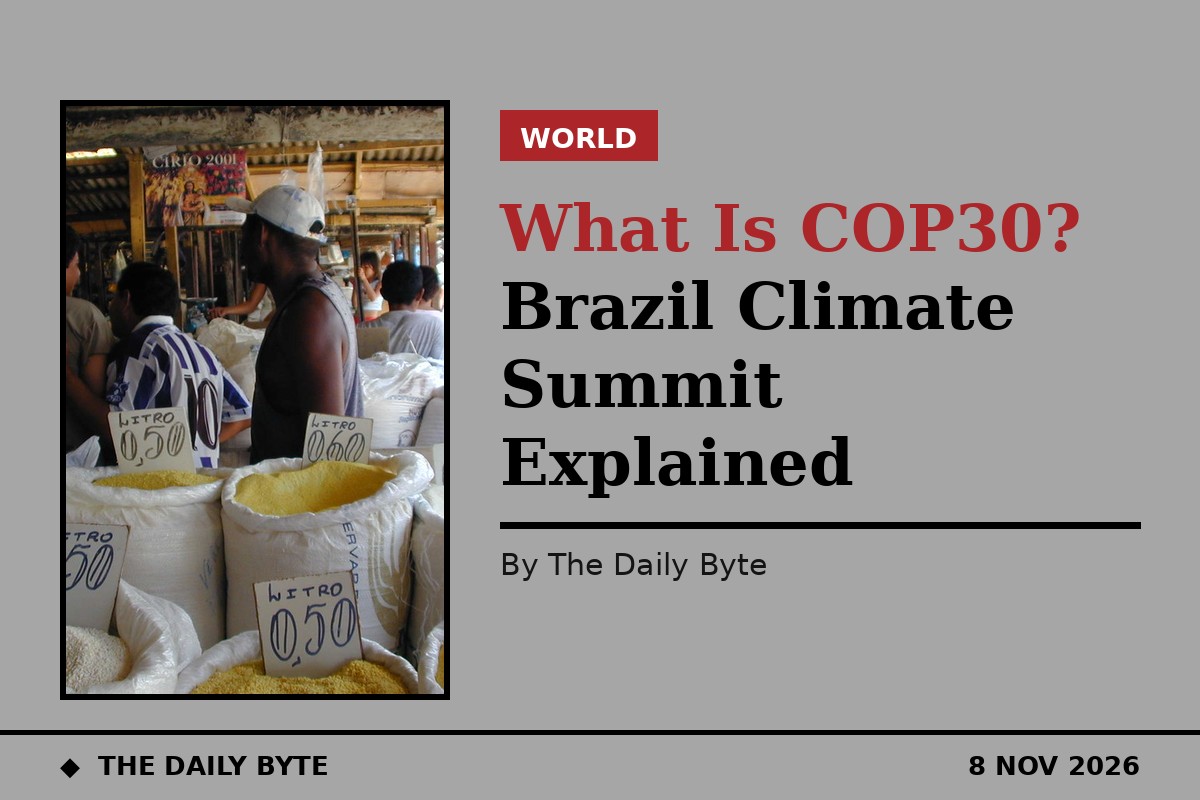
COP30 is the 30th United Nations Climate Change Conference, held from 10 to 21 November 2026 in Belém, Brazil. It brings together nearly 200 countries to negotiate action on climate change under the United Nations Framework Convention on Climate Change (UNFCCC). It is the first COP ever held in the Amazon, and it comes ten years after the Paris Agreement was adopted.
A leaders’ summit on 6 and 7 November 2026 opened the conference, with more than 100 national delegations taking part, before the formal negotiations began on 10 November. The United States is notably absent from the gathering.
What does COP stand for?
COP stands for Conference of the Parties. The “parties” are the 198 signatories to the UNFCCC — 197 countries plus the European Union — which meet every year to set climate ambition and assess progress. COP30 also marks 20 years since the Kyoto Protocol, the first major climate treaty, entered into force.
Why is COP30 being held in Belém?
Belém sits at the mouth of the Amazon rainforest, and Brazil chose the city to put forests at the centre of the talks. Brazil has promoted COP30 as the “COP of implementation”, focused on turning past promises into delivery rather than making new ones. The location also underlines the role of Indigenous peoples and biodiversity in tackling climate change.
What is on the agenda at COP30?
Three issues dominate the negotiations. First, countries’ updated climate plans, known as nationally determined contributions (NDCs), which set out how each country will cut emissions and adapt to warming. Second, the Global Goal on Adaptation, where negotiators are trying to agree indicators to measure progress on adapting to climate impacts. Third, climate finance — money from richer countries to help poorer ones cut emissions and adapt. Brazil also launched the Tropical Forest Forever Facility, a fund to reward countries that keep their tropical forests standing. The European Union arrived with an updated climate plan pledging to cut its emissions by 66% to 72.5% by 2035, compared with 1990 levels.
What would count as success?
A successful COP30 would raise ambition on emissions cuts, agree workable adaptation indicators and deliver credible finance commitments. Past COPs have often run past their scheduled end date as negotiators haggle over the final text, so the outcome may not be clear until after 21 November.
Frequently asked questions
When does COP30 end? The conference is scheduled to run until 21 November 2026, though COPs often overrun.
How many countries take part? There are 198 parties to the UNFCCC: 197 countries plus the European Union.
What is an NDC? A nationally determined contribution is a country’s climate action plan under the Paris Agreement, setting out its emissions targets. Parties are required to communicate updated NDCs every five years.
Where can I follow the talks? The UNFCCC publishes official updates, and the European Council has published the EU’s position and the results of the leaders’ summit.