What is COP31 and why is it in Antalya?
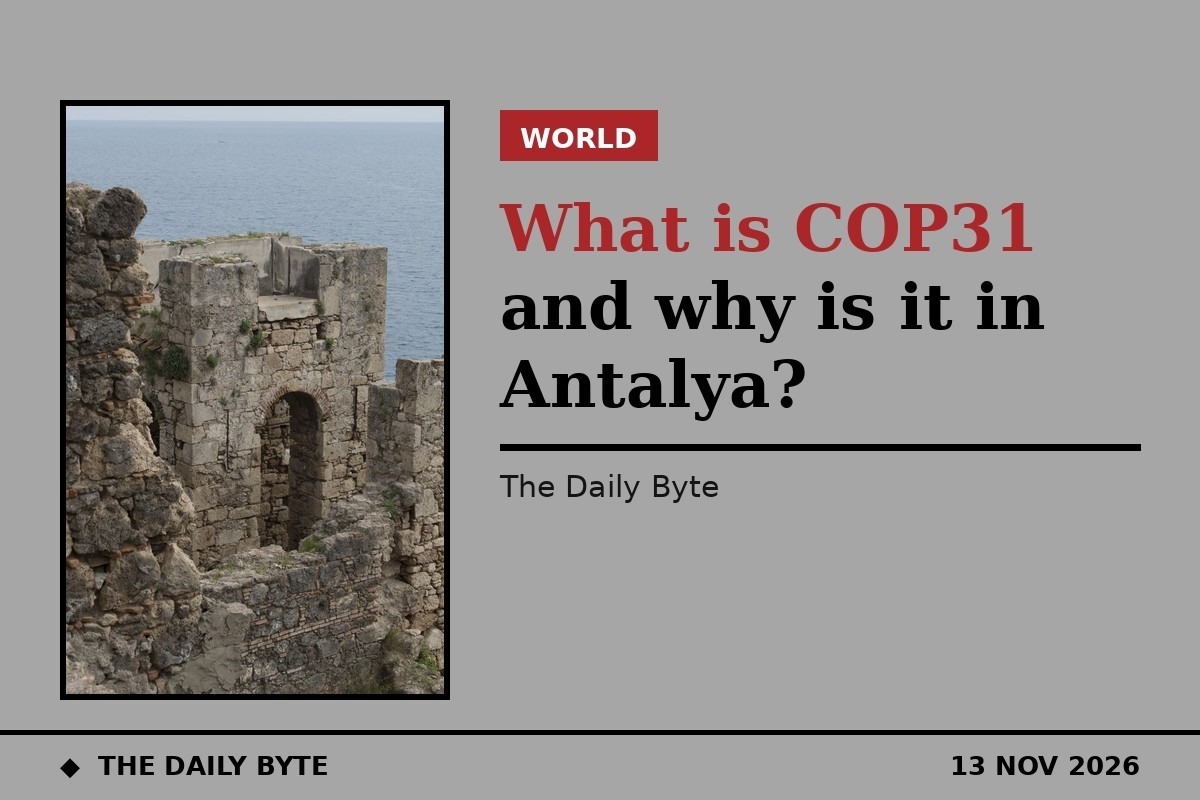
COP31 is the 31st session of the Conference of the Parties to the United Nations Framework Convention on Climate Change (UNFCCC), the annual United Nations climate conference. It is taking place from 9 to 20 November 2026 at the Antalya Expo Center in Antalya, Türkiye, with a World Leaders' Summit on 11 and 12 November. This year's conference is unusual: it is shared between two countries, with Türkiye holding the COP Presidency and Australia leading the formal negotiations — a dual-leadership arrangement agreed after both countries bid to host.
COP31 opened on 9 November 2026 and runs until 20 November, so it is under way now. Its stated focus is implementation — putting existing climate commitments into practice — rather than negotiating a new headline agreement. This explainer sets out what COP is, why Antalya is hosting, who is in charge, what is on the table and what happens next.
What does COP stand for?
COP stands for Conference of the Parties. The “parties” are the countries that have signed the United Nations Framework Convention on Climate Change, the 1992 treaty that is the foundation of international climate diplomacy. The conference is the treaty's supreme decision-making body, and it meets once a year to review progress, agree rules and set the direction of global climate action.
The number counts the sessions: COP31 is the 31st meeting. The first COP was held in Berlin in 1995. The most famous COPs are the ones that produced landmark agreements — COP21 in Paris in 2015, which produced the Paris Agreement, and COP26 in Glasgow in 2021. Others are remembered for the deals they did not reach, or for the technical rules they finally settled. COP31 belongs to a quieter category: the UNFCCC itself describes the Antalya meeting as focused on implementation, advancing the energy transition and delivering on promises already made, including on climate finance, food security, health and affordable clean energy.
Why is COP31 in Antalya, and why are two countries in charge?
COP31 is in Antalya because Türkiye and Australia both bid to host it, and neither would give way. After a week of negotiations in November 2025, the two countries compromised: Türkiye would host the conference, take the presidency and run the action agenda, while Australia's climate minister would preside over the formal negotiations. The arrangement is formally called the Türkiye–Australia Partnership Modalities, and it is the first time a COP has been split this way.
The split is more than a diplomatic nicety. The COP President runs the conference and sets its political direction; the President of Negotiations chairs the formal negotiating sessions where the text of decisions is hammered out. In Antalya those two jobs sit with different countries on different continents, which is why the conference has two leaders and why the Pacific island nations — a priority for Australia — feature prominently in the agenda. A pre-COP meeting was held from 5 to 8 October 2026, organised by Australia in partnership with Fiji and Tuvalu, to prepare the Pacific's input.
Antalya itself is a Mediterranean resort city on Türkiye's southern coast, and the conference is being held at the Antalya Expo Center. The COP31 website says Antalya will be “where dialogue becomes global action”, reflecting the presidency's emphasis on delivery rather than new pledges.
Who is in charge at COP31?
| Role | Person | Country |
|---|---|---|
| COP President | Murat Kurum, Minister of Environment, Urbanisation and Climate Change | Türkiye |
| President of Negotiations | Chris Bowen, Minister for Climate Change and Energy | Australia |
| UN Secretary-General | António Guterres | United Nations |
| Host venue | Antalya Expo Center, Antalya | Türkiye |
Murat Kurum, Türkiye's environment minister, was nominated as President of COP31, and Chris Bowen, Australia's climate and energy minister, serves as President of Negotiations — and, under the partnership arrangement, as Vice-President of the conference. The leaders' summit, entitled “Towards a Sustainable, Resilient and Equitable Future”, brought heads of state and government to Antalya on 11 and 12 November, in the first days of the talks.
What is COP31 trying to achieve?
COP31 is intended to shift the emphasis from negotiating new commitments towards implementing the ones that already exist, above all the goals of the 2015 Paris Agreement. That framing shapes everything on the agenda. The presidency's headline voluntary goal is to raise electricity's share of global final energy consumption to 35 per cent by 2035, as part of accelerating electrification. The conference is also working on delivering climate finance — the money richer countries provide to help poorer countries cut emissions and adapt to climate change — and on ocean-climate action, food security, and the links between the climate, biodiversity and land-degradation conventions, known as the Rio Conventions.
Pacific island nations are a particular focus. Under the Türkiye–Australia partnership, COP31 is advancing issues of importance to Pacific island nations, which face some of the most immediate threats from sea-level rise and extreme weather despite contributing little to global emissions. That is one reason Australia's leadership of the negotiations matters: Canberra has made the Pacific a central part of its pitch for the conference.
Climate finance is where the sharpest arguments are expected. At the opening of the leaders' summit, UN Secretary-General António Guterres urged countries to set out plans to move away from fossil fuels, and developing countries have been pressing for finance to be delivered as grants rather than loans. Pakistan's Prime Minister Shehbaz Sharif used the summit to urge grant-based climate finance, and African negotiators have demanded delivery of climate finance already promised. These are not new arguments — they run through every COP — but in Antalya they are the test of whether an “implementation COP” can actually deliver.
Key dates for COP31
| Date | What happens |
|---|---|
| 5–8 October 2026 | Pacific pre-COP meeting, organised by Australia with Fiji and Tuvalu |
| 9 November 2026 | COP31 opens in Antalya; first plenary meetings and opening statements |
| 11–12 November 2026 | World Leaders' Summit, “Towards a Sustainable, Resilient and Equitable Future” |
| 13 November 2026 | Negotiations continue; presidency issues a statement on growing carbon markets |
| 20 November 2026 | COP31 scheduled to close, with final decisions adopted |
| 8–19 November 2027 | COP32 scheduled in Addis Ababa, Ethiopia |
As with most COPs, the closing date should be treated as a target rather than a guarantee: climate conferences routinely run past their scheduled finish as negotiators work through the night on the final text. The 20 November date is when the conference is scheduled to end, not a promise that it will.
What has happened at COP31 so far?
The leaders' summit on 11 and 12 November set the political tone, with heads of state and government attending in the first days of the talks and the UN Secretary-General warning that the world needs plans to exit fossil fuels. Since then the work has moved into the negotiating rooms, where country delegations work through the detailed text of decisions on finance, adaptation, mitigation and the mechanisms of the Paris Agreement.
On 13 November, the presidency issued a statement on growing carbon markets, one of the mechanisms by which countries and companies trade emissions reductions. Carbon markets are a long-running argument at COPs: supporters say they channel money to where emissions can be cut most cheaply, while critics warn they can let polluters buy their way out of cutting their own emissions. The Antalya statement puts the issue squarely on this conference's agenda.
The other strand running through the first week is finance. Pakistan's prime minister has pressed for grant-based climate finance, and African countries have demanded delivery of finance already pledged. Those demands will be measured against whatever the final decisions say on 20 November — and against what actually flows afterwards, which is where previous COPs have most often fallen short.
How is COP31 different from COP30?
COP30 was held in Belém, Brazil, in 2025, and handed the presidency to Türkiye. Brazil's conference was notable for being held in the Amazon, which put forests and nature at the centre of the agenda. COP31 in Antalya is different in two ways: its dual Türkiye–Australia leadership, which no previous COP has had, and its explicit focus on implementation rather than new commitments. The House of Commons Library, in its briefing on the conference, notes that as with the 2025 conference, COP31 will focus on implementation of existing climate commitments — the difference is that Antalya has to show that implementation is actually happening.
The other difference is who is not there. The United States is absent from COP31, having stepped back from the Paris process, which changes the dynamics of the negotiations and puts more weight on the remaining major emitters and on the European Union, China and the host countries.
What happens after COP31?
Whatever is agreed in Antalya, the work continues. COP32 has already been accepted for Addis Ababa, Ethiopia, from 8 to 19 November 2027, so the calendar is set. The test of COP31 will not be the closing ceremony on 20 November but the months that follow: whether the finance promised is delivered, whether the electrification goal moves from a voluntary target into national plans, and whether the carbon-market rules agreed in Antalya are used or ignored. That is the nature of an implementation COP — its success is measured after it ends, not while it is happening.
Frequently asked questions about COP31
What is COP31? The 31st United Nations Climate Change Conference, held in Antalya, Türkiye, from 9 to 20 November 2026.
Why is COP31 in Antalya? Türkiye and Australia both bid to host. They compromised: Türkiye hosts and holds the presidency, while Australia leads the negotiations.
Who is the president of COP31? Murat Kurum, Türkiye's Minister of Environment, Urbanisation and Climate Change. Chris Bowen, Australia's climate minister, is President of Negotiations.
What is COP31 trying to achieve? Implementation of existing climate commitments under the Paris Agreement, including an electrification goal of 35 per cent of final energy use by 2035, climate finance delivery and action for Pacific island nations.
When does COP31 end? It is scheduled to close on 20 November 2026, although COPs often run past their scheduled finish.
Sources: UNFCCC, “UN Climate Change Conference — Antalya, November 2026”; House of Commons Library, “COP31: The 2026 United Nations Climate Change Conference”; Royal Meteorological Society, “COP31: Why the UN Climate Change Conference matters”.