What Is the EU-UK Carbon Market Linkage? Explained
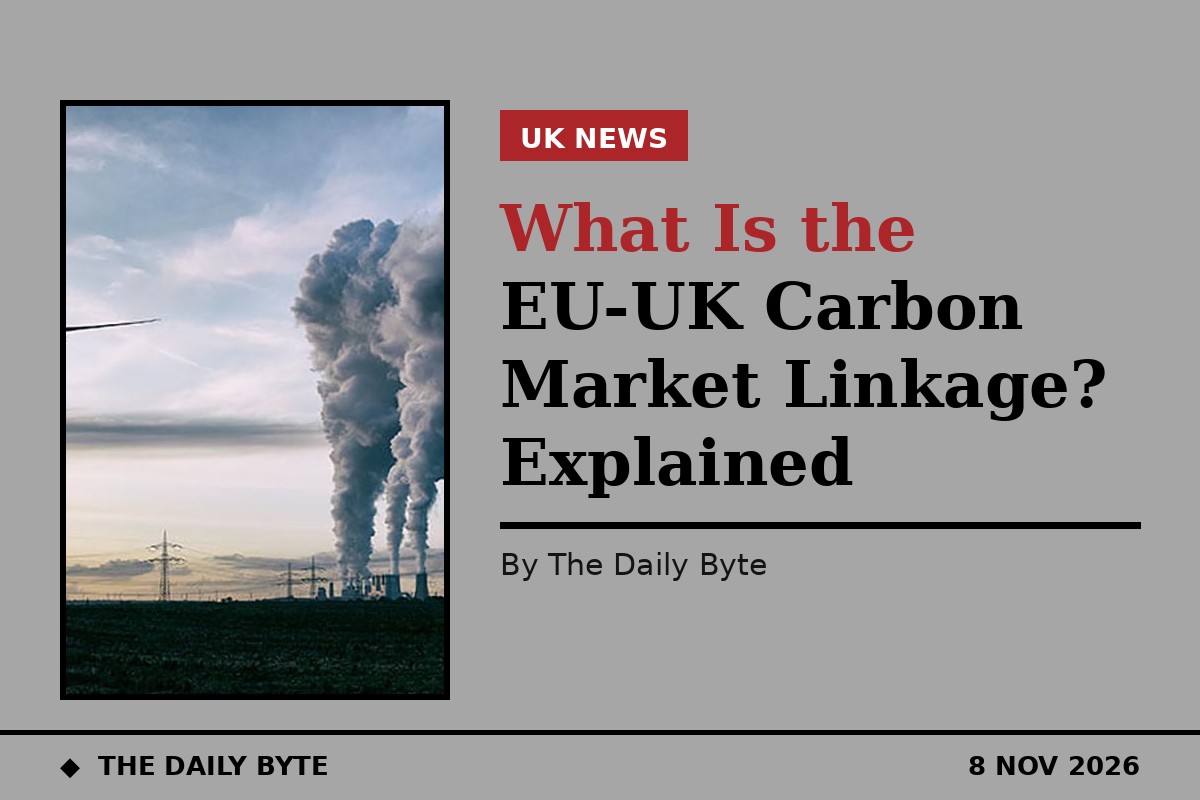
The European Union and the United Kingdom are near a deal to link their carbon markets, which would let carbon allowances issued on one side of the Channel be recognised on the other and could exempt EU and UK goods from each other's carbon border taxes. No agreement has been signed yet, and no exemption exists today. The deal is expected to be announced at the EU-UK summit in Brussels on 20 November 2026, if the remaining details are settled.
The news comes from a draft document seen by Euronews, which reported on 6 November that the two sides were expected to announce the conclusion of negotiations to link their respective Emissions Trading Systems. The draft could still change before publication, and the announcement itself is not a signed agreement.
What is a carbon market?
A carbon market, known formally as an emissions trading system or ETS, is a system in which power stations, factories and other large emitters must hold a permit, called an allowance, for every tonne of carbon dioxide they emit. Governments set a cap on the total number of allowances, and companies buy and sell them. The price of an allowance puts a cost on pollution, and the cap falls over time to push emissions down.
The EU and the UK each run their own system. The UK set up its own ETS after Brexit, when it left the EU's scheme. Since then, a tonne of carbon has had a different price in London than in Brussels, and companies trading across the Channel have faced two separate systems.
What would linking the two markets mean?
Linking the two systems would allow mutual recognition of allowances, so a permit issued under one system would count under the other. That would create a larger, more liquid market, with a single carbon price across the EU and the UK, and it would remove a growing trade friction between the two sides.
The draft document seen by Euronews says: We welcome the conclusion of the negotiations on linking the EU's and the UK's ETS agreement. This would allow mutual recognition of EU and UK allowances and exempt EU and UK goods from respective CBAM subject to respective laws and procedures that we plan to launch without delays.
CBAM is the Carbon Border Adjustment Mechanism, a levy on the carbon embodied in imported goods. The EU's definitive CBAM regime began operating on 1 January 2026, and the UK's own CBAM is scheduled to start charging on 1 January 2027. Linking the markets would pave the way for goods originating in the EU and UK to be exempted from each other's border carbon charges, which would spare manufacturers on both sides additional costs.
Why does it matter now?
The timing is driven by the carbon border taxes. The EU introduced its carbon border mechanism in January 2026, and Britain plans to introduce its own system in January 2027. Without a linkage, UK exporters selling CBAM-covered goods into the EU, such as iron and steel, aluminium, cement, fertiliser and hydrogen, would face the EU levy, and EU exporters would face the UK levy from next year.
The trade at stake is large. The EU imported 7.28 billion euros of CBAM-covered goods from the UK in 2025, including 4.37 billion euros of iron and steel, according to Eurostat data cited in trade analysis of the deal. A leaked draft of the summit declaration also proposes exempting British goods from the EU carbon levy retroactively to 1 January 2026, though that proposal has not become law and depends on the linkage being agreed.
What is not yet agreed?
Several important points remain open. Euronews reported that negotiations had reached consensus on critical details such as emission caps and supply controls, with the only remaining issue being the handling of financial derivatives. But as of today, no linking agreement has been signed, no agreement text has been published, and neither the EU CBAM nor the UK CBAM treats the other jurisdiction as exempt.
An exemption is not automatic even if the summit announces a deal. On the EU side, it needs a Commission delegated act adding the UK to Annex III of the CBAM Regulation. On the UK side, it needs Treasury regulations approved by the House of Commons under the Finance Act 2026. The Switzerland precedent shows that the gap between signature and effect can take more than two years.
The Prime Minister told the House of Commons on 12 October 2026 that he would work hard over the five weeks to the summit to achieve an emissions trading deal. Reporting in October said negotiators had agreed the outline of the scheme by late September, and a House of Commons Library briefing records the same. But the Prime Minister's own statement stopped short of announcing a concluded deal, and the distinction matters: on the table is negotiation language, not a signed instrument.
How did the talks get here?
The two sides agreed in May 2025, in a Common Understanding at the first post-Brexit EU-UK summit, to pursue a formal ETS link with mutual CBAM exemptions. The European Council authorised the Commission to open linkage negotiations in November 2025, and negotiators have been working on the detail since, alongside talks on bringing Britain back into the EU electricity market, which have run since December 2025.
The carbon deal is one of several agreements expected at the 20 November summit in Brussels, where Prime Minister Andy Burnham meets European Council President Antonio Costa and European Commission President Ursula von der Leyen. Others include a food and animal standards deal, under which the UK would keep its standards in step with the EU's, and an electricity market agreement that the Prime Minister has said could cut wholesale energy costs in Northern Ireland by 20 per cent.
What should businesses do now?
Nothing changes yet. HMRC confirmed on 9 September 2026 that there are currently no jurisdictions exempt from CBAM, and the UK CBAM still starts charging on 1 January 2027, with a 50,000 pound registration threshold measured on the value of CBAM goods. Traders must plan on that basis regardless of the summit outcome, and watch for the joint declaration on 20 November, then for the delegated act and the Treasury regulations that would have to follow before any exemption takes effect.
Frequently asked questions
What is the EU-UK carbon market linkage? A proposed agreement to link the EU and UK emissions trading systems so that carbon allowances issued in one system are recognised in the other.
Has the deal been signed? No. Negotiations are reported to be near conclusion, with an announcement expected at the EU-UK summit on 20 November 2026, but no agreement text has been published.
What is CBAM? The Carbon Border Adjustment Mechanism, a levy on the carbon embodied in imported goods. The EU's definitive regime began on 1 January 2026; the UK's starts charging on 1 January 2027.
Would the linkage exempt UK goods from the EU carbon levy? That is the intention, but the exemption would need a Commission delegated act and UK Treasury regulations approved by Parliament, and it does not exist today.