What is the First Time Buyer ISA? 2029 plan explained
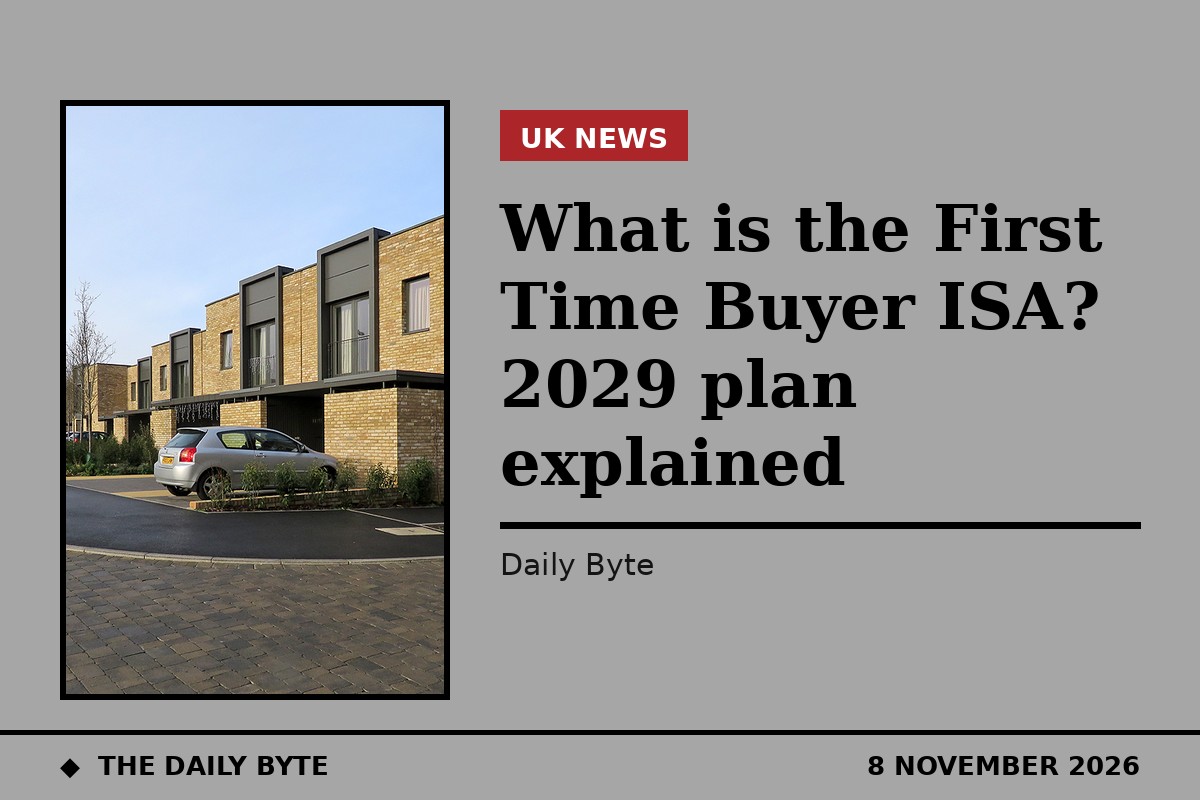
The First Time Buyer ISA is a new government-backed savings account for people buying their first home, announced in the Autumn Budget on 28 October 2026. It will launch on 6 April 2029 and replace the Lifetime ISA for new savers. Savers will be able to pay in up to £4,000 a year, and the Government will add a 25% bonus, up to £20,000 in total, when the money is used to buy a first home costing no more than £450,000. Unlike the Lifetime ISA, it will have no upper age limit and no withdrawal charge.
Chancellor John Healey confirmed the new account in his first Autumn Budget, delivered on 28 October 2026 under Prime Minister Andy Burnham. HM Treasury published its response to the consultation on the new account alongside the Budget. The account cannot be opened yet: it will not exist until April 2029, and several details, including legislation and which providers will offer it, still have to be completed.
When does the First Time Buyer ISA start?
The new account opens on 6 April 2029, the first day of the 2029-30 tax year. From that date, providers will stop opening new Lifetime ISAs, and the First Time Buyer ISA will be offered instead. People who already hold a Lifetime ISA will be able to keep contributing to it and using it under the existing rules; the change affects new savers, not existing accounts.
That long lead time matters for anyone saving now. If you plan to buy within the next two years, the First Time Buyer ISA will not help you, because it does not open until 2029. The Lifetime ISA remains the government-backed option for deposit saving until then, and the Budget also made an immediate change to it, cutting the withdrawal charge for some buyers from 29 October 2026.
How much can you save, and how big is the bonus?
Savers will be able to pay up to £4,000 into a First Time Buyer ISA in each tax year, the same annual limit as the Lifetime ISA. The Government will add a bonus of 25% of the account's final balance when the money is withdrawn for a qualifying first-home purchase, up to a total bonus of £20,000. To receive the maximum £20,000 bonus, a saver would need to have built up £80,000 in the account.
The home being bought must cost no more than £450,000. The account must have been open for at least a year before the bonus can be claimed, and the buyer must purchase the home with a mortgage. The bonus is paid at the point the money is withdrawn for the purchase, rather than being added year by year as the Lifetime ISA bonus is.
Who can open a First Time Buyer ISA?
Anyone aged 18 or over who is buying a first home will be able to open one. There will be no upper age limit, which is one of the main differences from the Lifetime ISA: that account can only be opened between the ages of 18 and 39. The change widens access to government-supported deposit saving, particularly for older first-time buyers who were shut out of the Lifetime ISA by the age cap.
The account is only for buying a home. There is no retirement option, unlike the Lifetime ISA, which can also be used as a retirement savings product from age 60. If you take money out of a First Time Buyer ISA for anything other than a qualifying first-home purchase, you simply do not get a bonus. There is no withdrawal charge, which is the other big difference from the Lifetime ISA.
How is it different from the Lifetime ISA?
The two accounts share the £4,000 annual limit, the 25% bonus rate and the £450,000 property price cap, but they differ in four important ways. First, the First Time Buyer ISA has no upper age limit for opening, while the Lifetime ISA closes to new savers at 40. Second, the bonus on the new account is calculated on the final balance and paid when the money is withdrawn for the purchase; the Lifetime ISA bonus is added monthly on money paid in.
Third, the new account has no retirement use: it is only for buying a first home. Fourth, and most importantly for savers, there is no withdrawal charge on the First Time Buyer ISA. Taking money out for another purpose means losing the bonus, but not part of your own savings. Under the Lifetime ISA, withdrawing money for anything other than a first home or retirement triggers a charge, which is currently 25% of the amount withdrawn.
What changes for Lifetime ISA savers now?
The Budget made an immediate change that helps some Lifetime ISA holders straight away. From 29 October 2026, the withdrawal charge falls from 25% to 20% when a Lifetime ISA is used to buy a first home that costs more than the £450,000 price cap, provided the purchase otherwise meets the qualifying rules. At 20%, the charge takes only the bonus, so savers get back what they paid in, rather than losing some of their own money as they did under the 25% charge.
That change matters in practice because the £450,000 cap has not risen while house prices have. In London and the South East in particular, many first-time buyers found their chosen home priced above the cap and faced a choice between losing a quarter of their savings or finding another way to buy. The lower charge does not remove the cap, but it softens the penalty for exceeding it.
The Budget also kept the £20,000 cash ISA allowance, reversing a planned cut to £12,000 that had been expected before the Budget. The Chancellor also announced a new ISA incentive for first-time investors, and a separate scheme for first-time buyers called Your First Home.
What is the Your First Home scheme, and is it the same thing?
No, Your First Home is a separate scheme, and the two are easy to confuse. Your First Home is a government-backed equity loan designed to help first-time buyers purchase a new-build home with a smaller deposit and a smaller mortgage. Buyers can purchase with a 2.5% deposit and a 20% government equity loan, which is interest-free for five years. It only covers new-build homes.
Your First Home is due to open for pre-registration by the end of December 2026, with full applications opening from February 2027. The First Time Buyer ISA, by contrast, is a savings account that opens in April 2029 and can be used towards any qualifying first home, not just new builds. A buyer could in principle use both: save in the ISA for a deposit, and use the equity loan scheme for the purchase, if they meet the conditions of each.
What is still unknown about the First Time Buyer ISA?
Several details remain to be settled. Legislation to create the account has not yet been passed, and the full product rules, including how the bonus is claimed and which providers will offer the account, have not been published. The Government has said the account will be available from 6 April 2029, but savers cannot open one, reserve one or pre-register for one now.
As with all Budget measures, the details could change as the legislation passes through Parliament. Anyone planning around the new account should check the official position closer to the launch date, and should not assume that the terms announced in the Budget are final. For now, the Lifetime ISA remains the account to use, and its rules, including the reduced 20% charge for purchases above the price cap, are the ones that apply to savers today.
Frequently asked questions
What is the First Time Buyer ISA? It is a new savings account for first-time buyers, launching on 6 April 2029. Savers can pay in up to £4,000 a year and receive a 25% government bonus, up to £20,000, when the money is used to buy a first home costing up to £450,000.
When can I open a First Time Buyer ISA? Not until 6 April 2029. The account does not exist yet, and providers will stop opening new Lifetime ISAs on the same date.
Is there an age limit for the First Time Buyer ISA? You must be 18 or over to open one, but there is no upper age limit, unlike the Lifetime ISA, which can only be opened before age 40.
What happens if I take the money out for something else? There is no withdrawal charge. You simply do not receive the government bonus on money not used for a qualifying first-home purchase.
What happens to my Lifetime ISA? Existing Lifetime ISA holders can keep contributing to and using their accounts under the current rules. From 29 October 2026, the withdrawal charge for buying a first home above the £450,000 cap is 20% instead of 25%.
Can I use the First Time Buyer ISA with the Your First Home scheme? The two schemes are separate, but they are designed to be compatible: the ISA helps you save a deposit, while Your First Home is an equity loan for buying a new-build home. Full rules for both are still being finalised.
Sources: Which? coverage of the Autumn Budget 2026 and Barclays' Budget review, both published on 28 October 2026 and setting out the First Time Buyer ISA terms confirmed by the Chancellor. Budget measures remain subject to legislation, and details may change before the April 2029 launch.