What Is a GHIC? UK Health Card Explained
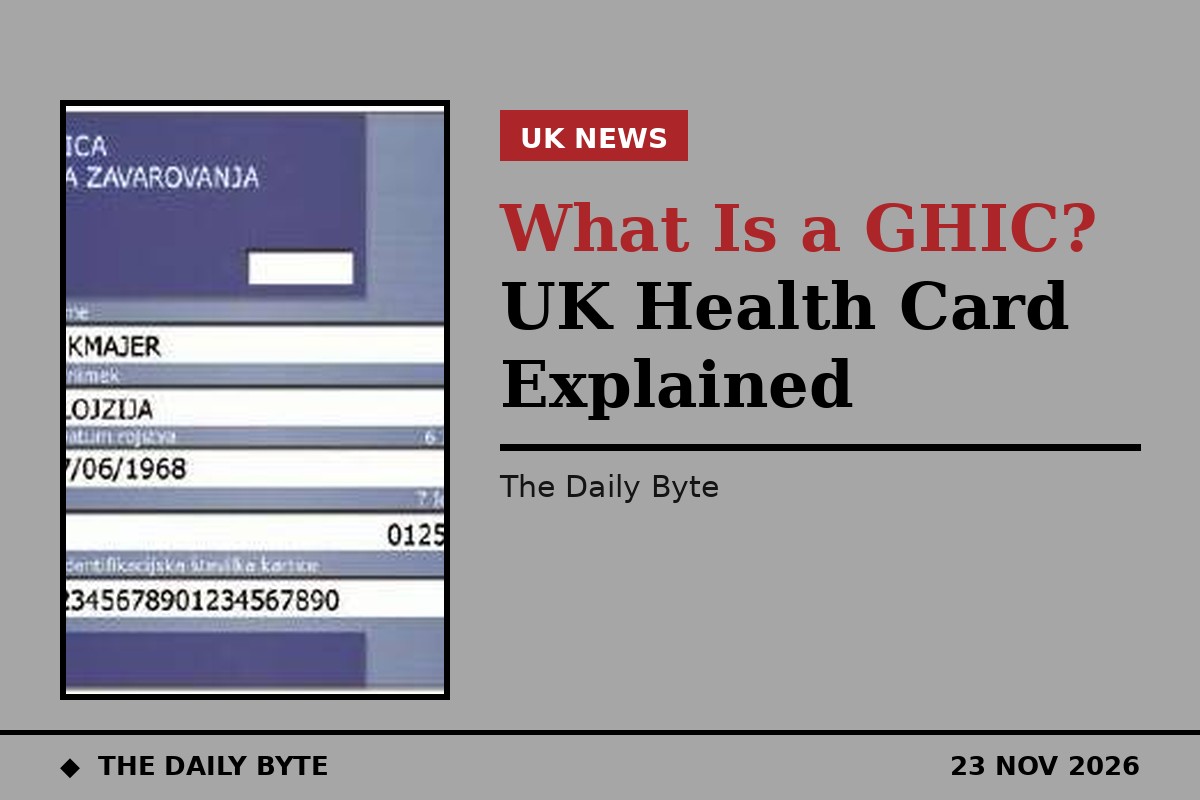
A GHIC — a UK Global Health Insurance Card — is a free card that lets UK residents get medically necessary, state-provided healthcare while visiting the EU and some other countries, on the same terms as local residents. It replaced the old European Health Insurance Card (EHIC) for most UK residents after Brexit. If you are travelling to Europe, it is one of the first things to sort out — but it is not a substitute for travel insurance, and a surprising number of people still pay copycat websites for a card that is always free from the NHS. This guide explains what a GHIC covers, who can get one, how to apply, and where it differs from an EHIC.
More than 1.28 million GHICs were due to expire in the UK during 2026, according to a Freedom of Information request reported by MoneySavingExpert — so if your card is a few years old, check the expiry date before your next trip. A card is valid for up to five years, and you need to apply for a new one when it runs out.
What is a GHIC?
The Global Health Insurance Card is issued by the NHS Business Services Authority. It is proof that you are entitled to state-provided healthcare that becomes medically necessary during a temporary stay in a participating country. That means treatment for an illness or injury that happens while you are away — a broken ankle on a walking holiday, for example, or urgent care for a flare-up of a long-term condition such as kidney dialysis.
The key phrase is "medically necessary". The card is not a blank cheque for any treatment you fancy while abroad, and it does not cover you if you travel abroad specifically to get treatment. It covers care through the state healthcare system of the country you are visiting — not private hospitals — and it covers you on the same terms as a local resident. If local residents get the treatment free, you do too. If they pay a patient contribution, you pay the same amount.
What does a GHIC cover?
A GHIC covers medically necessary, state-provided healthcare. In practice that includes emergency treatment, a visit to a state GP or hospital, and treatment for pre-existing conditions that need attention while you are away, including routine maternity care and dialysis. What it does not cover is just as important: it does not cover private treatment, it does not pay for you to be flown home if you fall seriously ill, and it does not cover cancellations, lost luggage or any of the other things travel insurance is for. That is why the NHS is blunt about it: a GHIC is not a replacement for travel insurance, and you should have both.
Some countries charge for state healthcare in ways that surprise British travellers. In France, for example, patients often pay part of the cost of state treatment upfront and claim some of it back. A GHIC puts you on the same footing as a French resident — no better, no worse. Keep your receipts, because you may be able to claim a refund for healthcare covered by your card through NHS Overseas Healthcare Services when you get home.
Where can you use a GHIC?
A GHIC is accepted in all EU countries, and in Iceland, Liechtenstein, Norway and Switzerland. Reciprocal healthcare arrangements also mean the card is accepted in Australia, and it can be used as proof of UK residency to access state-funded treatment in a small number of other places, including Montenegro and St Helena. The list of countries can change as the UK government negotiates new agreements, so always check the latest NHS guidance and the official travel advice for your destination before you go.
If you fall ill in a country that does not accept the card, it will not help you — another reason travel insurance matters. And if you are going to more than one country, check each one: coverage is decided country by country.
GHIC vs EHIC: what is the difference?
For most travellers, there is no practical difference between the two cards while they are in date. Both give you the same access to state healthcare in the same countries, and neither is a substitute for travel insurance. The real difference is who can apply for each one now.
The EHIC was the card UK travellers used when the UK was in the EU. If you still hold a UK EHIC and it has not expired, you can keep using it until the expiry date printed on it — there is no need to swap it for a GHIC early. When it expires, or if you are applying for the first time, you will normally be issued a GHIC instead.
New UK EHICs are now only available to smaller groups of people, including UK state pensioners living in the EU and their family members, UK students studying in the EU or Switzerland, people from EU countries, Switzerland, Norway, Iceland or Liechtenstein who were already living in the UK before 1 January 2021, and UK workers temporarily posted abroad by their employer. If you have rights under the EU Withdrawal Agreement, you can choose to apply for a new UK EHIC rather than a UK GHIC. For everyone else, the GHIC is the card to apply for.
Who can get a GHIC?
You are entitled to a UK GHIC if you are ordinarily and legally resident in the UK and you do not have healthcare cover provided by an EEA country or Switzerland. That covers British citizens and non-British nationals living in the UK alike. If your circumstances change and you no longer meet those conditions, you may not be entitled to keep using the card, and you should contact NHS Overseas Healthcare Services.
Every member of your family needs their own card, including children. You can add your spouse, civil partner and children to your application when you apply — just enter your own details first and add the others when prompted. Students have a slightly different process: if you are studying abroad as part of a UK course, you will need a letter from your university or college, and you may be issued a time-limited card tied to your course.
How to apply for a GHIC
Applying is free and takes a few minutes online. The only official route is the NHS website — apply at nhs.uk/ghic. You will need your full name, address, date of birth and National Insurance number, or your Health and Care number if you are from Northern Ireland. The NHS says it will email you within 24 hours to let you know whether your application has been approved, and once approved your card should arrive by post within 15 working days.
Apply in good time before you travel. If your card has not arrived and you need medically necessary treatment during your visit, you can apply for a Provisional Replacement Certificate (PRC), which gives you temporary cover. You can also replace a lost or damaged card through the same NHS service. If you prefer not to apply online, you can call NHS Overseas Healthcare Services on 0300 330 1350 from the UK.
Beware copycat websites that charge for a GHIC
This is the single most important warning in this guide. The GHIC is always free, and the only official application is through the NHS. Unofficial websites advertise GHIC applications and charge fees — MoneySavingExpert warns of sites charging £20 or more — for doing nothing you cannot do yourself for free in a few minutes. Some of these sites look official, with similar names and NHS-style branding. If a site asks you to pay for a GHIC, close it and go to the NHS website instead. The same warning applies to EHIC applications.
Frequently asked questions
Is a GHIC free? Yes. It is completely free to apply for through the NHS. Any website charging a fee is unofficial.
How long does a GHIC last? A GHIC is valid for up to five years. Check the expiry date printed on the card and apply for a new one before it runs out.
Can I still use my old EHIC? Yes, until the expiry date printed on it. Once it expires, apply for a GHIC.
Does a GHIC replace travel insurance? No. It only covers medically necessary state healthcare. It does not cover private treatment, medical repatriation, cancellations or lost baggage. You still need travel insurance.
Does each family member need a card? Yes. Every person needs their own card, including children — but you can add family members to one application.
What if my card has not arrived before I travel? If you need treatment while away, you can apply for a Provisional Replacement Certificate (PRC) for temporary cover.
Can I use a GHIC for planned treatment abroad? No. The card covers healthcare that becomes medically necessary during a temporary stay. It does not cover travelling abroad specifically for treatment.
Sources: NHS, Applying for healthcare cover abroad (GHIC and EHIC) and MoneySavingExpert, Apply for a free UK GHIC — and are EHICs still valid?. Check the official NHS page before you travel, as country coverage and eligibility can change.