What Is the UK Graduate Visa? Explained
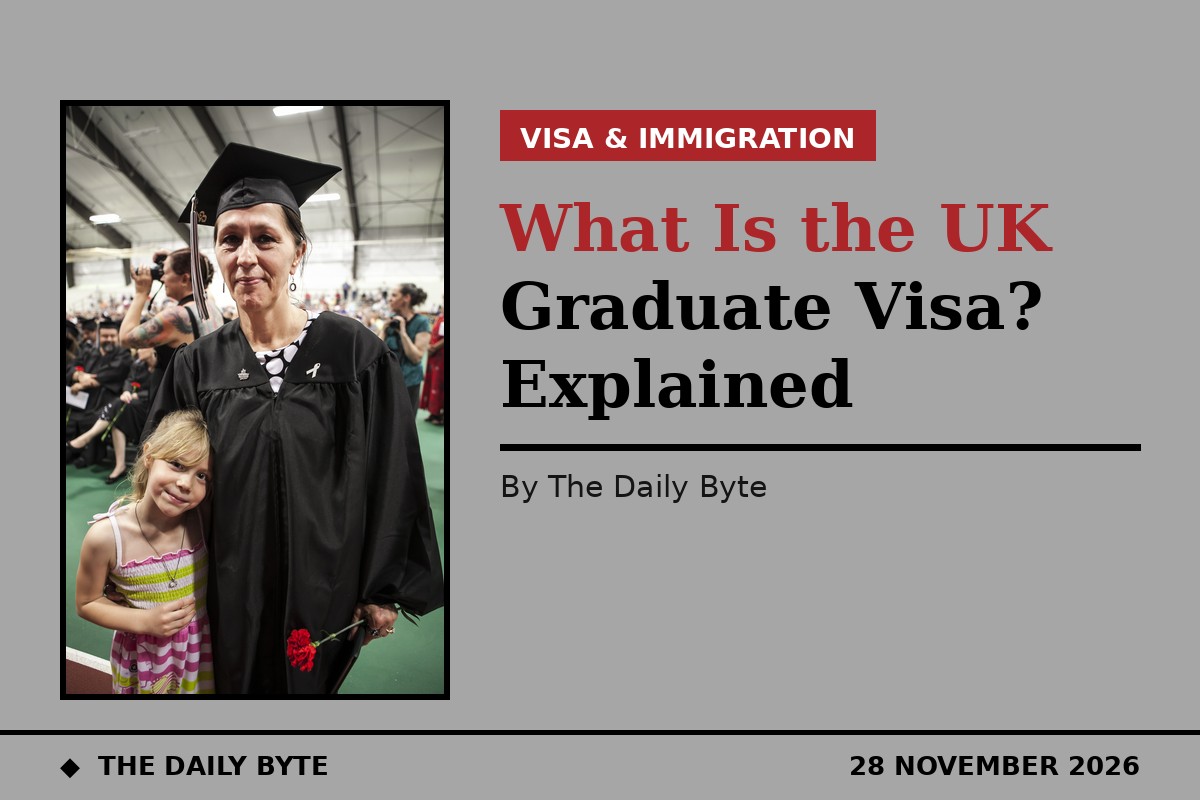
The UK Graduate visa is a post-study work visa that lets international students stay in the UK to work, or look for work, after successfully completing an eligible UK course. You do not need a job offer or a sponsoring employer to apply. How long it lasts depends on when you apply: two years if you apply on or before 31 December 2026, 18 months if you apply on or after 1 January 2027, and three years if you have a PhD or another doctoral qualification.
The visa is in the news again. On 26 November 2026, Reform UK leader Nigel Farage announced that a Reform government would scrap the Graduate route altogether, replacing it with a 30-day window for graduates to secure a skilled, well-paid job. That is a party pledge, not a change in the law: the route is still open, and the change already written into the Immigration Rules is the cut from two years to 18 months for applications made from 1 January 2027. This guide explains the visa as it stands today, what it costs, who can apply, what you can and cannot do on it, and which of the announcements about its future are already law and which are only proposals.
Who can apply for a Graduate visa?
You can apply if all of the following are true. You must be in the UK when you apply. Your current visa must be a Student visa or a Tier 4 (General) student visa. You must have studied a UK bachelor's degree, postgraduate degree or other eligible course for a minimum period of time on that visa. And your education provider, such as your university or college, must have told the Home Office that you have successfully completed your course.
Your provider must be a licensed sponsor with a track record of compliance. You do not have to wait until you have graduated or been given a certificate: you can apply as soon as your provider has reported your successful completion to the Home Office. Universities warn students not to apply before that confirmation arrives, because applying too early can lead to a refusal. You must also apply before your Student visa expires.
There is also a study-in-the-UK requirement. If your course lasted more than 12 months, you need to have studied in the UK for at least 12 months on your Student visa. If your course lasted 12 months or less, you need to have spent the full length of the course studying in the UK. Time spent away during term breaks and weekends still counts, but studying your course from overseas without approval can break your eligibility. Students who were affected by the coronavirus pandemic have separate concessions covering study outside the UK between 24 January 2020 and 30 June 2022.
Which courses count?
You usually need to have completed a UK bachelor's degree, a UK master's degree or a UK PhD or doctorate. Several other qualifications also count, including a law conversion course approved by the Solicitors Regulation Authority, the Legal Practice Course in England and Wales, the Bar Practice Course, a Postgraduate Certificate in Education (PGCE) or a Postgraduate Diploma in Education (PGDE). You may also qualify if passing your course made you eligible for a job regulated by UK law or a UK public authority. Your education provider can tell you whether your course is eligible.
You cannot apply if you have already been granted a visa under the Graduate route or the earlier Doctorate Extension Scheme. The visa is granted once only.
How long does the Graduate visa last?
The length of the visa is decided by the date you apply, not by the date you finished your course or the date of your graduation ceremony. GOV.UK states the position plainly. A Graduate visa lasts for two years if you apply on or before 31 December 2026. It lasts for 18 months if you apply on or after 1 January 2027. If you have a PhD or another doctoral qualification, it lasts for three years, whichever date you apply.
Your visa starts from the day your application is approved. That matters for planning: the clock does not start when you submit the form, and a decision usually takes up to eight weeks. You can stay in the UK while you wait for a decision.
The 18-month cut was made by a Statement of Changes in the Immigration Rules laid in October 2025, so it is already in the rules rather than a proposal still under discussion. Students finishing one-year taught master's degrees in late 2026 face the tightest timing: to receive the two-year visa, the application must be made before 1 January 2027, and only after the university has confirmed successful completion.
What does the Graduate visa cost?
There are two payments. The application fee is £937. On top of that, you pay the Immigration Health Surcharge, which is usually £1,035 for each year you will be in the UK. GOV.UK gives the totals: £1,552.50 for an 18-month visa, £2,070 for a two-year visa and £3,105 for a three-year visa. The same fee applies to each dependant who applies with you, and the health surcharge for a child dependant is £776 per year. You are told the exact amount when you apply.
There is no requirement to show a set amount of savings or maintenance funds for the Graduate route. Even so, you need a realistic plan for supporting yourself while you look for work, because the surcharge and the fee are paid upfront and the health surcharge is not refunded if you leave the UK early or switch to another visa.
How do you apply?
You apply online, from inside the UK, through GOV.UK. You will need a valid passport or other travel document that shows your identity and nationality, and the Confirmation of Acceptance for Studies (CAS) reference number from when you applied for your Student visa. If your course fees and living costs were paid by a government sponsor or an international scholarship agency in the last 12 months, you may also need a letter from that sponsor approving your application. Documents that are not in English or Welsh need a certified translation.
As part of the application you prove your identity, usually through the UK Immigration: ID Check app, or by having your fingerprints and photograph taken at a UK Visa and Citizenship Application Services (UKVCAS) service point if the app route does not work for you. You will be told which route applies when you start the application, and you may need an appointment, which can make the process take longer.
One warning matters more than any other. You must not travel outside the UK, Ireland, the Channel Islands or the Isle of Man until you get a decision. If you do, your application will be withdrawn. Once the application is successful, you receive an eVisa, a digital record of your immigration status, which you access through a UKVI account.
Your partner and children can apply to stay as your dependants if they joined you in the UK as dependants on your Student visa. A child born in the UK during your Student visa can also apply. A dependant's visa ends on the same date as yours.
What can you do on a Graduate visa, and what can you not do?
With a Graduate visa you can work in most jobs, look for work, be self-employed, continue living in the UK with your partner and children if they are eligible, travel abroad and return to the UK, and do voluntary work. Any voluntary work must be unpaid and for a registered charity, a voluntary organisation, an associated fundraising body or a statutory body.
You cannot apply for most benefits, known as public funds, or the State Pension. You cannot work as a professional sportsperson. You can only study on a Graduate visa if your chosen course is not eligible for a Student visa; if it is eligible for a Student visa, you should extend your Student visa instead. You may need an Academic Technology Approval Scheme (ATAS) certificate if you study or research sensitive topics.
The visa's flexibility is its main attraction. It does not tie you to one employer or one salary level, and you can change jobs freely. That is also why it is politically contested: critics argue it lets graduates stay for two years without securing work, while supporters say the breathing space is the point, giving graduates time to find work that matches their degree.
Can you stay in the UK longer?
You cannot extend a Graduate visa. When it ends, you must either leave the UK or switch to a different visa. The most common next step is the Skilled Worker visa, which needs a sponsoring employer and a job that meets that route's skill and salary requirements. You should plan that switch well before the Graduate visa expires, because finding a sponsoring employer takes time and the Graduate visa itself does not lead directly to settlement.
If you work in public sector healthcare, check whether the Health and Care Worker visa would suit you instead. It is cheaper to apply for and you do not pay the annual immigration health surcharge. If you take a public sector healthcare job after paying the surcharge for a Graduate visa, you may be able to claim a refund.
What is changing in 2027, and what is only a proposal?
Three different announcements are often confused, and they have very different legal standing.
First, the cut to 18 months is already law. It applies to applications made on or after 1 January 2027 for bachelor's and master's graduates. Doctoral graduates keep three years.
Second, the Budget of 28 October 2026 announced that graduates from universities described as high-compliance would keep a two-year Graduate visa. That is a plan, not yet a rule. No list of qualifying universities has been published, and universities themselves say they are waiting for official confirmation and guidance. Until the change is written into the Immigration Rules, nobody can promise that a particular university qualifies.
Third, Reform UK's pledge to abolish the route is a political promise, not a change in the rules. Announced on 26 November 2026, it would give international graduates 30 days after completing their studies to secure employment that meets a proposed economic contribution test, with those who fail expected to leave. Reform UK has not clarified how abolition would affect people who already hold Graduate visas or students already enrolled. The pledge would only take effect if Reform UK won a general election and formed a government. Home Office figures published on the same day, 26 November, showed 20,478 Nigerian nationals were granted Graduate visas in the year ending September 2026, making Nigerians the third-largest group of beneficiaries.
Frequently asked questions
Do I need a job offer to get a Graduate visa? No. The route is unsponsored, and you do not need a job offer or an employer sponsor before you apply. You can look for work, or work, at any skill or salary level once the visa is granted.
How long is the Graduate visa in 2026? Two years for bachelor's and master's graduates who apply on or before 31 December 2026, and three years for PhD and other doctoral graduates. From 1 January 2027, the standard length for bachelor's and master's graduates falls to 18 months.
Can I apply before my graduation ceremony? Yes. You can apply once your education provider has told the Home Office you successfully completed your course. You do not have to wait until you have graduated or received your certificate.
Can I travel while my application is being decided? No. Travelling outside the UK, Ireland, the Channel Islands or the Isle of Man before you get a decision withdraws your application.
Does the Graduate visa lead to settlement in the UK? Not directly. It cannot be extended, and time spent on it does not by itself lead to indefinite leave to remain. To stay longer you must switch to another route, most commonly the Skilled Worker visa, before the Graduate visa expires.
Immigration rules and fees change, so check the official GOV.UK Graduate visa page before you apply. This article is general information, not personal immigration advice: for advice about your own circumstances, speak to your university's international student advice team or a regulated immigration adviser.