WHO begins first Ebola vaccine trial in DR Congo as outbreak passes 9,700 cases
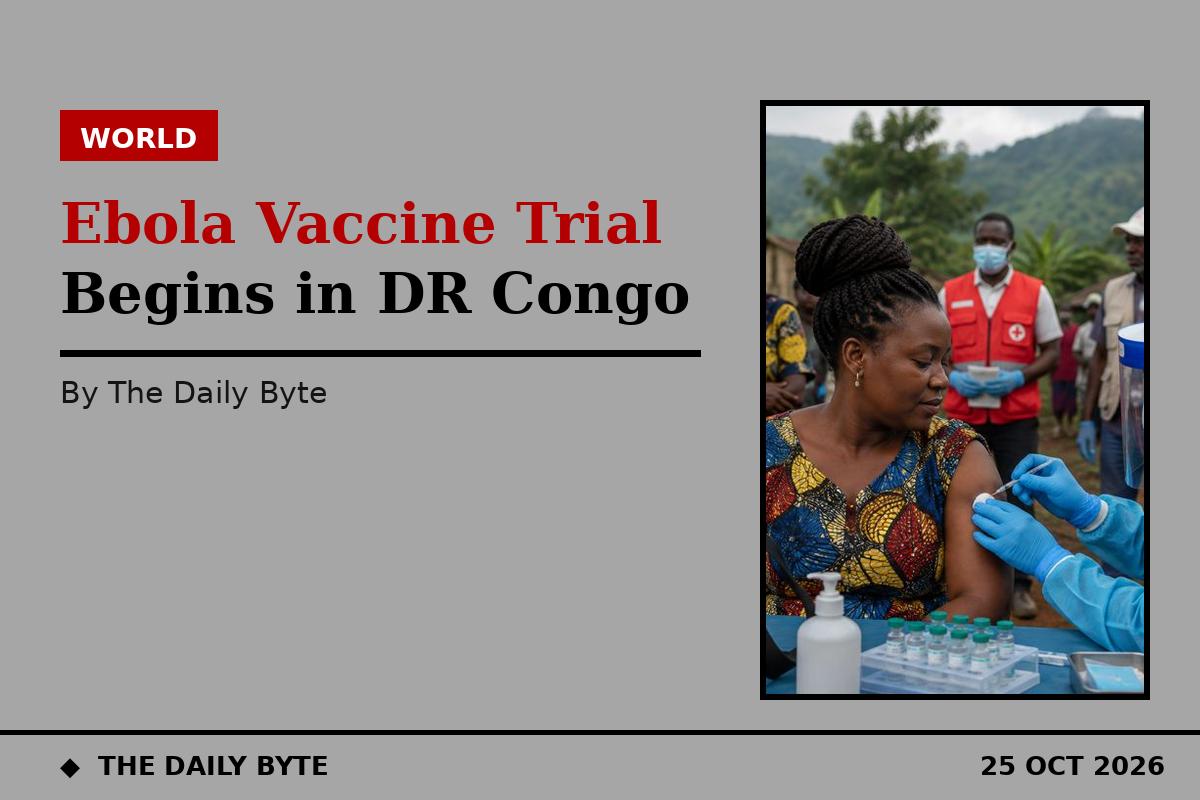
The World Health Organization (WHO) has begun the first clinical trial of an Ebola vaccine in the Democratic Republic of the Congo, in a new effort to find protection against the Bundibugyo strain behind the current outbreak. The trial, called Tumaini — Swahili for “hope” — started in Bunia, in the north-eastern Ituri province, where the first participants have now been vaccinated.
Why this trial matters
No vaccine has yet been approved for the Bundibugyo species of Ebola virus, which has been spreading in the DRC since the outbreak was declared on 15 May 2026. WHO Director-General Tedros Ghebreyesus announced the trial after the first vaccinations in Bunia, saying it would test whether vaccine candidates designed for Bundibugyo actually work. The first candidate to enter the trial is Ervebo, already licensed against the Zaire strain of Ebola; two further candidates, from Moderna and from the University of Oxford with the Serum Institute of India, are expected to join.
The scale of the outbreak
By 20 October, the DRC had recorded 9,704 confirmed cases and 4,687 deaths, a case fatality ratio of about 48 per cent, according to WHO figures reported in the latest update. Cases span 66 health zones across eight provinces, with Ituri still the epicentre. Contact tracing remains short of the 95 per cent target. The trial will use a ring vaccination approach, focusing on contacts of confirmed cases and others at high risk, while researchers assess safety, immune response and effectiveness.
What happens next
The trial is led in the DRC with WHO support. Its results will matter beyond one province: Kenya has grown a cluster from a single imported case, and Nigeria confirmed an imported case in Abuja on 20 October.