Why Are Driverless Taxis Blocked in Washington DC?
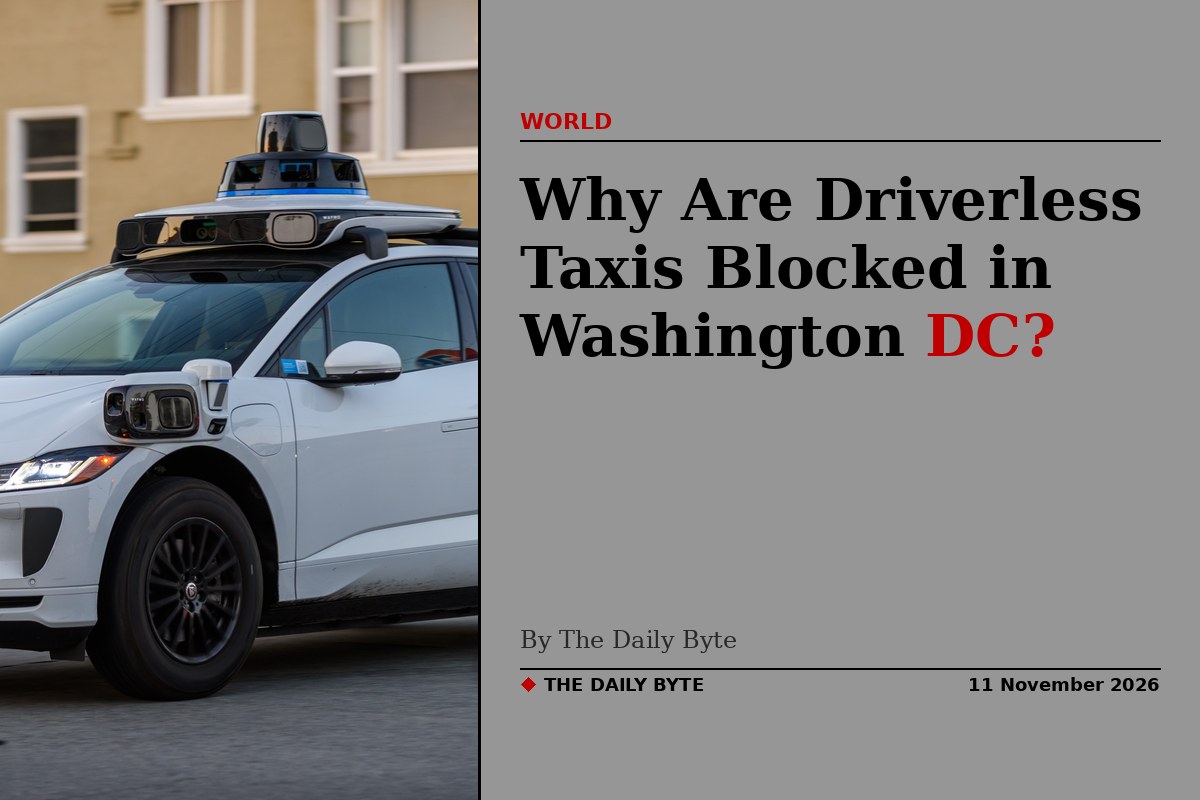
Driverless taxis are blocked in Washington DC because the bill that would legalise them is one vote short in the DC Council committee that must approve it first. Three of the five members of the Committee on Transportation and the Environment say they will vote against it this week, leaving the bill's author, Council member Charles Allen, one vote short of sending it to the full Council.
The bill would let companies such as Waymo carry paying passengers in cars with no one behind the wheel. It was rewritten on Tuesday, 10 November 2026, with new protections for drivers, but the changes have not yet won over its opponents. Here is what the bill does, why it is stuck, and what happens next.
What is the driverless taxi bill?
The bill is the Autonomous Vehicle Deployment Authorization Amendment Act of 2026, known as Bill B26-0684. It was introduced on 1 May 2026 by Charles Allen, the Ward 6 council member who chairs the Committee on Transportation and the Environment.
The bill would create a legal framework for the commercial deployment of autonomous vehicles offering rideshare services in the District of Columbia. At present, companies can test driverless cars in Washington, but they cannot carry paying passengers in vehicles with no one behind the wheel. The bill would change that, allowing firms such as Waymo, the Alphabet-owned driverless car company, to run a paid robotaxi service.
Why is the bill stuck?
The bill cannot reach the full DC Council without first being voted out of Allen's committee, and three of the committee's five members say they will vote no this week. They are Zachary Parker of Ward 5, at-large member Elissa Silverman, and Ward 4 member Janeese Lewis George, who is the mayor-elect. At-large member Christina Henderson would vote yes, which leaves Allen one vote short.
The central dispute is jobs. Opponents, backed by labour unions, say driverless taxis would displace rideshare and taxi drivers. Lewis George has called the push to legalise robotaxis "irresponsible" and warned it would "put countless workers at risk". Supporters of a delay also raise safety concerns and argue the decision should wait until the next legislative session, when new council members and Lewis George's own appointees take office.
What changed in the rewritten bill?
On Tuesday, 10 November 2026, Allen unveiled a rewritten version of the bill in a last-minute attempt to win over sceptics. The new version caps the total number of autonomous vehicles across DC at 800 for all companies, replacing an earlier plan for a smaller initial rollout.
The rewrite would also allow both rideshare drivers and workers at autonomous-vehicle maintenance facilities to unionise, a significant concession to the labour unions that have opposed the bill. Other provisions include a tax on vehicle miles travelled, a requirement that operators begin offering wheelchair-accessible rides, stringent data-sharing rules, and a lengthy driverless testing phase before commercial service can start.
Two of the three opponents said on Tuesday morning that they had not yet read the new version, and all three have said they want the vote delayed until the next session.
Why do opponents want a delay?
The opponents argue that the bill is being rushed through before a change of leadership. Lewis George takes over as mayor in 2027, replacing Mayor Muriel Bowser, and she opposes the bill. Silverman has said the vote should wait until Lewis George's transport, for-hire vehicle and employment services directors are in place.
Allen had hoped to hold a committee vote this week and reach a full Council vote by the end of the year. The Council has held three hearings on the technology in the past two and a half years, and Allen has described his proposal as one of the most progressive pieces of legislation of its kind in the country. Uber has also called for more time, according to The Washington Sun.
What happens next?
Allen's team anticipates the transportation committee will mark up the bill and decide whether to send it to a full Council vote. The Washington Sun reports that a second and final vote is expected later this month.
Time is short. If the bill is not passed before the Council session ends on 2 January 2027, it dies and would have to start all over again in 2027, when Lewis George will be mayor and the Council will have new members. That deadline is why Allen is pushing for a vote this year despite being one vote short.
Can you ride in a driverless taxi in Washington DC today?
No. Driverless cars are being tested in Washington, but no company can yet carry paying passengers in a vehicle with no driver. That will only change if the Council passes the bill and the rules it sets, including the 800-vehicle cap and the testing phase, are put in place. Until then, passengers in Washington must use a human-driven taxi or rideshare car.
Frequently asked questions
Why are driverless taxis not allowed in Washington DC? Because the DC Council has not passed the law that would permit them. The bill to legalise paid driverless rides is stuck in committee, one vote short of advancing to the full Council.
How many driverless taxis would the bill allow? The rewritten bill unveiled on 10 November 2026 caps the total number of autonomous vehicles across DC at 800 for all companies combined.
What happens if the bill is not passed by 2 January 2027? It dies when the Council session ends, and the legislation would have to be introduced again in 2027 under a new Council and a new mayor.
Sources: The Washington Sun and Zark News, 11 November 2026.


