Wirral NHS First Low-Helium MRI Scanner Cuts Waits
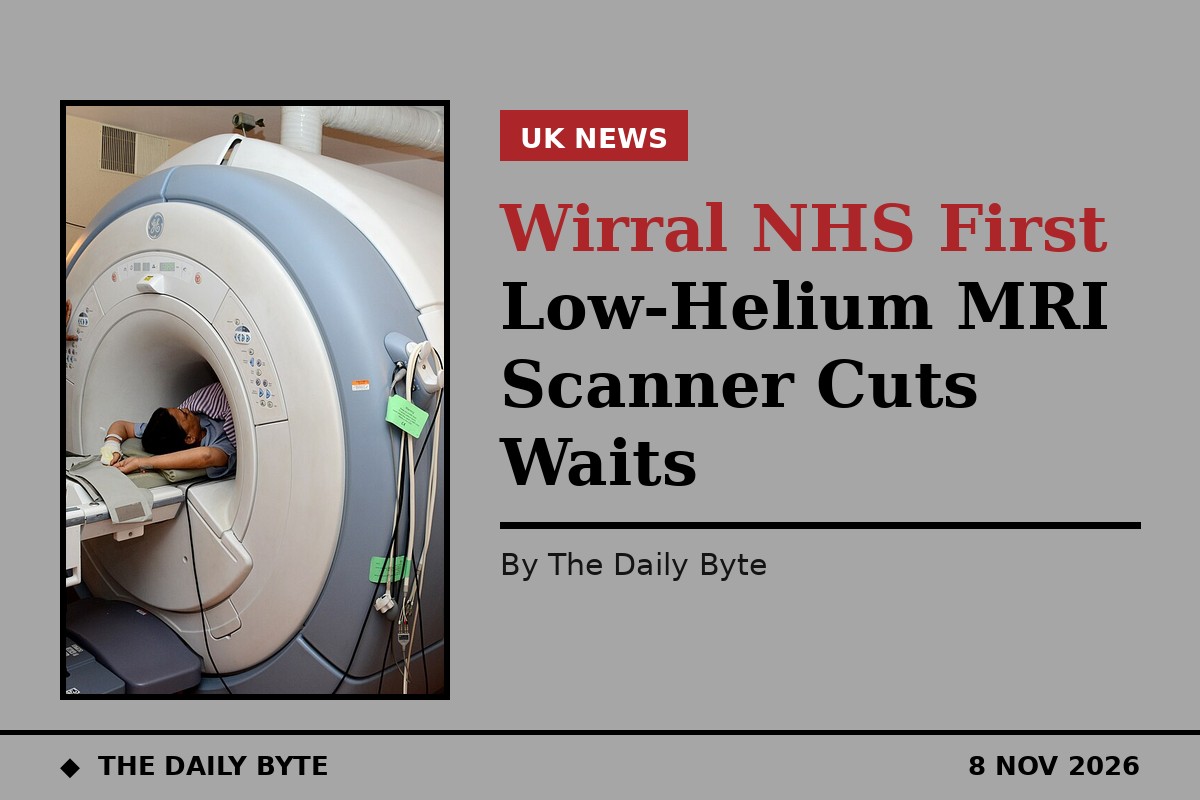
Patients in Wirral will soon benefit from faster access to MRI scans after Arrowe Park Hospital became the first NHS organisation to put a new low-helium scanner into everyday patient care. The MAGNETOM Flow.Elite system, installed at the hospital in Birkenhead, is expected to start seeing patients from mid-November, once radiographers complete specialist training.
The trust says the scanner should allow its team to scan 15 to 20 per cent more patients each day, while maintaining image quality. Advanced technology speeds up image processing, and a wider 70 cm bore is designed to make examinations more comfortable. A specialised patient table will also allow people from intensive care and high dependency units to be moved to and from the scanner more safely.
Why low helium matters
Unlike traditional MRI scanners, which need large amounts of liquid helium to cool their magnets, the new system uses around 0.7 litres of helium sealed inside the magnet for its lifetime, with no need for refills. That is roughly the volume of a water bottle. Reducing reliance on helium, a finite natural resource, also supports the NHS ambition to cut its environmental impact, and the design removes the need for a conventional quench pipe, simplifying where the scanner can be installed.
Timed for World Radiography Day
The announcement comes ahead of World Radiography Day on 8 November, which recognises the role radiographers play in diagnosing and treating patients. The trust will mark the occasion on 9 November with an information stand in the main foyer at Arrowe Park Hospital, where visitors can learn more about radiography services and careers. Principal MRI radiographer Paula Quilliam said the team was proud to be first in the NHS to use the scanner in everyday care, and looked forward to welcoming the first patients later this month.