World Bank: Commodity Prices to Jump 23% in 2026
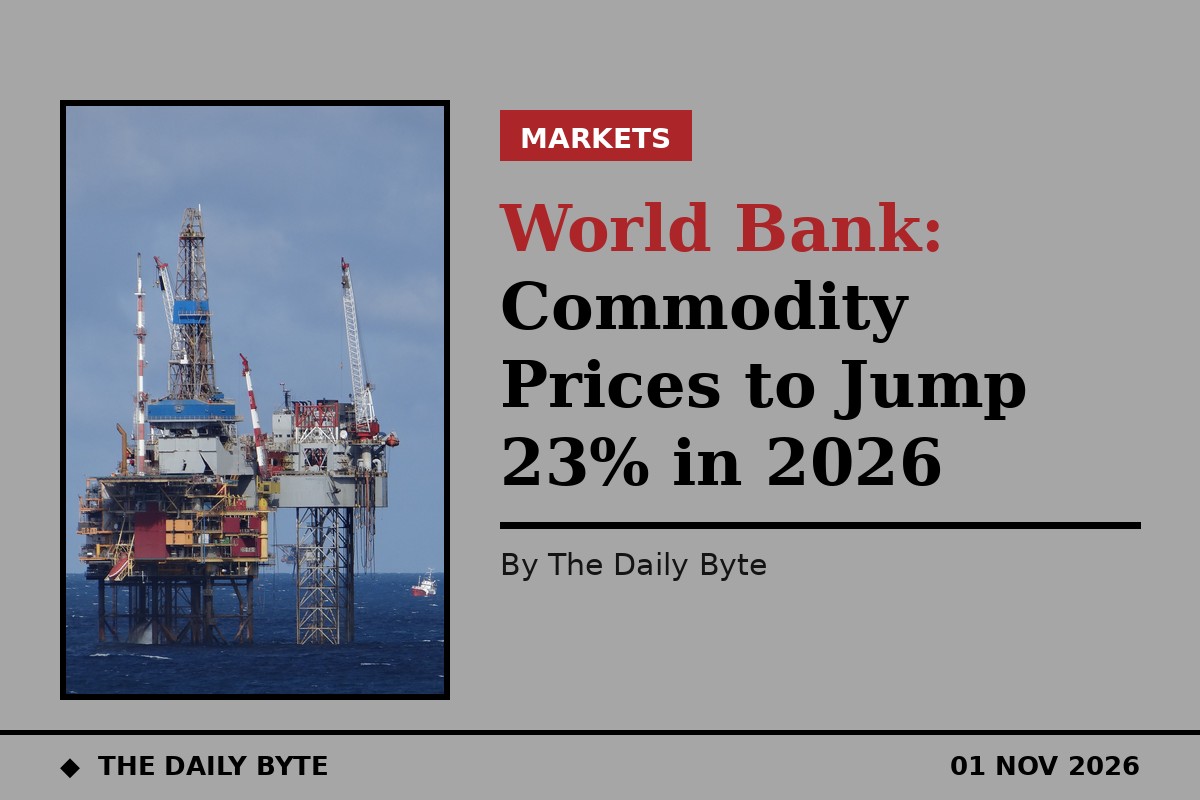
Global commodity prices are on course for a sharp rise this year, driven chiefly by energy costs, according to the World Bank's October 2026 Commodity Markets Outlook. The bank projects an overall increase of 23% in 2026, followed by a decline of 7% in 2027, in a forecast released on 28 October and widely reported on 1 November.
Energy leads the increase
Energy prices are expected to rise by 32% in 2026, reversing three years of declines and reaching a four-year high, the World Bank said. Brent crude, the international oil benchmark, is forecast to average $91 a barrel in 2026, up from $69 in 2025, before easing to $79 in 2027. The bank links the pressure to conflict in the Middle East, which has reduced oil inventories and left markets more exposed to further supply disruption.
Global oil supply is projected to fall by 5.2% in 2026, while oil consumption is expected to fall by 2.5%, as high prices, disrupted industrial activity and growing electric-vehicle use weigh on demand, according to reporting of the outlook by People Daily.
Food and metals also under pressure
Food commodity prices are forecast to rise by about 10% in 2026 and by a further 7% in 2027, a cumulative increase of 18%, as conflict disrupts grain shipments, El Niño threatens harvests, and high fuel and fertiliser prices raise agricultural costs. Industrial metal prices are projected to rise by 25% in 2026 before falling by 3% in 2027.
The bank stresses that its baseline assumes no major intensification of conflicts affecting commodity supplies. If that assumption fails, the report warns, energy prices could rise above the baseline and pressure on food markets could intensify.