One in six young jobseekers out of work as AI creeps into entry-level job adverts
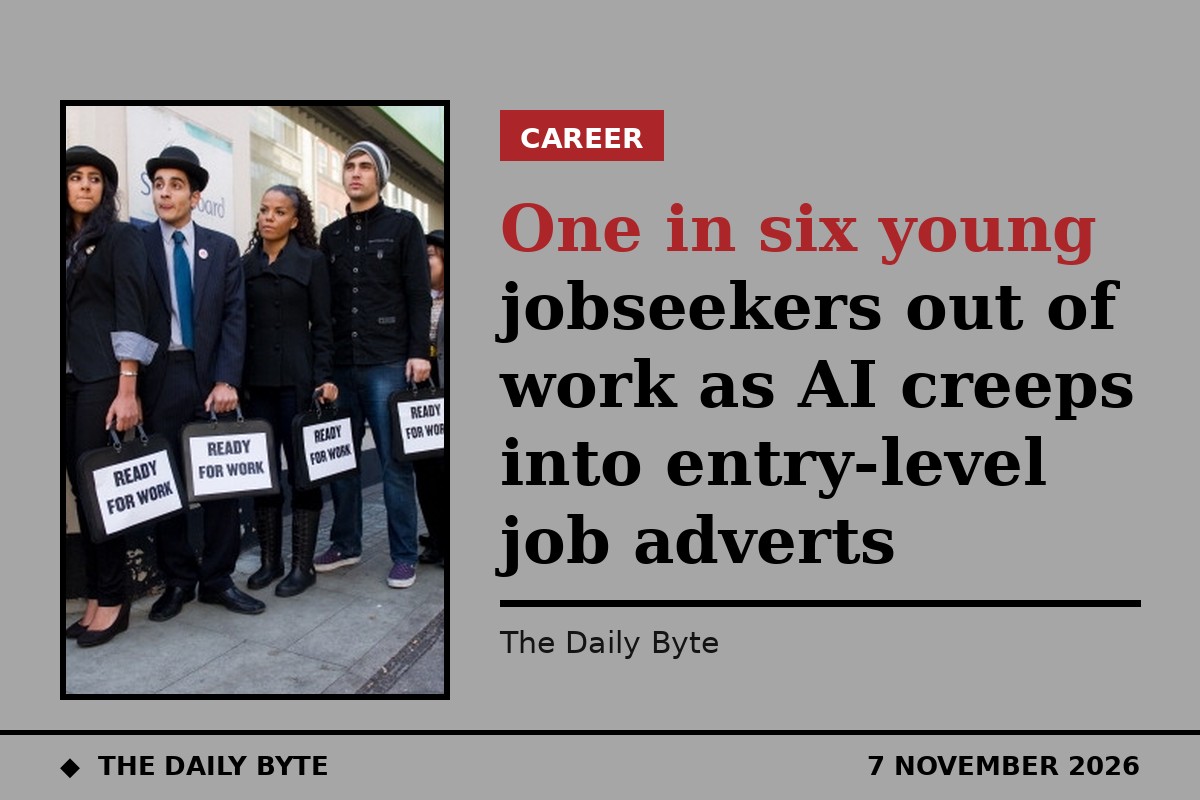
Youth unemployment in the UK stood at 15.6% in June to August 2026, official figures show, as employers write artificial intelligence skills into a growing share of entry-level job adverts. The Office for National Statistics reported 715,000 unemployed people aged 16 to 24, up from 661,000 a year earlier. The rate had hit 16.4% in March to May and again in May to July, its highest since late 2014. Unemployment for all ages was 4.7%.
Fewer vacancies, more AI mentions
Employers reported 691,000 open vacancies in July to September, 37,000 fewer than a year earlier and the lowest outside the pandemic since 2014. Separately, 981,000 young people aged 16 to 24 were not in education, employment or training in April to June, 13.0% of the age group. A Bloomberg report on 5 November said mentions of AI in UK entry-level job postings had almost tripled since early 2025, based on data from Adzuna and Indeed. One in six entry-level postings in highly AI-exposed fields such as banking, law and software development mentioned AI, twice the share a year earlier, while Indeed reported a record 9.4% of all UK postings mentioned AI or related tools at the end of June.
What the figures do not prove
The figures do not show that AI is causing youth unemployment. Indeed senior economist Jack Kennedy told Bloomberg that demand for AI skills was concentrated among a relatively small number of large employers, and that growth in AI-related postings had offset only about a third of the fall in other entry-level postings. The ONS cautions that its Labour Force Survey estimates can be volatile for smaller groups such as young people, and Bloomberg's entry-level figures were not publicly released, so they cannot be independently checked. What the official data does establish is a tight market for first jobs.