Zaporizhzhia Plant Regains Power After Outage
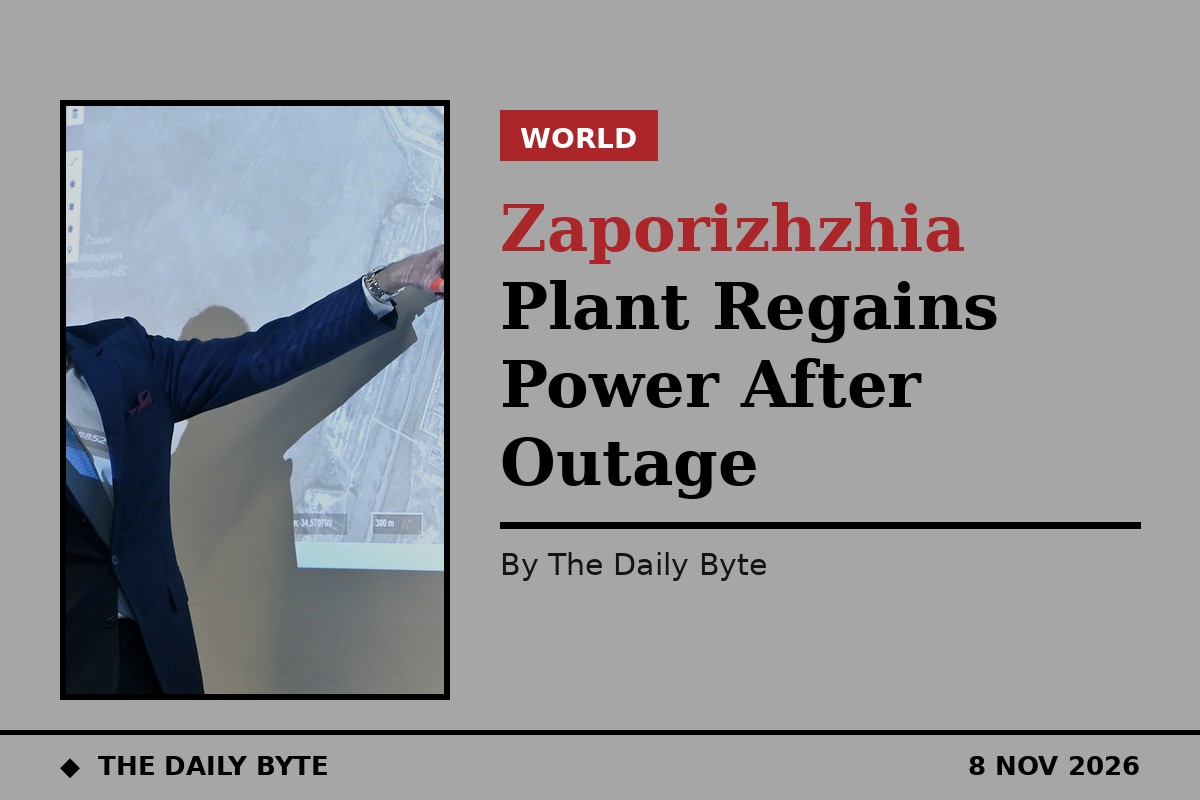
Ukraine's Zaporizhzhia nuclear power plant has regained its external electricity supply after losing it earlier on Sunday, 8 November, state nuclear operator Energoatom said. The company said the 330 kV Ferosplavna-1 power line was switched back on at 17:41, reconnecting the plant to Ukraine's grid.
The restoration ended several hours in which the plant, the largest nuclear facility in Europe, had depended on emergency diesel generators. Zaporizhzhia does not generate electricity, but it needs power from outside links to keep its nuclear fuel cool and its safety systems running. The plant's Russian-installed management said the Ferosplavna line had been shut down by automatic protection systems, and that radiation levels at the site and in the surrounding surveillance zone were normal.
The International Atomic Energy Agency (IAEA), the United Nations nuclear watchdog, confirmed the outage and said the cause and location of the disconnection were not yet known. It described the incident as the 27th complete loss of external power at the facility since the start of the conflict between Russia and Ukraine. Energoatom counted it as the 16th such blackout since the start of 2026.
The IAEA said the plant had enough diesel fuel to run a limited number of emergency generators for about two weeks. Its director general, Rafael Mariano Grossi, called for the grid connection to be restored and for diesel stocks at the site to be increased. The plant's dependence on a single external line had already been a concern: the IAEA said on 23 October that the main Dniprovska power line remained unavailable, leaving Ferosplavna-1 as the site's only grid connection.
Energoatom warned that the risks had not gone away with the restoration. It said operating in blackout mode created a direct risk to cooling and life-support systems if the diesel generators broke down or ran out of fuel, and it cautioned that nuclear-safety risks and the threat of further outages remained while the plant was under occupation.
The plant has been under Russian control since the first weeks of the war that began with Moscow's invasion of Ukraine in February 2022. Its six reactors are not generating power, but the fuel inside them still needs continuous cooling, which is why any loss of outside electricity is treated as a serious safety event even when no radiation release is reported.
This is not the first time the plant has been cut off and reconnected. In early September, a local ceasefire brokered by the IAEA took effect to allow repairs to restore external power after the plant had been without it since 20 August. That history shows how repairs in the area depend on temporary pauses in fighting, and how quickly a single damaged line can put the site back on backup power.
Moscow and Kyiv have regularly accused each other of military action that puts nuclear safety at risk, and neither side's account of who is responsible for damage to the power lines has been independently established. What is confirmed is that the line is back in service, the generators are no longer the plant's only source of power, and the IAEA's team remains at the site monitoring conditions.


