Zardari, Shehbaz agree to settle issues by dialogue
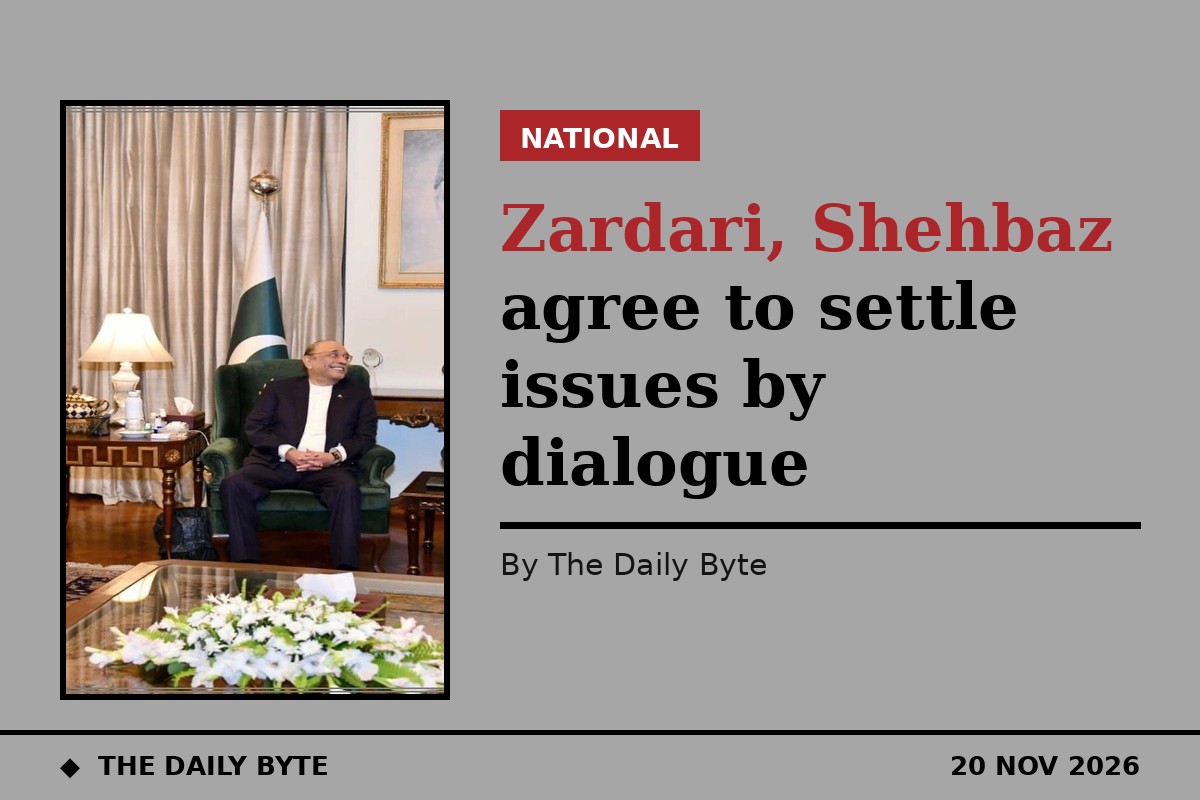
President Asif Ali Zardari and Prime Minister Shehbaz Sharif have agreed that all outstanding issues between the coalition partners will be resolved through dialogue and mutual consultation, the Presidency said after the two leaders met in Islamabad on Thursday.
The meeting at Aiwan-e-Sadr reviewed the prevailing political situation in the country and developments in the Middle East, according to the official statement. Interior Minister Mohsin Naqvi was also present.
“We will sit down together on all issues and resolve them through consultation,” the statement said, in the leaders’ own words.
What the two leaders agreed
The statement said both leaders agreed that every matter would be settled through dialogue and mutual consultation, and that the coalition partners would be consulted collectively. It also noted that previous constitutional amendments had been made through mutual consultation among all coalition parties.
No decision on the creation of new provinces was announced after the meeting, and no date for a referendum was set. The two leaders did not name a timetable, a negotiating committee or a list of concessions.
Why the meeting mattered
The meeting came after days of visible friction between the Pakistan Peoples Party and the Pakistan Muslim League-Nawaz, including public criticism of the government by PPP chairman Bilawal Bhutto-Zardari and sharp exchanges with federal ministers. The debate over new provinces and a possible referendum had added to the strain.
It was the second meeting between the president and the prime minister in less than a week. They had previously met in Lahore on 14 November, where they agreed to strengthen cooperation among coalition partners and advance public welfare initiatives.
The stakes for the coalition are high. The PPP is a key partner in the governing arrangement, and the government depends on its support in parliament. Public disagreement between the two parties therefore carries weight beyond the remarks themselves, and Thursday’s meeting was read in Islamabad as an attempt to steady the relationship before the differences hardened into an open split.
The two leaders also reviewed the situation in the Middle East, according to the Presidency statement, although no detail of that discussion was made public. The region has been a recurring item in the leaders’ recent meetings, alongside the domestic political agenda.
What happens next
The agreement reached on Thursday is a process, not a settlement of the underlying disputes. It gives the coalition a channel for managing its differences, but no public evidence has yet shown that those differences have been resolved.
Attention will now turn to whether the promised consultations take place, and whether the coalition partners reach common ground on the constitutional and administrative questions that have divided them in recent days.