Africa Imported 26 GW of Solar in 2025, Far Above Records
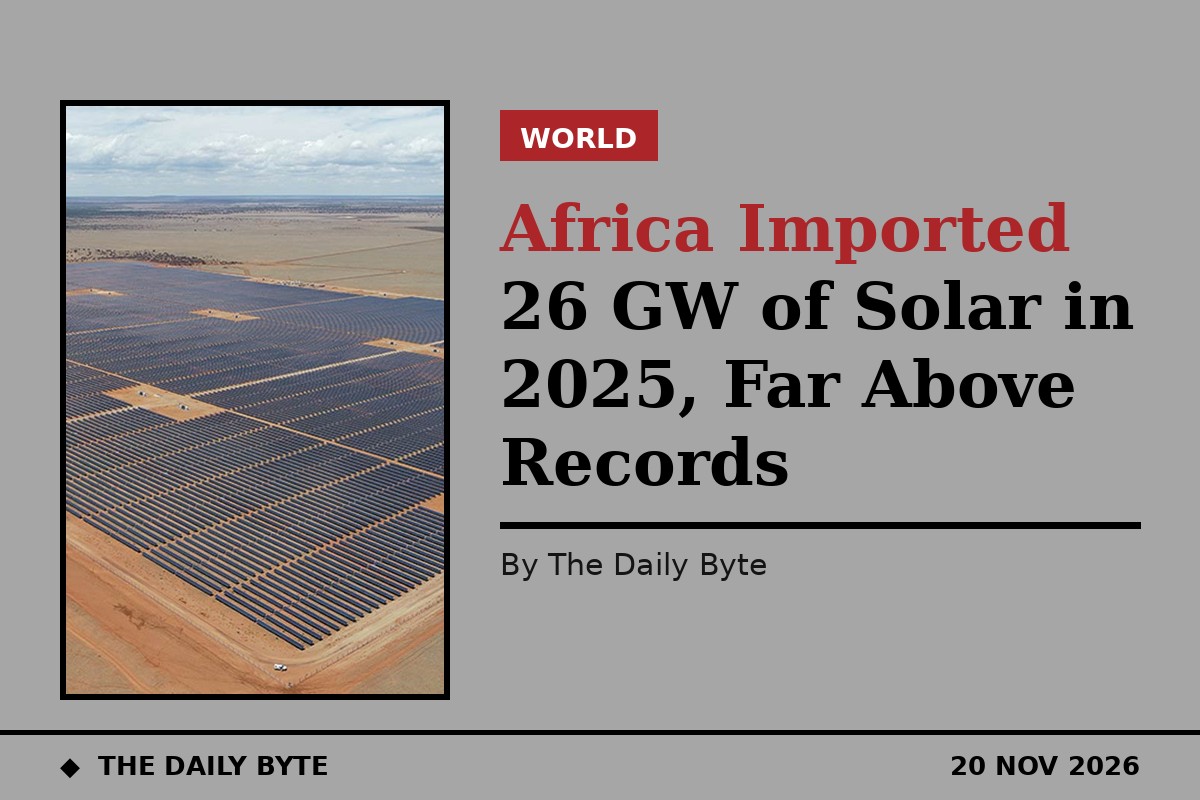
Africa imported about 26 gigawatts of solar equipment from China in 2025 but recorded only about 10 gigawatts of new installations, the International Energy Agency (IEA) said, in figures that suggest much of the continent's solar boom is going uncounted.
The figures, published on 19 November in the IEA's World Energy Outlook 2026, compare two different things: the rated capacity of equipment crossing borders, and the capacity of new systems recorded as installed. They do not show that all the imported equipment was ready to generate electricity, or that it was installed in the same year.
Even so, the scale of the mismatch is striking. Africa has imported about 60 gigawatts of solar panels from China since 2020, but less than half of that capacity appears in official installation records.
A gap that keeps growing
The cumulative gap between imports and recorded installations since 2020 is about 35 gigawatts, according to the IEA's figures. The agency used satellite imagery and other remote-sensing tools to check official records, and found that capacity at large solar installations across Africa was more than 50% higher than official records indicated.
Even after taking those additional installations into account, the agency could not reconcile almost 30 gigawatts of the cumulative gap. In other words, tens of gigawatts of panels have arrived in Africa with no matching record of where they were installed.
The pattern is not new. Solar panel imports to Africa have grown 28-fold since 2017, most of the increase coming from China, and the continent's recorded installations have persistently lagged behind what the trade data implies.
Why the numbers do not add up
The IEA offered several explanations. Some equipment may still be sitting in warehouses. Smaller rooftop and off-grid systems often escape official counts altogether, because they are installed without going through a utility or a central register.
Some imports are also solar cells used to make panels, rather than finished units, and Africa exported nearly 6 gigawatts of solar panels in 2025, which could help explain part of the difference.
The agency gave Johannesburg as an example of how large the blind spot can be. It estimated rooftop solar capacity in the city at more than 400 megawatts in 2025, roughly 60% above the capacity for small-scale installations in official records. Gaps of that kind alone, the IEA said, could not explain the continent-wide difference.
The outlook also noted plans to expand solar-panel manufacturing in Nigeria, which would bring more of the supply chain onto the continent.
Why it matters
For governments, utilities and lenders, the difference matters because capacity they cannot see is capacity they cannot plan around. Grids, subsidies and investment decisions are all built on official figures, and if those figures miss much of the solar actually installed, planning will be based on a smaller system than the one that exists.
The IEA's findings point in the other direction too: Africa's solar boom is bigger than the record books say. The challenge now is to count it properly, so that the panels already on rooftops and in fields show up in the plans for the power system they are already part of.
Sources: Okay News; DNE Africa.