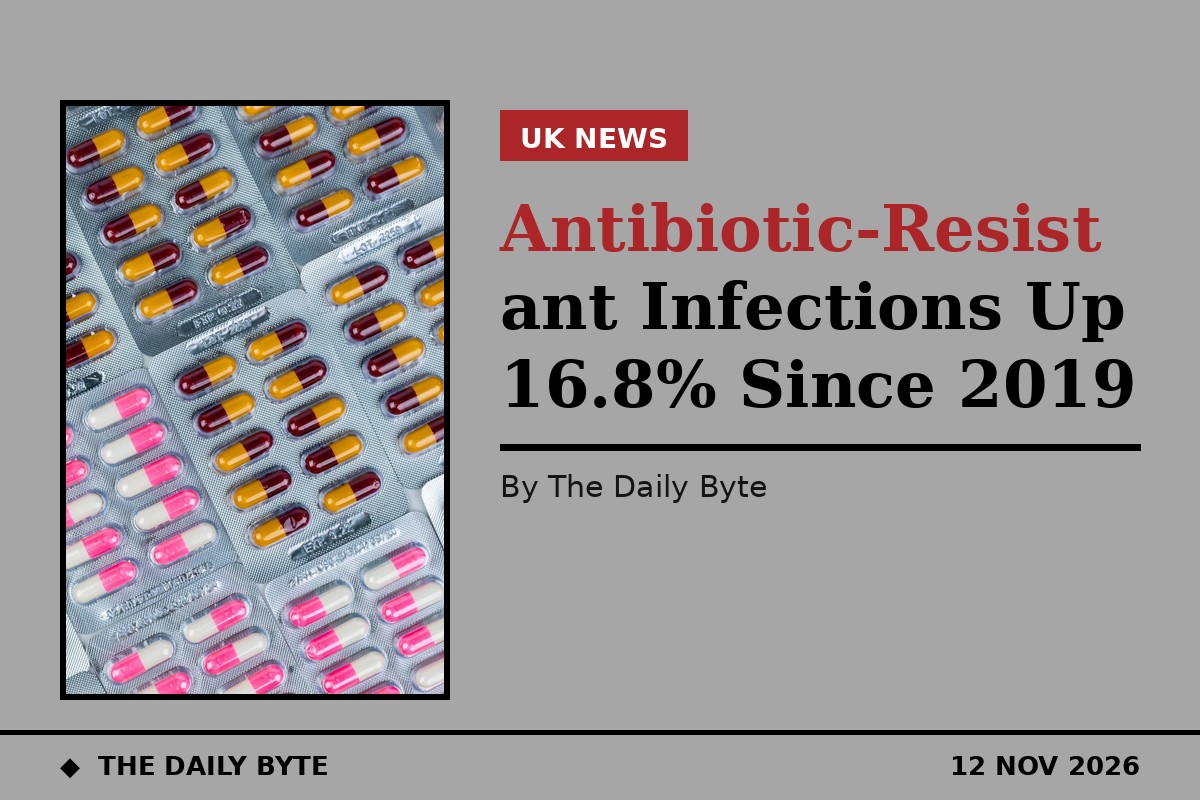
Antibiotic-Resistant Infections Up 16.8% Since 2019
Hundreds of people in the UK are now being diagnosed with potentially life-threatening antibiotic-resistant infections every week, new figures from the UK Health Security Agency (UKHSA) show.
The overall burden of antimicrobial resistance rose by 16.8% between 2019 and 2025, according to the data. There were 21,129 cases of antibiotic-resistant bacteraemia — infections where bacteria are present in the bloodstream — reported in 2025, up from 18,086 in 2019. Officials said that is the equivalent of 406 episodes each week.
Bacteraemia is measured against bacteria resistant to one or more “critically important antibiotics”, the drugs doctors rely on when common treatments fail. When those drugs stop working, infections that were once routine become harder, and sometimes impossible, to treat.
Growth is slowing, but from a high level
There is some encouragement in the figures. Cases rose by 3.2% between 2024 and 2025, a much slower increase than the 9.3% jump recorded between 2023 and 2024. Deaths linked to resistant Gram-negative bacteraemia also fell slightly, to 2,318 in 2025 from 2,399 the year before.
Dr Shona Arora, UKHSA’s interim chief medical adviser, said the figures showed that efforts to promote responsible antibiotic use were having an effect, but that significant challenges remained. “Every week hundreds of people face a new reality of what it means to get an antibiotic-resistant infection, which can increase the risk of serious illness and even death,” she said.
Why resistance keeps rising
Resistance builds when bacteria evolve to survive the drugs designed to kill them, a process accelerated by overuse and misuse of antibiotics in people and animals. The UKHSA has repeatedly urged doctors to prescribe antibiotics only when needed, and patients to finish courses as directed rather than saving pills for later.
The burden is not spread evenly. Resistant infections disproportionately affect people in the most deprived communities and older patients, who are more likely to be in hospital and to need antibiotics in the first place.
A landmark review published in 2016 by Lord Jim O’Neill warned that drug-resistant infections could become a bigger threat to people than cancer if left unchecked. It called for urgent action to cut unnecessary antibiotic use and to give drug companies stronger incentives to develop new treatments.
What happens next
The UK is now working under a national action plan for antimicrobial resistance running from 2024 to 2029, which covers better prescribing, faster diagnosis and support for developing new drugs. The latest figures suggest the direction of travel is improving, but the overall burden is still well above pre-pandemic levels.
Health officials say the task now is to hold the slowdown and push it further. For the public, the advice remains the same: only take antibiotics when a clinician prescribes them, finish the course, and never share leftover pills. UKHSA publishes its surveillance data on GOV.UK, and Sky News reported the new figures on Thursday.