Argentina University Staff Strike Over 2027 Budget
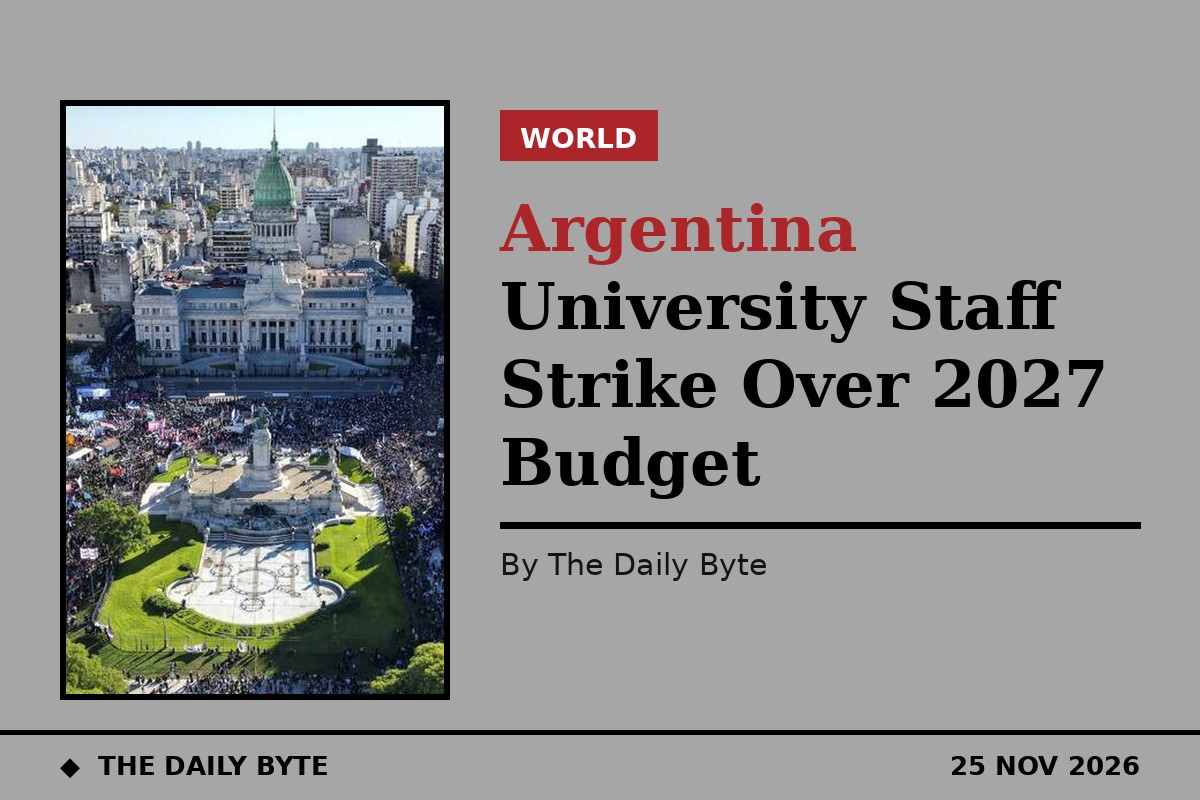
University teaching and non-teaching staff across Argentina held a 24-hour national strike on Wednesday 25 November, halting classes at public universities as the Chamber of Deputies prepared to debate the government's 2027 budget.
The stoppage was called by the university unions, working with the National Interuniversity Council (CIN), which brings together the rectors of the public universities, the Argentine University Federation (FUA) and the National Universities' Trade Union Front. In Buenos Aires, the University of Buenos Aires teachers' association (AGD-UBA) confirmed a total halt to teaching in its faculties, pre-university schools and institutes, while staff at the National University of Rosario and the National Technological University also joined the action.
At the centre of the dispute is the money the government plans to give the universities next year. The unions say the draft budget sets aside about 7.7 trillion pesos in transfers to the national universities, while the rectors' council estimates that at least 11 trillion pesos are needed to keep the system running. The gap between the two figures is more than 3 trillion pesos.
The unions also say the planned funding would equal about 0.54 per cent of gross domestic product, which they describe as the lowest level since 2004. Their central demand is that the government apply the University Financing Law, Law 27.795, which Congress passed and which sets out funding obligations for the sector. The unions say the draft budget ignores that law.
Pay, scholarships and research at stake
The unions say the shortfall would hit staff pay, student scholarships and research, as well as the day-to-day running of universities. They have been demanding a recomposition of salaries for teaching and non-teaching staff, the payment of accumulated debts and the full application of the financing law. They have warned that they may deepen their measures in December if lawmakers do not respond.
The dispute also has a court dimension. The University Financing Law was approved by Congress and then faced a veto attempt by the executive. The government later used decree 759/2025 to suspend the law's application, and that move has been challenged in the courts. On Tuesday 24 November, the federal prosecutor before the Federal Administrative Litigation Chamber, Rodrigo Cuesta, issued an opinion that the decree is unconstitutional, according to Argentine press reports.
Wednesday's action was not limited to the universities. The date also marked the International Day for the Elimination of Violence against Women, and women's organisations joined marches in Buenos Aires and other cities, combining their demands with the university, union and social organisations' protests against the budget.
March on Congress planned for Thursday
The unions plan to keep up the pressure on Thursday 26 November, when the Chamber of Deputies is due to debate the budget. AGD-UBA has called a further stoppage from 11 in the morning, with a march to the National Congress building at 1 in the afternoon. Protests are also planned in other cities across the country.
The government is seeking approval for a budget that projects growth of about 4 per cent and annual inflation of 18 per cent, with the official exchange rate reaching about 1,847 pesos per dollar by December 2027, according to Argentine press reports of the bill. The ruling coalition holds 95 seats in the chamber and needs the support of allied blocs to reach the 129 votes required for a quorum, with provincial governors pressing for more money for universities, disability funding and public works.
For the universities, the coming days will show whether the strike and the march shift the debate. The rectors and unions say the figures in the draft budget would leave public higher education unable to function properly, while the government says its spending plan protects the fiscal surplus. The vote in the chamber, and the size of the protest outside it, will be the next test of that argument.