Autism assessment waits hit 336,764 in England
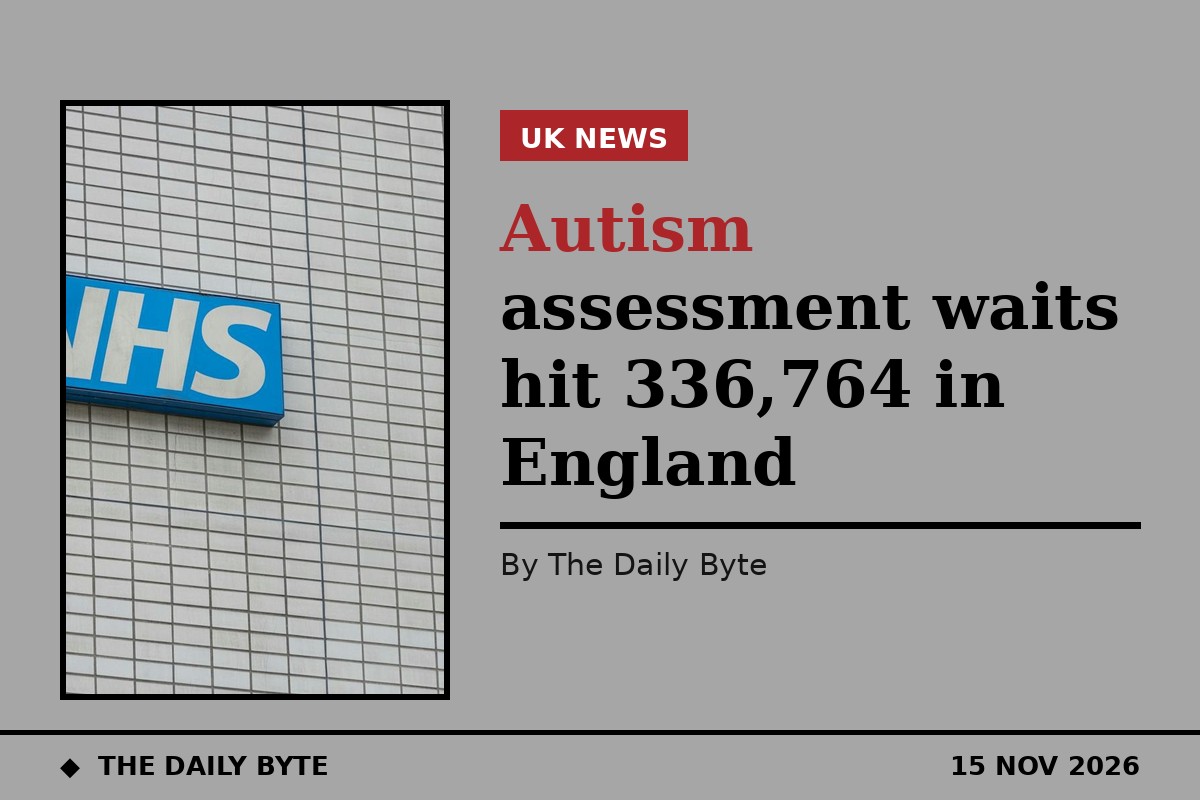
More than 336,000 people in England were waiting for an autism assessment in September 2026, according to new NHS figures — a 34% rise in a year. The National Autistic Society, which analysed the data, says the waiting list has reached 336,764 people and is calling on the Prime Minister to write and fund a new autism strategy.
The figures come from NHS England Digital's Autism Statistics, published on 12 November 2026. They show the number of people with an open referral for suspected autism rose from 327,871 in August to 336,764 in September, a rise of 2.7% in a single month. One provider missed its September data submission, so the true total may be slightly higher still.
Nearly nine in ten of those waiting — 292,180 people, or 86.8% — had already been waiting longer than 13 weeks. That is the longest wait recommended by the National Institute for Health and Care Excellence (NICE), which says a diagnostic assessment should begin within three months of referral. The charity says average waits in some areas are as long as three years and seven months.
Why more people are seeking a diagnosis
The charity is clear that rising diagnoses do not mean there is more autism. It says more people are seeking a diagnosis because understanding has improved and people who were previously missed — particularly women and girls — are now being recognised. It calls this a good thing: a diagnosis can help someone make sense of a lifetime of difficulties and can open doors to education, work, social care and mental health support.
But long waits, the charity says, leave autistic people facing avoidable delays that push many into crisis, with no consequences for the government or NHS England when waiting-time targets are repeatedly missed. Joey Nettleton Burrows, the charity's policy and public affairs manager, said successive governments had failed autistic people and their families. "Action is needed now," she said. "There is a clear need for sustained investment in NHS workforce capacity, so that the needs of autistic people are finally recognised and properly addressed."
A timeline the charity calls government failure
The National Autistic Society sets out a timeline it describes as years of failure. Waiting times were already spiralling before the pandemic, with 62% of areas reporting in 2018 that they would miss the NICE recommendation. In 2021 the government published the most recent national autism strategy, which promised to cut waiting times — but the charity says it came with no methods of accountability and very limited funding, and the strategy has effectively been abandoned since 2022, with the deadline for a refreshed strategy already missed.
Three years ago, NHS England flagged that investment in assessment capacity had not kept pace with referrals, yet the charity says the government took no meaningful action and told local integrated care boards to follow new guidance without extra investment. Since Labour came to power, it says, there has been no additional investment for autism assessments. There is no NHS workforce plan for autism assessments, no requirement for care boards to report assessment spending, capacity, staffing or completed assessments, and autism was not mentioned at all in the NHS 10-year plan.
With too little capacity inside the NHS, spending by care boards on private providers to carry out assessments has more than doubled in the last year, the charity says. Some boards are also restricting the right to choose a provider, which the charity says is creating a postcode lottery for autism services.
What the charity is calling for
The National Autistic Society is asking the Prime Minister to write and fund a new autism strategy, provide enough funding for assessment capacity, and build a system that supports people both before and after an assessment. It points to the recent Fonagy Review, which recommended moving to a needs-led system, but warns that any move to such a system that abandons those currently waiting for an assessment will only increase harm.
The charity says it is still waiting for a government response to the latest figures. The figures cover England only; autism assessment services in Scotland, Wales and Northern Ireland are organised separately. Daily Byte will report any new autism strategy or funding announcement when it is published.


