Bank of England Stability Report Due on Thursday
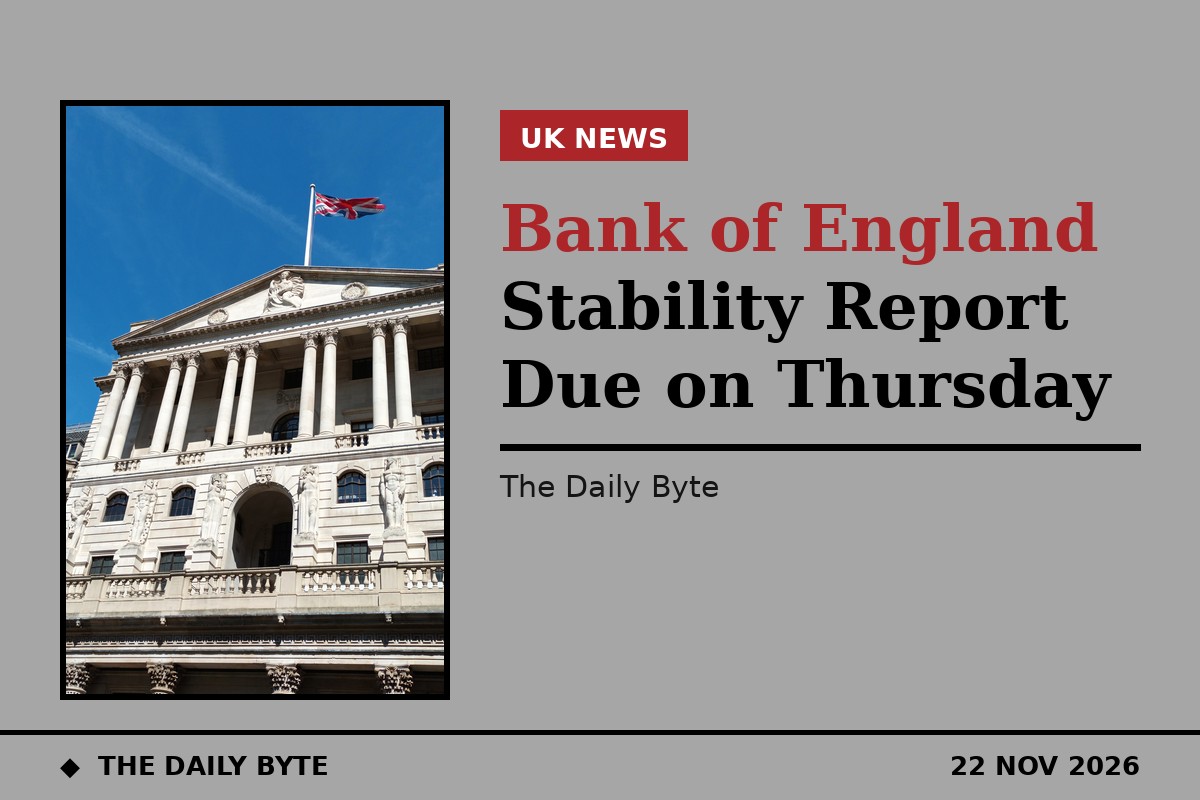
The Bank of England will publish its Financial Stability Report on Thursday 26 November at 10.30am, the Bank has confirmed, with the record of the Financial Policy Committee's November meeting released at the same time. The twice-yearly report is the Bank's main assessment of risks to the UK financial system — and it lands in a week when markets are already on edge.
It comes days after a bruising Friday for global markets, in which the FTSE 100 fell 1% to a five-month low and Wall Street's S&P 500 entered correction territory. The report will show whether the Bank thinks the UK banking system can absorb further shocks, and what it makes of the risks building in bond markets, private credit and artificial intelligence.
A busy week at Threadneedle Street
The report is the centrepiece of a crowded week for the Bank. Chief Economist Huw Pill speaks at a central banking conference in Vienna on Monday 23 November, external rate-setter Megan Greene takes part in a roundtable on UK monetary policy and the Iran shock on Tuesday, and Governor Andrew Bailey appears with three colleagues before the Treasury Select Committee on Wednesday to answer questions on the November Monetary Policy Report, according to the Bank's published schedule.
Thursday is also Thanksgiving in the United States, when Wall Street is closed — meaning the report will land in thin trading, with fewer US investors at their desks to absorb any surprises.
What the committee warned in September
The last full read on the committee's thinking came from its meeting on 25 September. The Financial Policy Committee said the likelihood of linked vulnerabilities crystallising had risen since its previous meeting, with sovereign bond yields across a number of advanced economies at levels not seen since 2008. It judged the system had so far proved resilient, with market adjustments "mostly gradual".
The gilt market was the exception it singled out. Hedge fund leverage in gilts was stable but elevated, the committee said, and the risk of a sharp adjustment remained — underlining the importance of the Bank's work on the resilience of gilt repo, the short-term borrowing secured against government bonds. The committee also noted a substantial increase in leverage in equity markets at its June meeting, and its December 2025 report had already said risks to financial stability increased during 2025.
On bank capital, the committee kept the countercyclical capital buffer — an extra capital requirement on lenders — at 2%, judging the UK banking system appropriately capitalised with high levels of liquidity. UK banks' underlying return on tangible equity rose to 17.1% in the second quarter, and impairments stayed low.
What to watch on Thursday
Three themes are likely to dominate. The first is private credit: the committee has flagged the sector before, noting that private markets funds hold around $16 trillion of assets globally and that risky credit markets, including parts of private credit, remain vulnerable to a tightening in financing conditions. The second is artificial intelligence: global AI-related debt issuance totalled around $450 billion, more than double the total for all of 2025, and the committee has warned that frontier AI could increase cyber and operational risks. The third is the gilt market itself, where the Bank will want evidence that leveraged positions can unwind without disorder.
The committee met again on 19 November, so Thursday's record will show whether its view has hardened after the autumn's market swings, the Bank's own rate rise to 4% in early November and the latest bout of selling. Households and businesses will also be listening for any change in the Bank's view of their resilience, after it judged vulnerabilities broadly unchanged since July even as borrowing costs edged up.
Sources: Bank of England and Financial News.