Black Friday Deals: How to Spot a Bogus Bargain
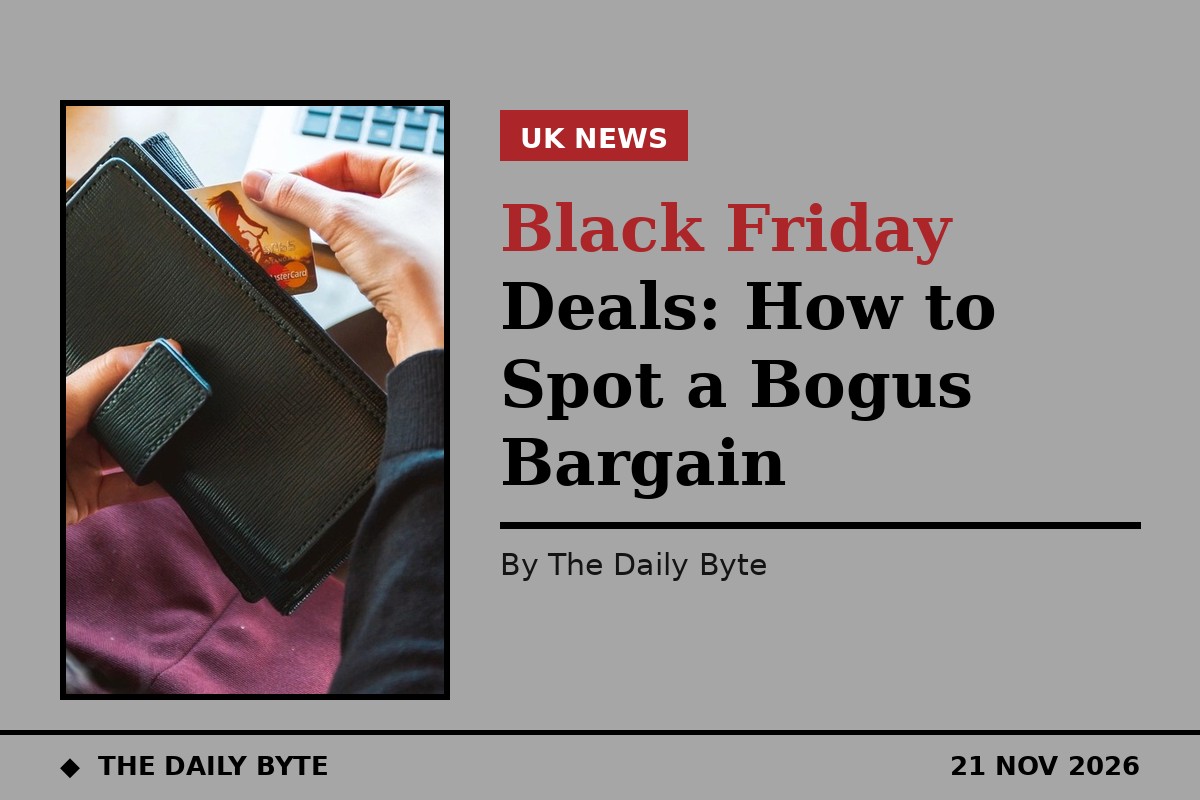
Black Friday falls on Friday 27 November, and shoppers are being warned that many of the deals on offer are not the bargains they appear to be.
Research by the consumer group Which? found that most of the Black Friday offers it tracked were available for the same price, or less, at another time of year. The group followed 175 appliances on sale on Black Friday 2024 at eight major retailers, including Amazon, Argos, Currys and John Lewis, checking their prices over the year around the sale. In 83% of cases, the product could be found cheaper or at the same price outside the four-week Black Friday sales period.
The findings do not mean every Black Friday deal is poor value. The investigation looked at a particular sample of products rather than every retailer and promotion, and some offers do give genuine savings. But the research shows that an advertised discount is not a reliable guide to value on its own.
Parliament hears the worst examples
The issue was put to Parliament's Business and Trade Committee at a hearing on 3 November 2026, where Sue Davies, head of consumer rights and food policy at Which?, and David MacKenzie, lead officer for e-commerce at the Chartered Trading Standards Institute, gave evidence on consumer protection. Three organisations invited to appear, Amazon, John Lewis and TikTok, declined.
MPs heard examples of deals that were not deals. A Samsung washing machine at John Lewis was 399 pounds on Black Friday, but had been 399 pounds for 61% of the year. A toaster on Amazon was advertised at 21.87 pounds, reduced from 29.99 pounds, yet just 60 days before Black Friday it had cost 20 pounds, less than the sale price. A television was listed at 318 pounds with a recommended retail price of 449 pounds, but it had not been sold at 449 pounds on Amazon in the 12 months before the sale.
Davies told the committee that the pattern fits what Which? has seen over the years. People think Black Friday means they are going to get special deals, she said, but when the group monitored prices last year it found that in 83% of cases people could find the product cheaper or at the same price at other times of the year.
How to check whether a deal is genuine
The first step is to look at the product's price history. Free tools such as Keepa and CamelCamelCamel track prices on Amazon, while PriceSpy and PriceRunner compare prices across retailers and, where available, show historical prices. If a product was cheaper in October or early November, before the sale started, the Black Friday price is not a deal.
Second, compare the exact product across retailers, searching for the full product name and model number rather than a general description. Two products can look identical in advertising but differ in storage capacity, processor or screen specification, and the cheapest listing on a big store's website is often from a third-party seller rather than the store itself.
Third, be careful with recommended retail prices. Retailers often use an RRP to show how much shoppers could save, but the RRP is not necessarily the price customers have regularly been paying. A television might carry a recommended price of 999 pounds but spend most of the year selling for 699 pounds. If it is reduced to 649 pounds for Black Friday, the practical saving against its normal selling price is 50 pounds, not 350 pounds.
With a week still to go before Black Friday, shoppers have time to do the checks before they buy. A price-history chart takes less than a minute to read, and it is a better guide than any crossed-out price on the page.