Brexit barriers hit UK food and drink exporters
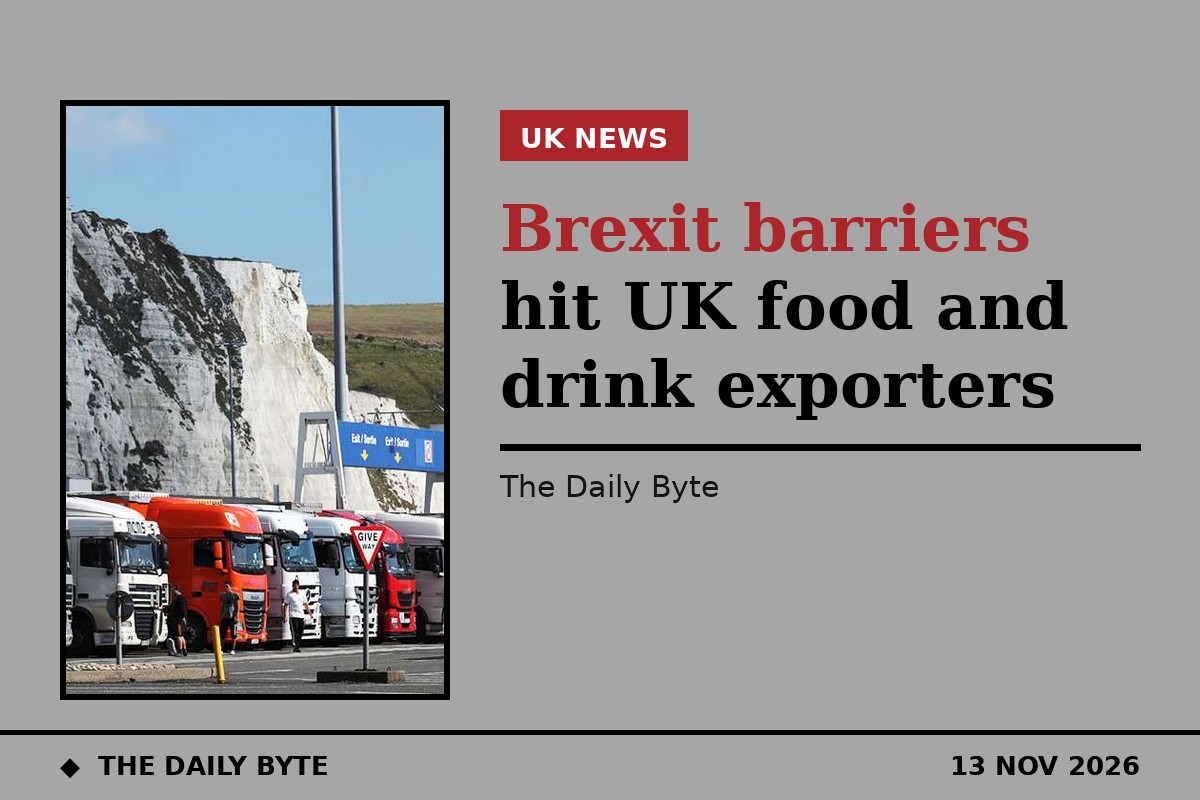
More than half of small British food and drink manufacturers that export to the European Union say post-Brexit trading rules have cut their profits, according to a survey of 600 firms published by the government on 13 November. The findings land a week before a UK-EU summit at which ministers hope to agree a deal to cut the red tape.
The survey, carried out by ICF for the Department for Environment, Food and Rural Affairs, found that 55 per cent of small and medium-sized exporters to the EU and 47 per cent of importers reported lower profitability since new trading requirements were introduced in January 2021. Smaller firms, often family-run, have been particularly exposed to the costs of complex paperwork, border checks and delays, with fewer resources to absorb the extra burden.
What the survey found
The damage goes beyond thinner margins. Among firms that have stopped trading with the EU since 2021, 69 per cent of exporters and 55 per cent of importers said Brexit was a major reason for pulling out. The research also points to an opportunity to revive that trade: 58 per cent of firms said a new UK-EU food and drink agreement could help them increase, resume or begin exporting within a year, with half saying the same for imports.
When firms were asked what would make the biggest difference to exporting to the EU, they overwhelmingly identified less paperwork, named by 79 per cent, lower trading costs, named by 78 per cent, and fewer border delays, named by 71 per cent. The same three priorities topped the list for imports, at 68, 65 and 64 per cent. Clear guidance was rated extremely or very influential by 71 per cent of exporters and 61 per cent of importers, ahead of trade promotion or training.
What firms want changed
Environment Secretary Dame Angela Eagle, who is visiting small firms this week to see how lower trade barriers could help businesses such as Provender grow, expand exports and create jobs, said the figures told a human story. “Behind every one of these figures is a family firm that should be selling great British produce abroad but is instead stuck in paperwork,” she said. “It's exactly why we are doing a deal with the EU to cut red tape and ease pressure on food price inflation, and we will keep working with businesses of every size to make trade easier.”
She added that lower costs for businesses could help ease pressure on food prices, giving families more room to breathe, and that the government wanted growth in every postcode, with food and drink firms of every size sharing in it.
The deal on the table
The government is negotiating a new food and drink agreement, known as a sanitary and phytosanitary deal, intended to make trade with Britain's largest trading partner easier and cheaper. Leaders also met in Dublin on 12 November for the ninth meeting of the European Political Community to discuss security, stability and prosperity across the continent. The UK-EU summit follows on 20 November.
The survey findings reflect businesses' own reports and stated intentions, and the government said it was working with trade bodies and local business networks so that practical support reaches firms in every part of the country. The full research is published on GOV.UK as EU Trade Opportunities for Food and Drink SMEs under a UK-EU SPS Agreement. Further coverage is available from Bytes Europe, and the official announcement is on GOV.UK.


