Bristol to Become UK's First Wetland City
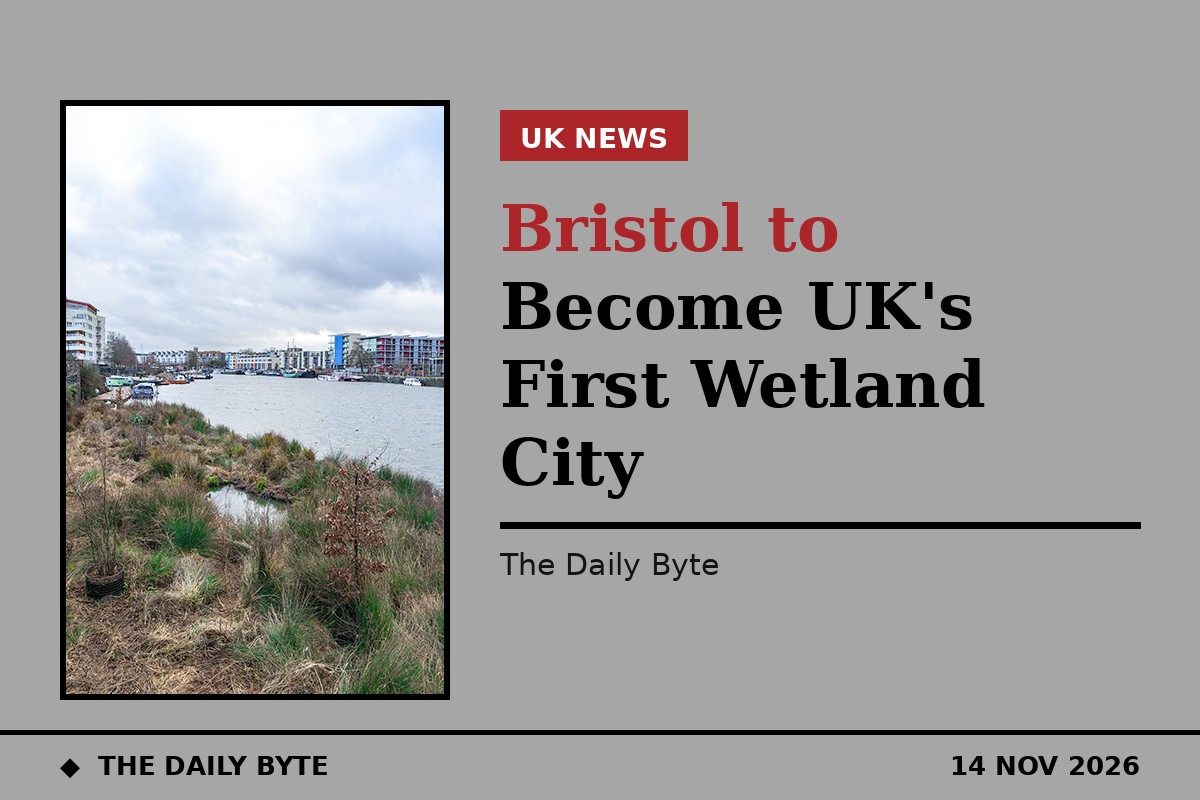
Bristol could become home to the United Kingdom's first accredited wetland city, under a five-year plan to weave wetlands through its streets, rivers and harbour. The Wildfowl and Wetlands Trust (WWT) said the initiative will include more than 200 projects to restore and create wetlands across the city, cutting flood risk, supporting wildlife and giving more people access to green and blue spaces.
The charity hopes Bristol will win wetland city accreditation under the Ramsar Convention, the international treaty on wetland conservation, which recognises cities that protect and make wise use of their urban wetlands. There are currently 74 accredited wetland cities in 27 countries, 22 of them in China, but none yet in the United Kingdom.
What the Bristol project will build
The projects will range from small household rainwater ponds and street-level rain gardens to the restoration of river habitats, reconnecting rivers with their floodplains and creating entirely new wetlands. The charity began the work in September by installing floating wetlands, made of buoyant modules covered in wetland plants, at three sites in Bristol's city-centre harbour.
Peter Lee, the programmes lead at WWT, said wildlife arrived almost immediately. "Within minutes, dragonflies and other wildlife were appearing. Nature was being drawn to it," he said. "It sparked a conversation - people were saying: 'Why can't it always be like this?'"
The floating islands also create a more welcoming habitat for insects, birds and other wildlife, and the charity said swans, ducks and a goose had already made themselves at home on one of them.
Why wetlands matter for flooding
Lee said wetlands absorb and store water more effectively than impermeable surfaces such as concrete, making them a practical way to reuse rainwater and prevent flooding during heavy rainfall. "It's a rethink of how we manage the water that lands in the city," he said. "Instead of trying to get water out of the city as quickly as possible through drains and combined sewers, which overflow when it rains, we can actually manage the water where it lands."
The need is clear in Bristol. According to data cited by Aviva, almost one in three homes across the city's constituencies was at risk from river, coastal or surface water flooding in 2025.
Who is paying for the wetland city
The project is funded by the insurer Aviva, which is contributing £8.9 million over the five years. Lee said bids for wetland city status elsewhere had usually been state-led, often driven by a city's mayor, but the Bristol scheme is backed by private funding.
He said he hoped Bristol would become a template for other UK towns and cities, and that it could demonstrate the economic case for wetlands, including commercial returns such as higher mooring fees and more footfall in the city centre. "By proving the commercial and economic case for investment in wetlands, we won't always need to rely on a big philanthropic donation - instead that's seed funding to kickstart a much bigger programme," he said.
Why Bristol was chosen
The charity considered several cities before choosing Bristol, pointing to its maritime heritage and long relationship with water. Lee noted Bristol has 100 miles of waterways, many hidden away, and place names full of water references.
Tony Dyer, the leader of Bristol City Council, said: "Bristol has always been shaped by its relationship with water, and this exciting programme shows how we can work with nature to tackle some of the biggest challenges facing our city. By creating and restoring wetlands across Bristol, we can help reduce flood risk, support wildlife, improve people's health and wellbeing, and help build resilience to a changing climate."
The initiative is supported by Bristol City Council and the West of England Combined Authority, and builds on existing work by local community groups.
Wildlife and access to nature
Louise Kennedy, who is managing the project in Bristol, said 40 per cent of species around the world were reliant on wetlands. "At WWT we often say they're in freefall, given the number we've already lost," she said. "In a world that is increasingly urbanised, figuring out where pockets of wetland can be restored and protected within our cities massively improves biodiversity."
She added that urban wetlands improve access to nature for large parts of the population who would not otherwise be able to reach wildlife reserves in rural locations.
Sarah Fowler, WWT's chief executive, said wetlands could buffer homes from floodwater, purify polluted water and provide a vital home for wildlife. Aviva's chief sustainability officer, Claudine Blamey, said the insurer backed practical, nature-based approaches to climate adaptation.
If the programme succeeds, Bristol would be the first UK city to hold Ramsar wetland city accreditation, and WWT hopes other towns and cities will follow.


